WORKS

Find works

Work Series

Two-dimensional Calligraphy
Calligraphy

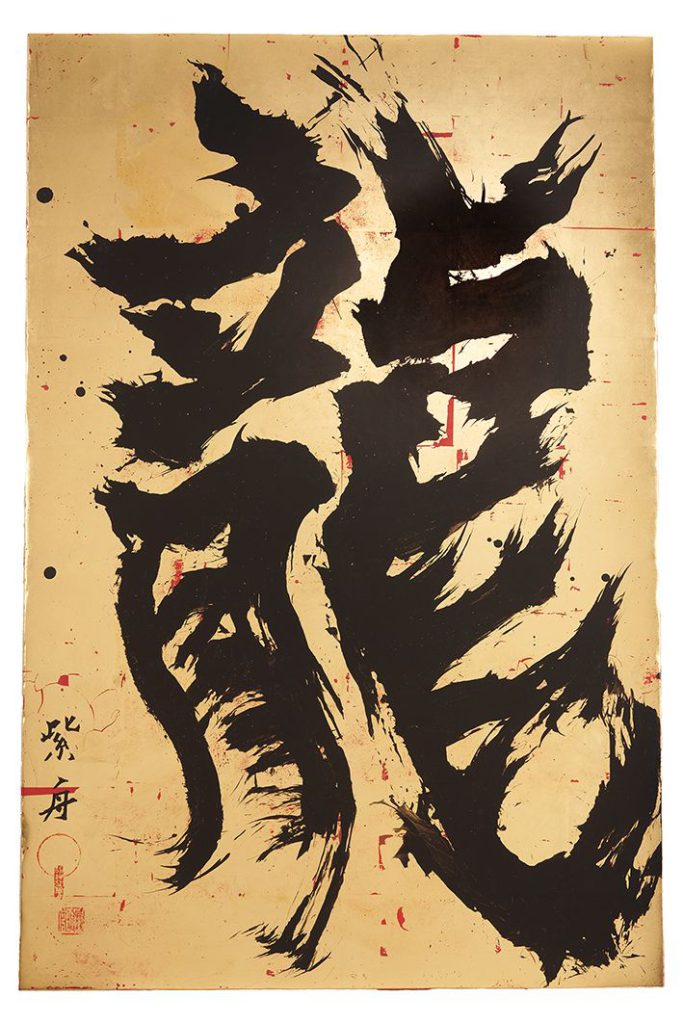
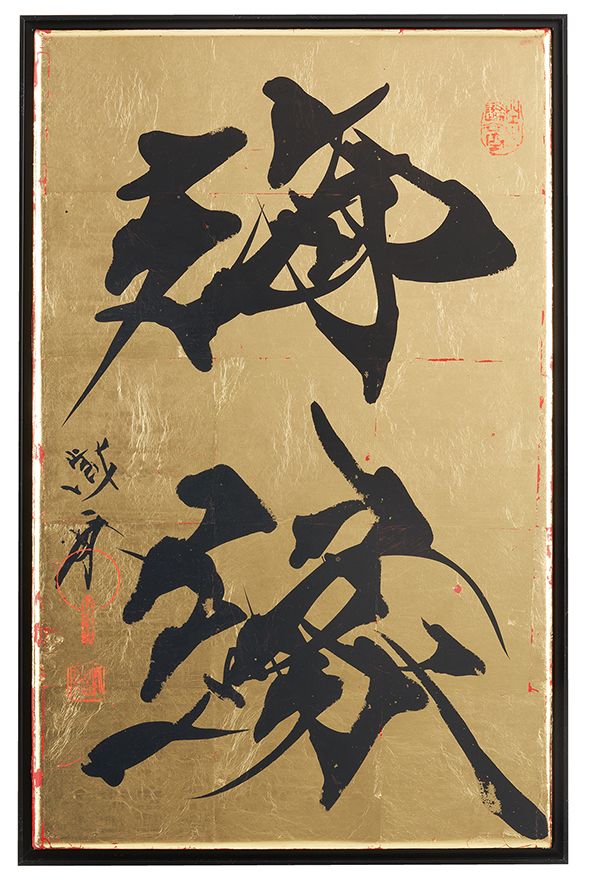
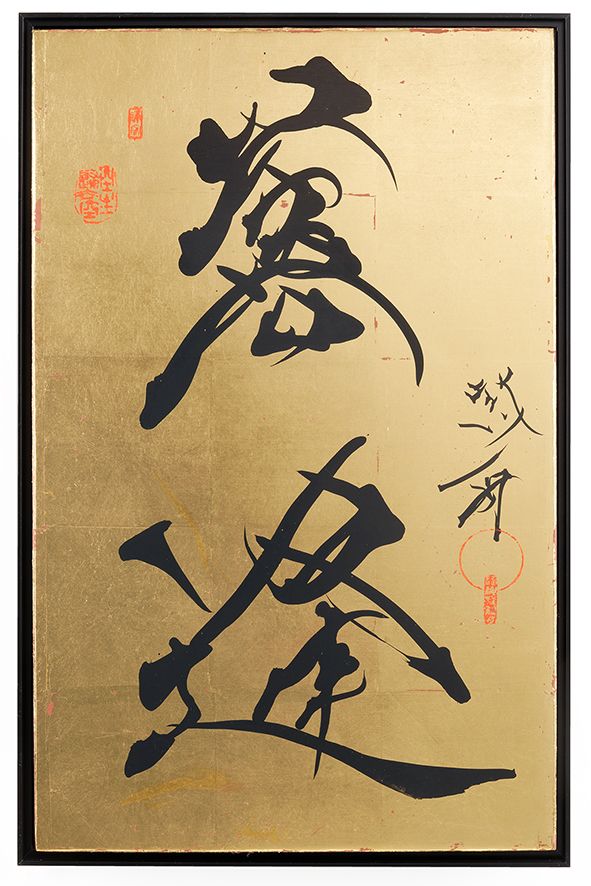
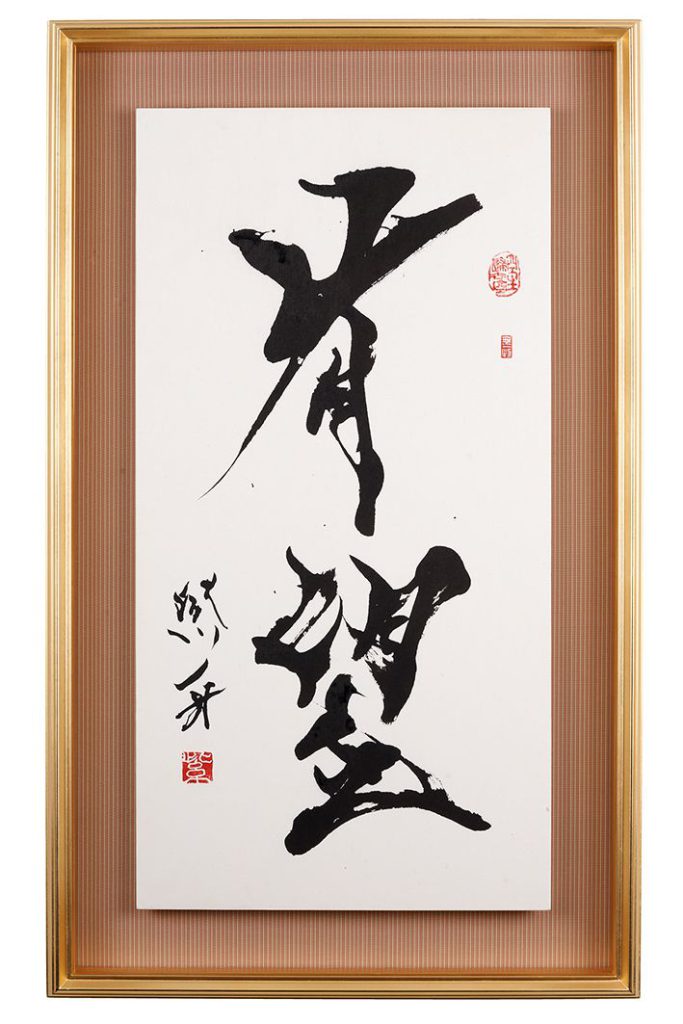
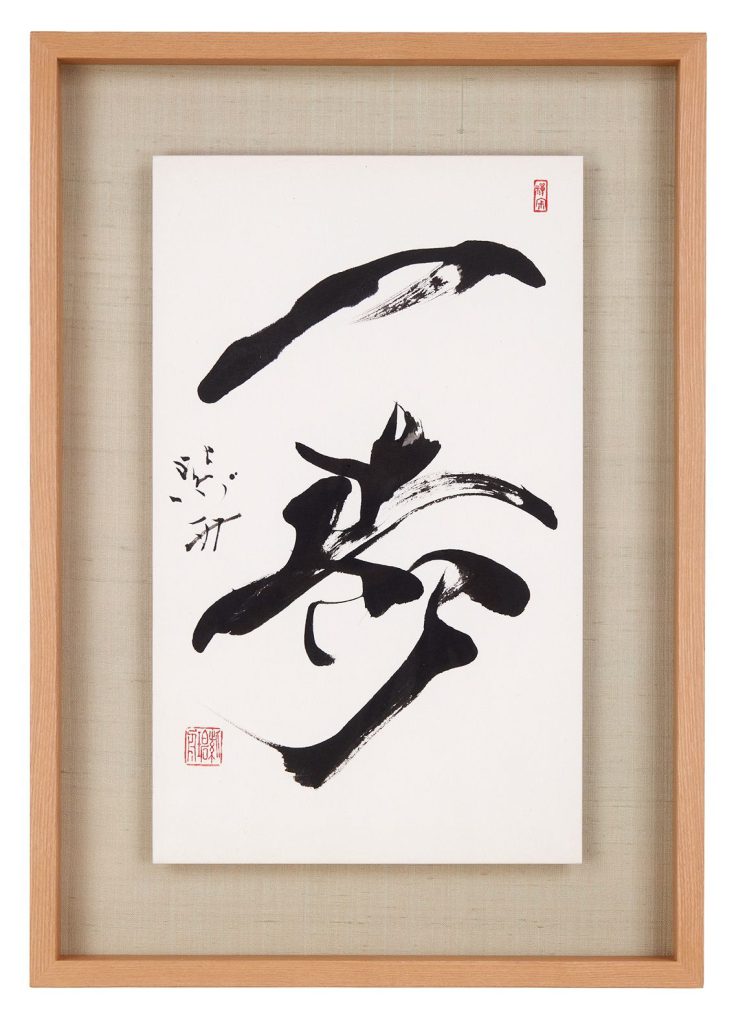
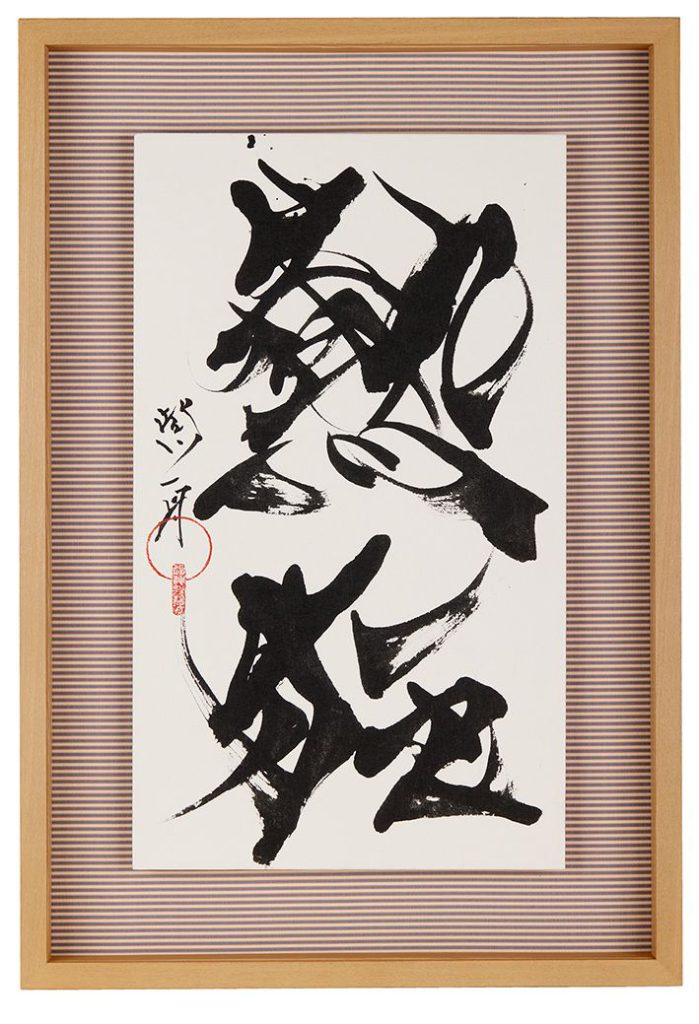
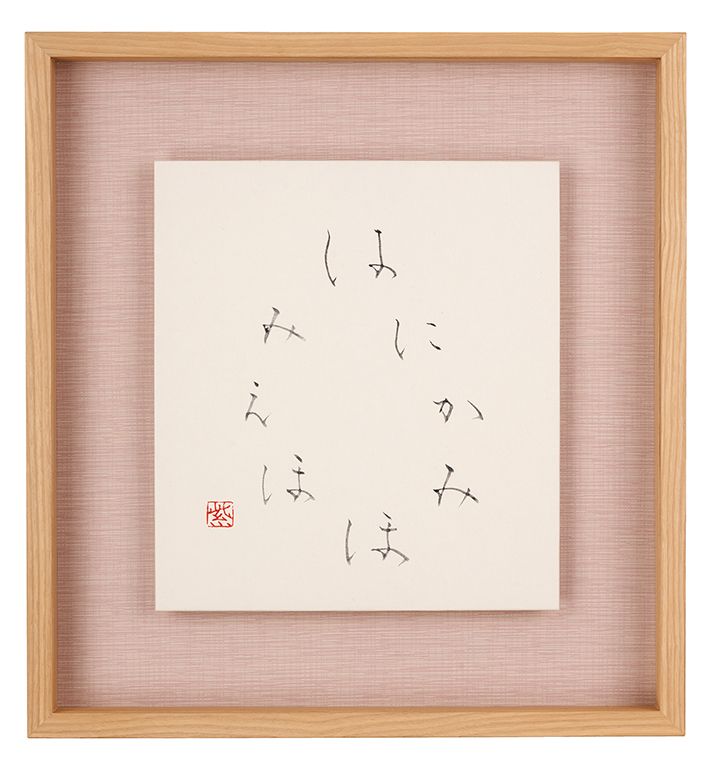
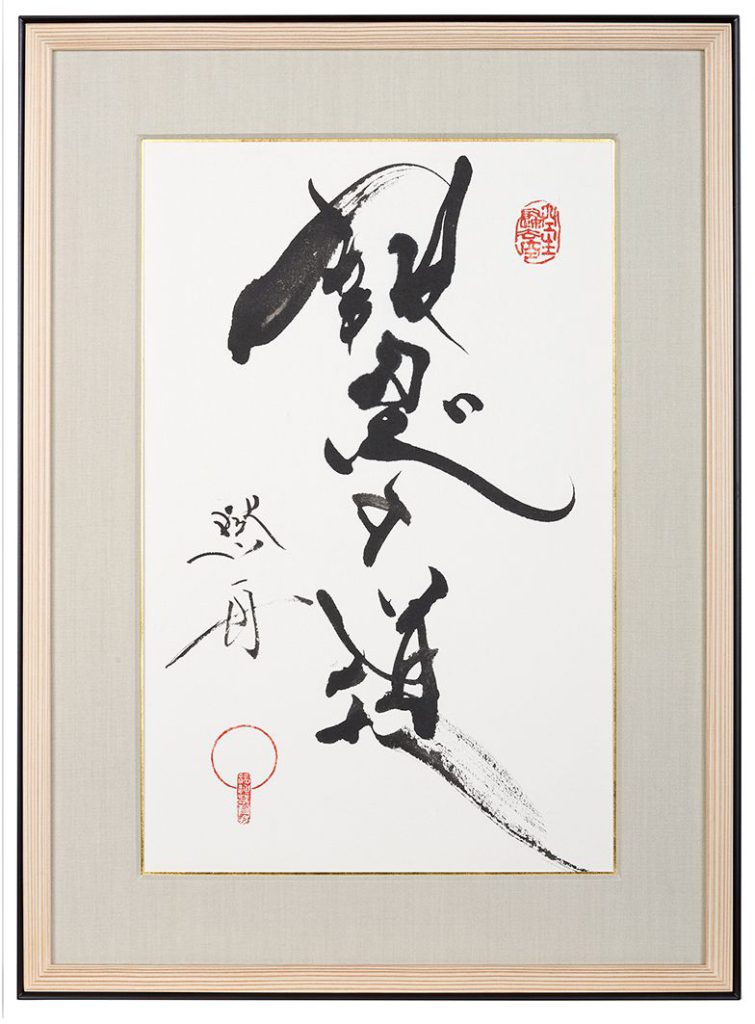
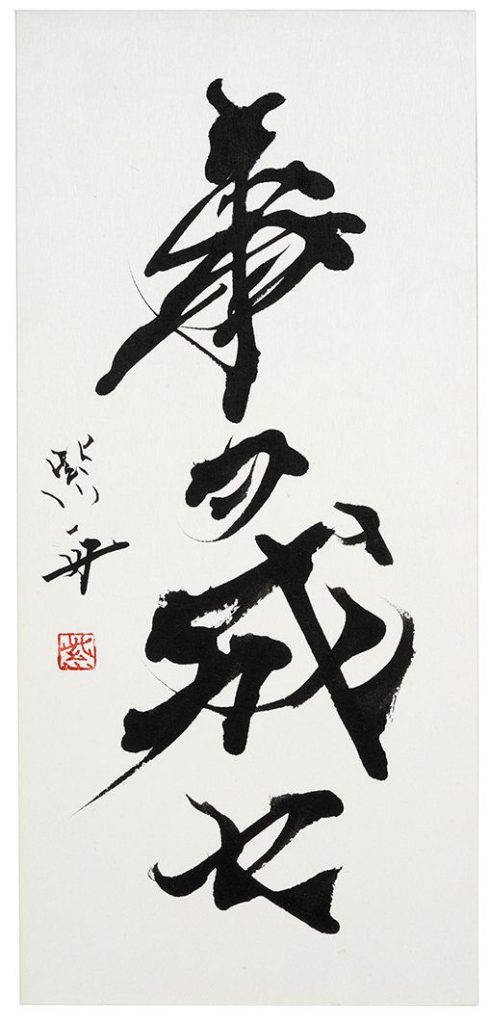
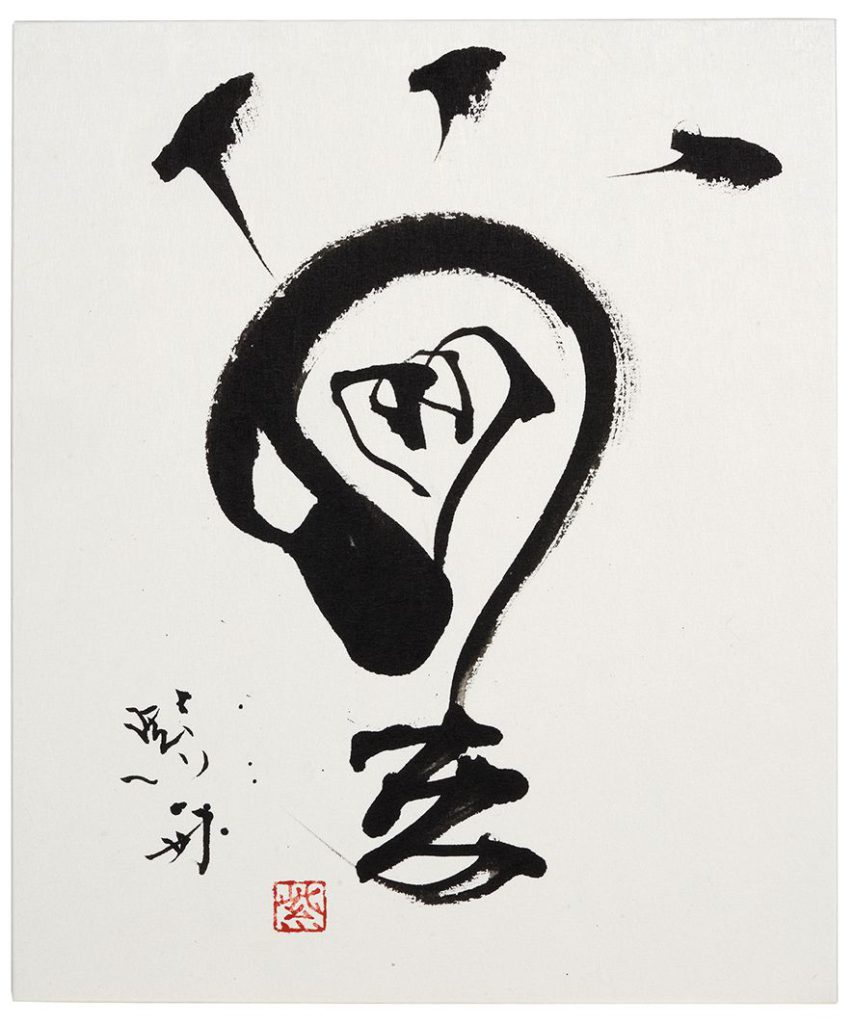
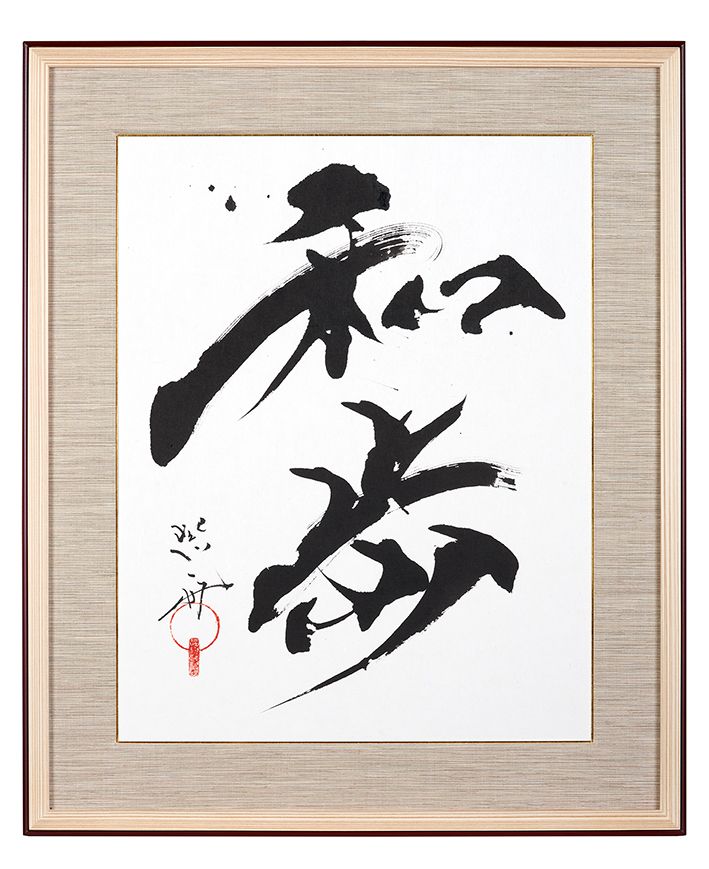
Sisyu seeks to create calligraphy whose words continually bestow their blessings simply by being displayed. In Japan, there is a concept called kotodama, the spirit of words. Since ancient times, people have believed that words possess spiritual power. To instill that spirit in written characters, she believes she must go beyond reaching the human heart and approach each work with the resolve of making an offering to the gods and the Buddha. Inconvenience deepens spirituality. She deliberately distances herself from information, limits convenience, and imposes restrictions on herself. When creating, she leaves the city, switches off her computer and mobile phone, and concentrates on the tip of her brush, facing only her calligraphy. She also practices restraint in daily life and eats shojin ryori, the vegetarian cuisine of Buddhist monks, to strengthen her concentration. Everything is directed toward a state in which the blessings of words flow endlessly from a single completed sheet of calligraphy.

Calligraphy Without Margins

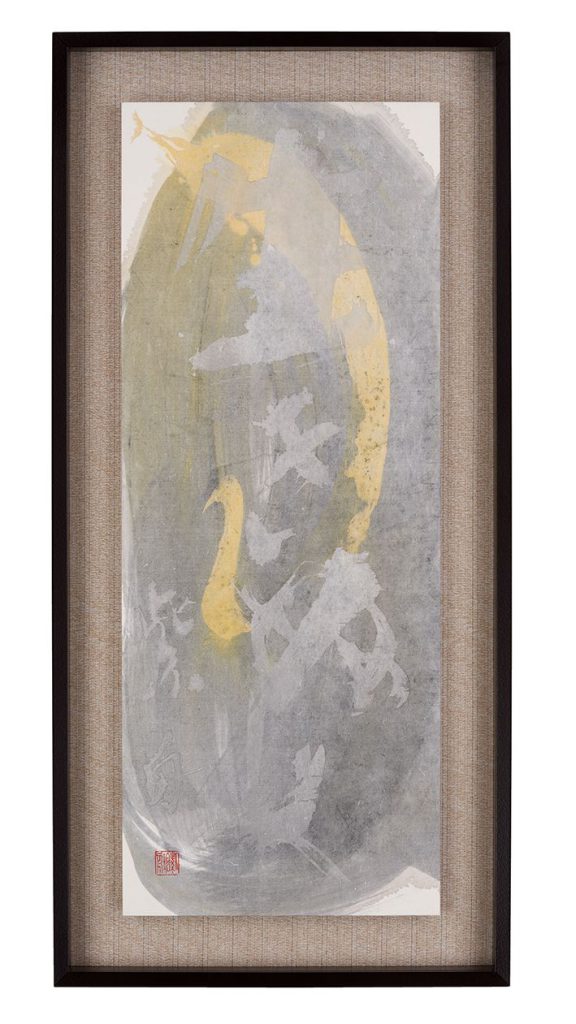
In Western oil painting, thousands upon thousands of brushstrokes build the background and principal subject, bringing a work to completion. Japanese painting and calligraphy, by contrast, have treasured the beauty of blank space, intentionally leaving the background unpainted. Yet this economy of means can sometimes be seen as incompleteness when judged by the standards of Western painting. Sisyu began a new challenge: intervening in that traditional blank space. On washi handmade by a Living National Treasure, she builds a background through repeated brushwork. What was once an empty space becomes a space imbued with profound resonance. She then draws lines with ink she has blended herself, adapting traditional techniques. A single stroke acquires a depth that seems to contain many layers of brushwork. This is a new realm of calligraphy in which the background has strength and presence while preserving the beauty of empty space. By bringing together the structure of Western painting and the spirituality of the East, a new beauty emerges, resonating with contemporary spaces in both East and West.

Otherworldly Calligraphy

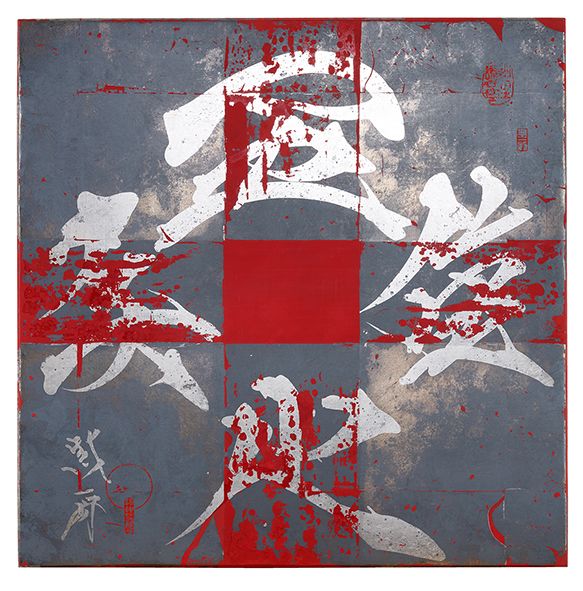
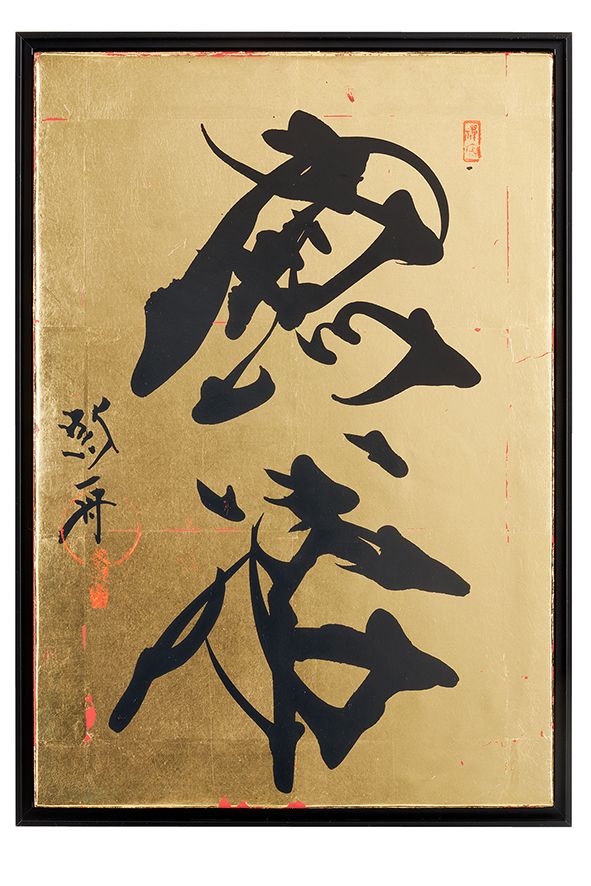
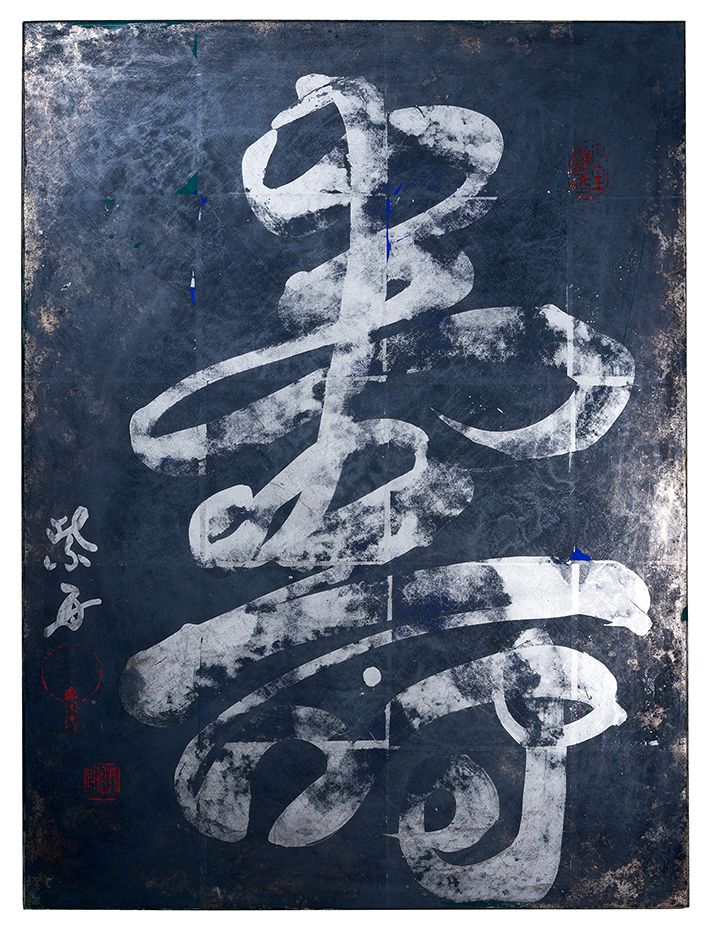
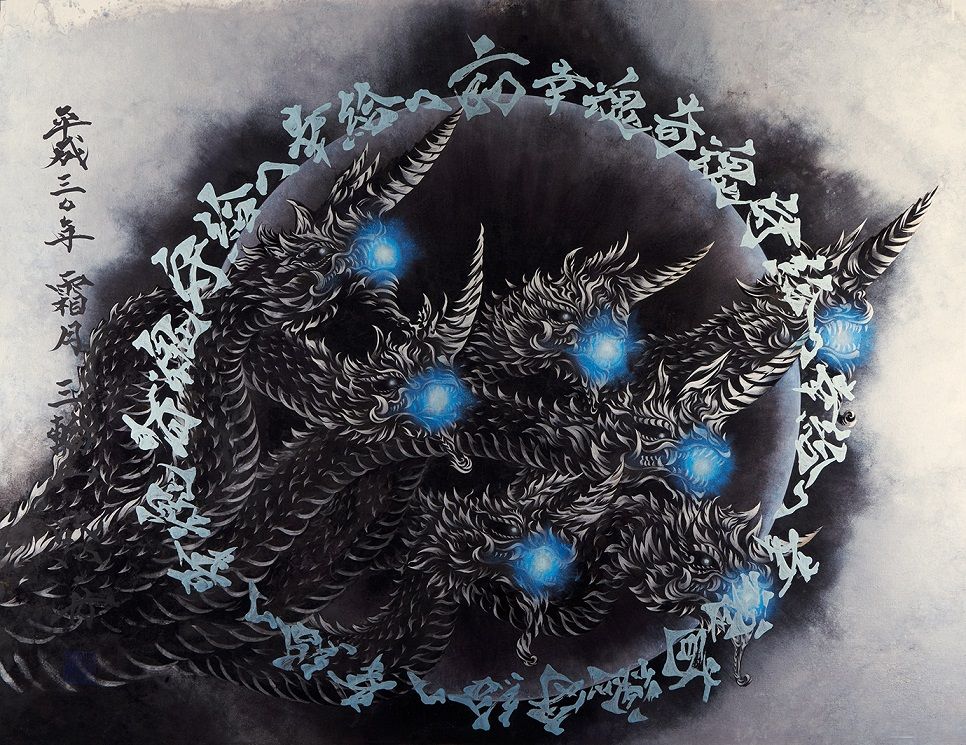
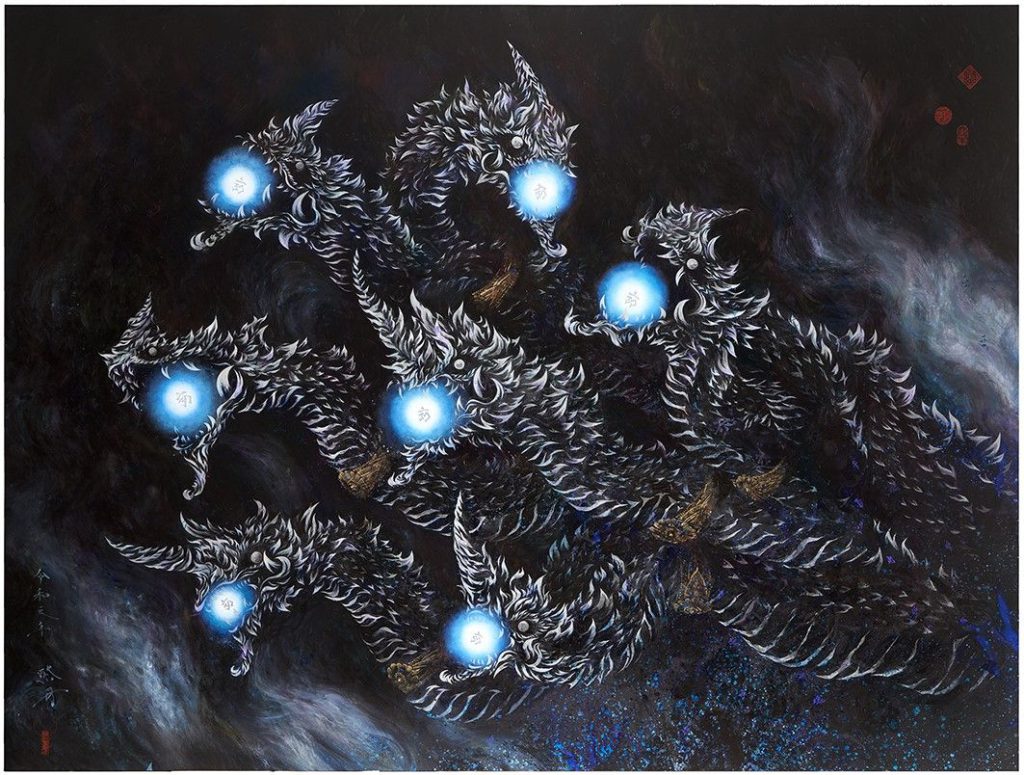
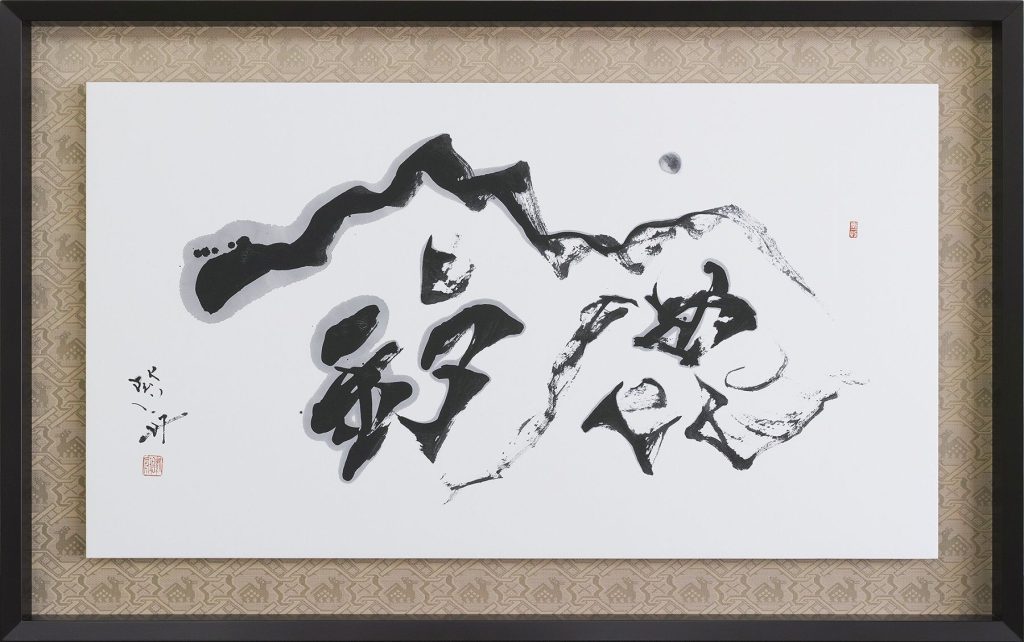
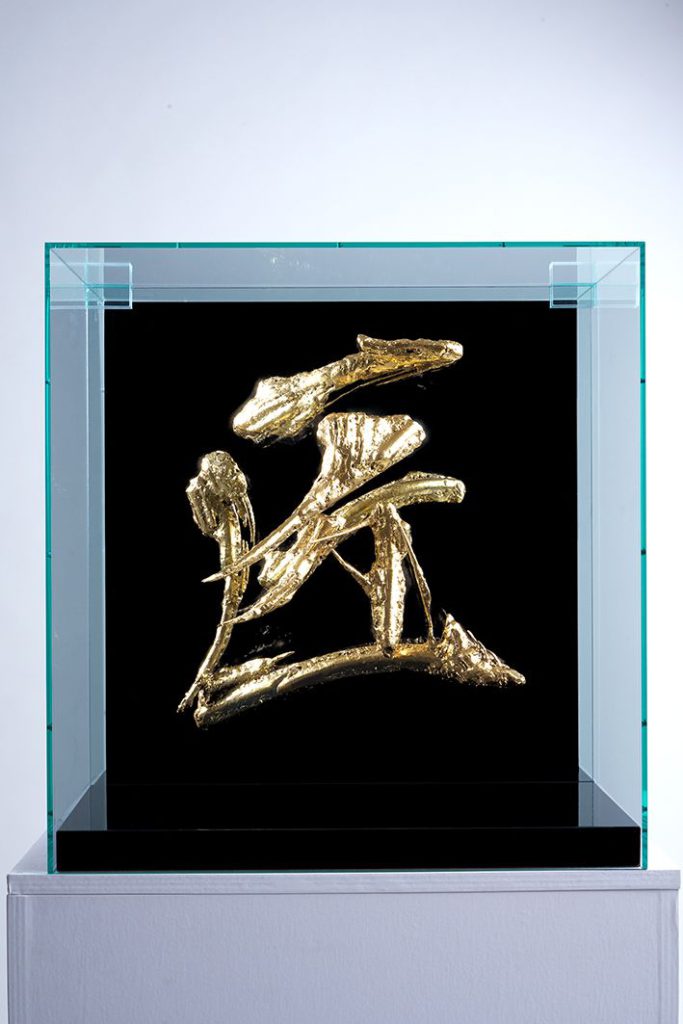
In Japanese painting, an unpainted or lightly worked background suggests distant space. In Western painting, by contrast, a background built up with thousands of layers of paint creates depth and distance. This reversal in methods of depiction and spatial expression is a major divide between Japanese and Western art, and an obstacle to understanding Japanese expression in Europe. Moreover, the blank space prized in Japanese art can imply incompleteness by Western standards. To bridge these aesthetics through calligraphy, Sisyu deliberately breaks with the Japanese tradition of leaving the background unpainted and constructs the background itself. Drawing on the gold-ground techniques of the Renaissance, she builds layers across the entire work. To incorporate the solidity of Western painting, she combines four elements: ink, gold, silver, and sulfur. Finally, to move beyond the traditions of calligraphy, she burns the work. Each piece takes months to create, as she consults old texts, searches for lost techniques, and builds successive layers. Grounded in the spirituality of Japanese calligraphy, she incorporates Western painting techniques and a final burning process to transcend established concepts of writing. From this process emerges a new aesthetic realm: Otherworldly Calligraphy.
Three-dimensional Calligraphy
Sculptural Calligraphy

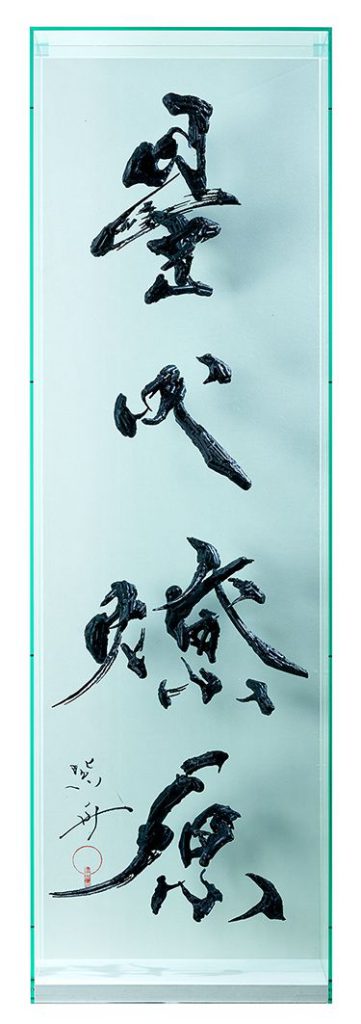
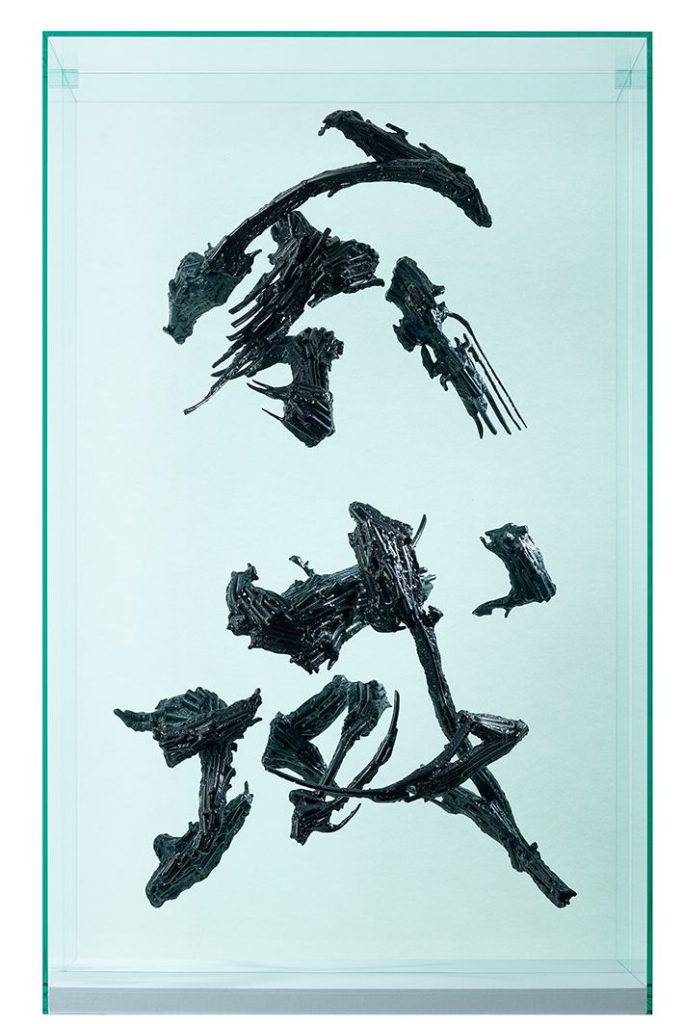
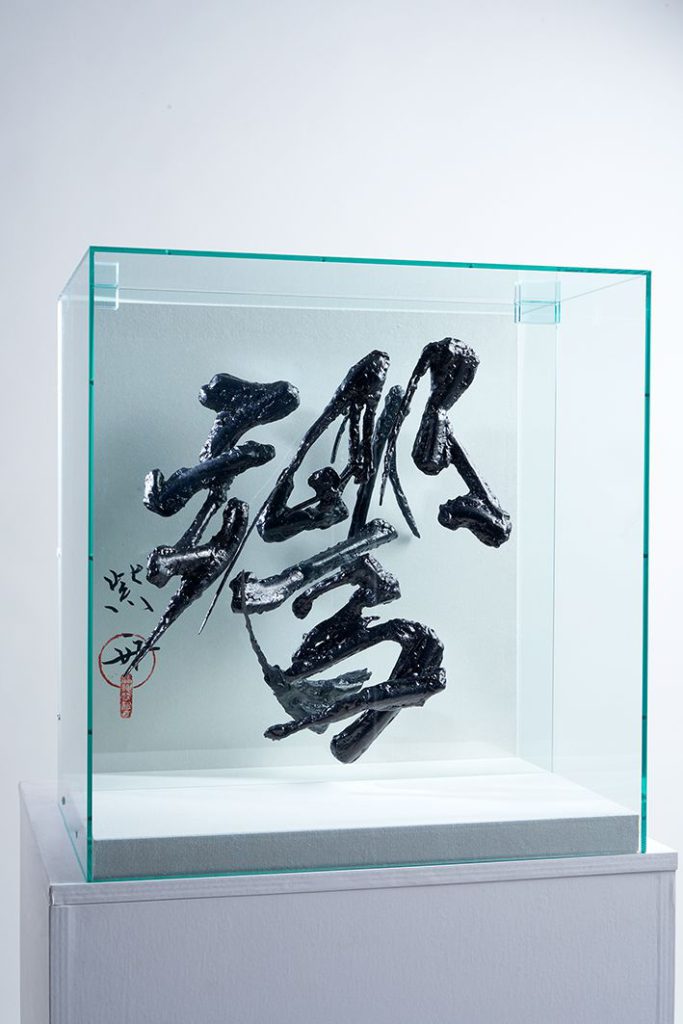
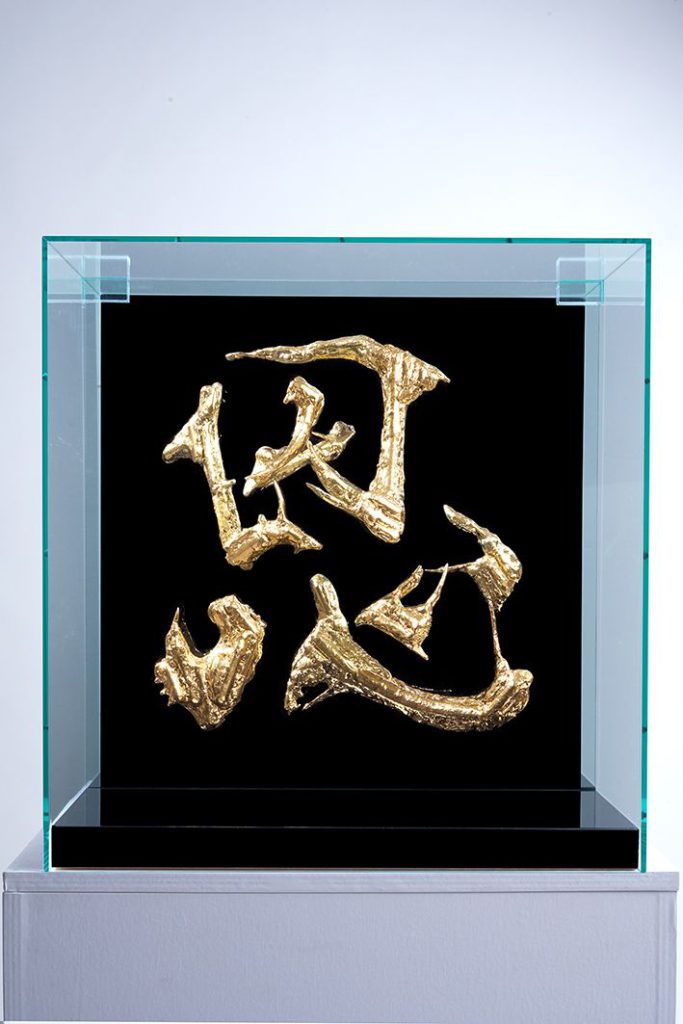
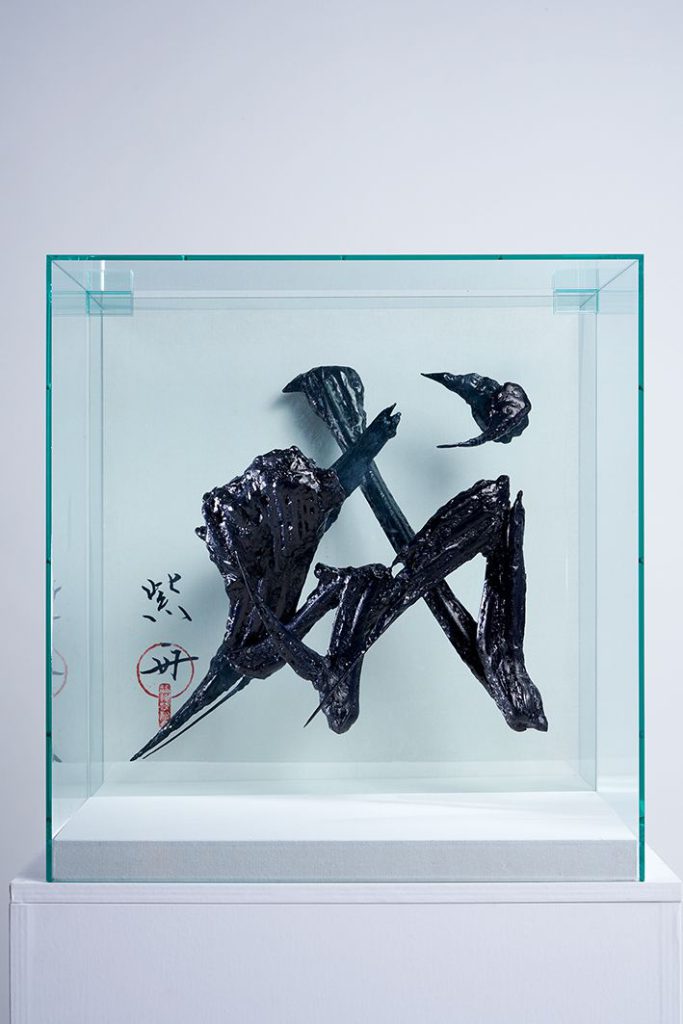
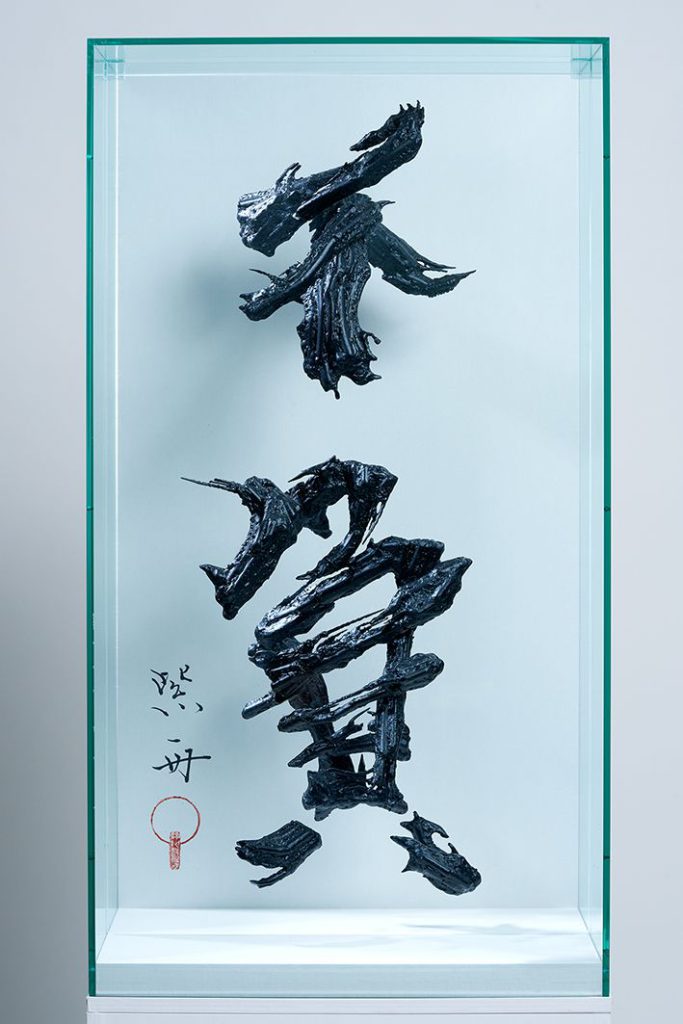
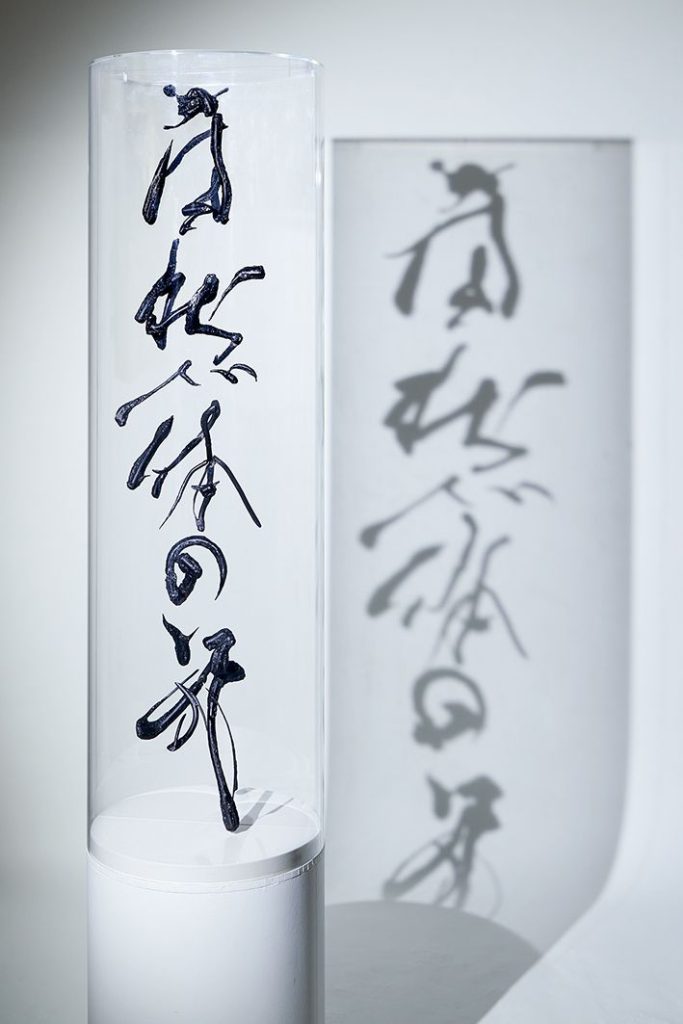
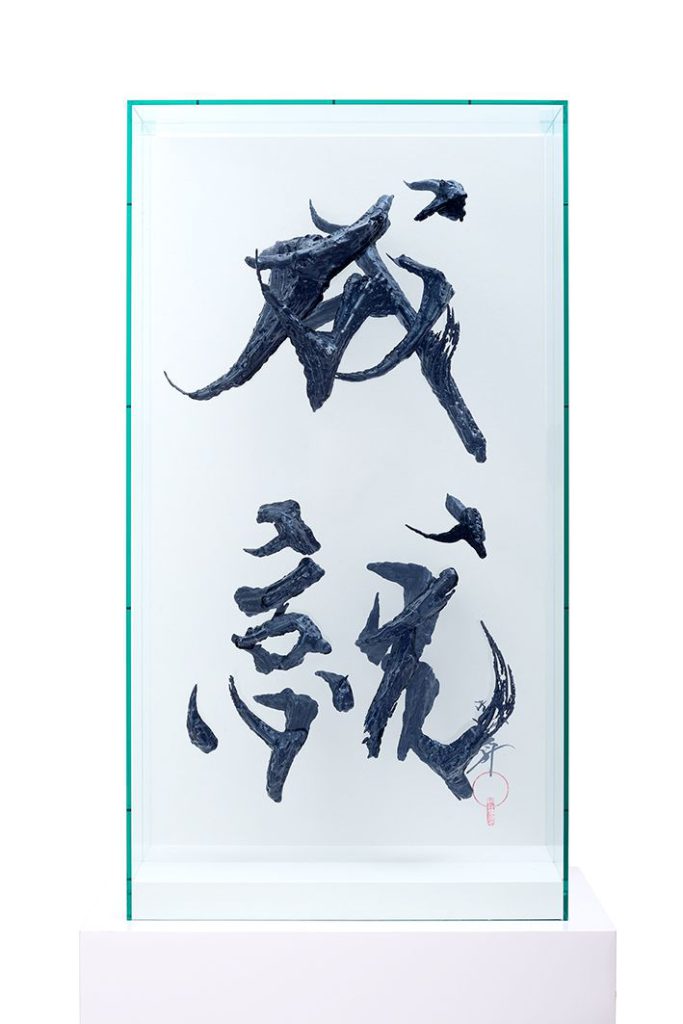
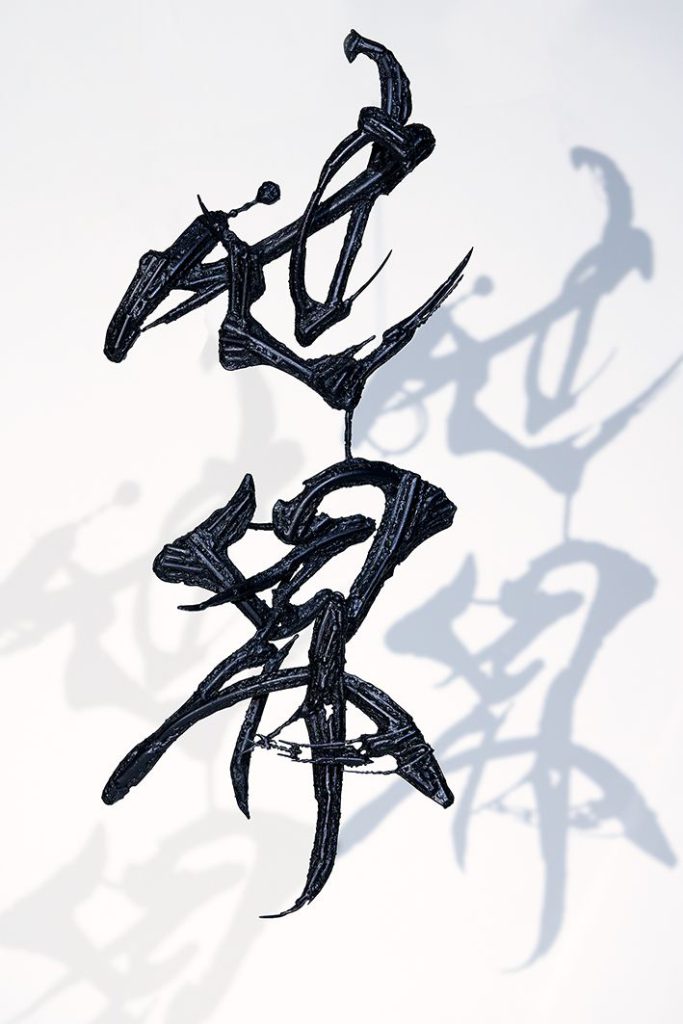
Sculptural Calligraphy frees characters from the plane and elevates them into three dimensions, overturning the assumption that writing is inherently flat. When light falls on a sculpture, its shadow becomes another central element of the work. As the angle of the light changes, the shadow shifts and moves, reflecting the meanings and emotions of the words. Tracing the origins of Chinese characters leads back to oracle-bone script, born some 3,300 years ago: characters carved into turtle shells and deer bones. Long before paper became widespread, characters were carved rather than written. In other words, they did not originate as writing on a flat surface. Writing began some 1,300 years later. By tracing this history back to its origins, Sisyu moves from the plane into three dimensions. Carrying forward the tradition of characters while transcending its conventions, she creates a new calligraphic art within the 1,300-year history of Japanese calligraphy.
Cubism in Calligraphy

These works make visible, as three-dimensional sculpture, the flow, breath, rhythm, depth, and even the passage of time created when calligrapher and brush become one. Areas of stronger brush pressure recede deeper into the sculpture, while those where the brush lightly touches the paper come forward. A line drawn in a single stroke becomes one undulating sculptural form. Cubism in Calligraphy is a new means of expression that intuitively conveys the depth and brushwork of flat calligraphy, even to people unfamiliar with its culture. The traces of each moment of the brush are preserved forever in three dimensions. Viewers can retrace the time in which the calligrapher moved the brush, experiencing its breath and vitality again and again. A fleeting act of writing becomes art that can be contemplated for eternity.

Calligraphy of Light

Calligraphy of Light gives writing three-dimensional form in glass and produces color through light. Transparent, hollow glass characters are filled with colored water. When illuminated, their shadows become vivid colors that appear and shimmer in the surrounding space. Rather than applying color to the characters themselves, color is generated by transmitting light through them. Their expression changes continually with the angle and intensity of the light, revealing different kinds of beauty over time. If traditional calligraphy fixes characters on paper with ink, Calligraphy of Light draws characters in space with light.

Painting
Calligraphic Painting

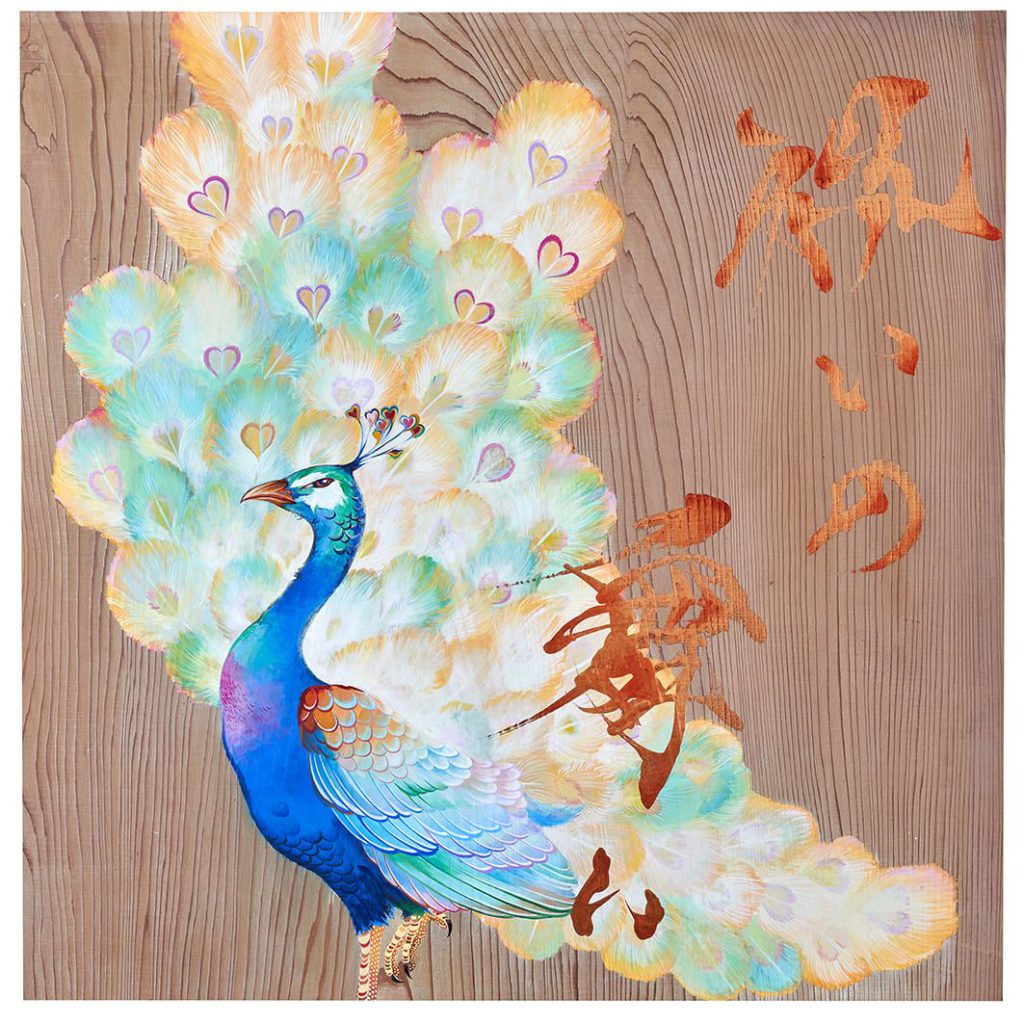
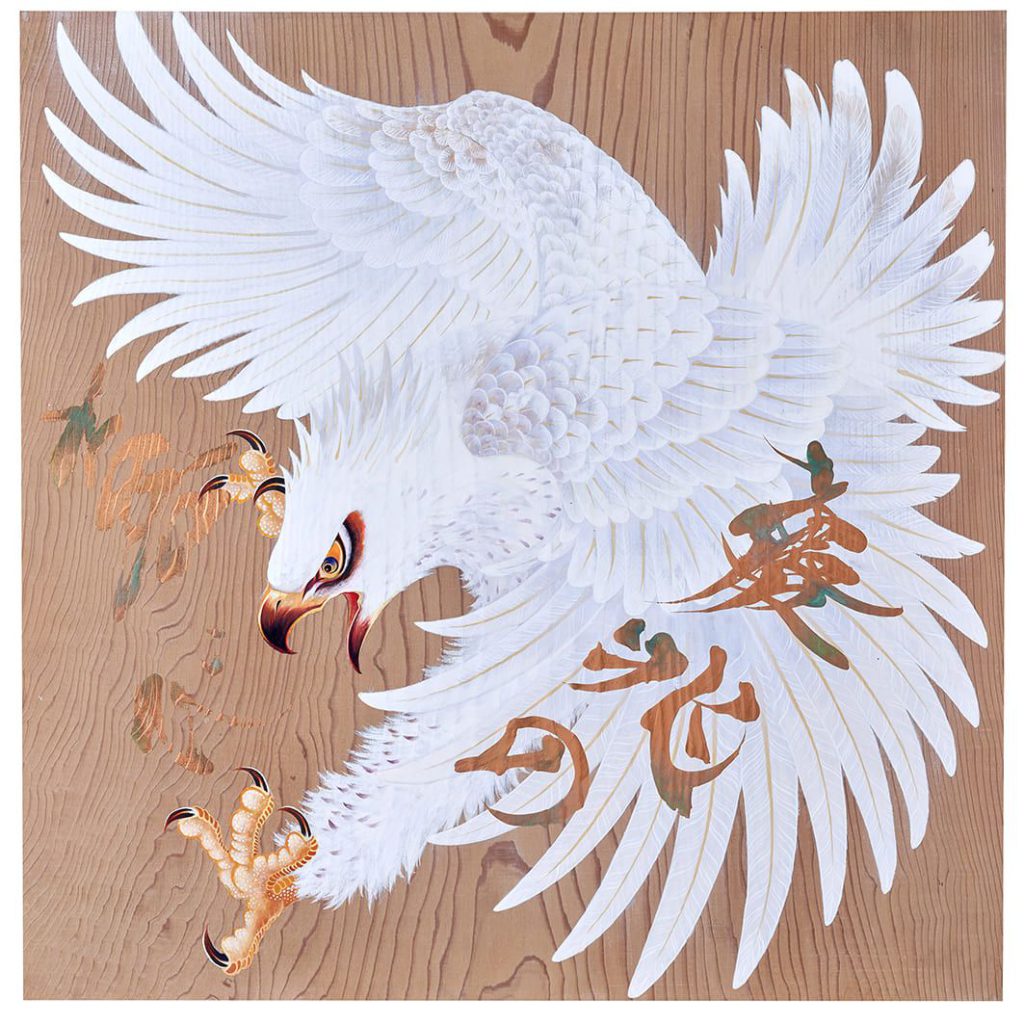
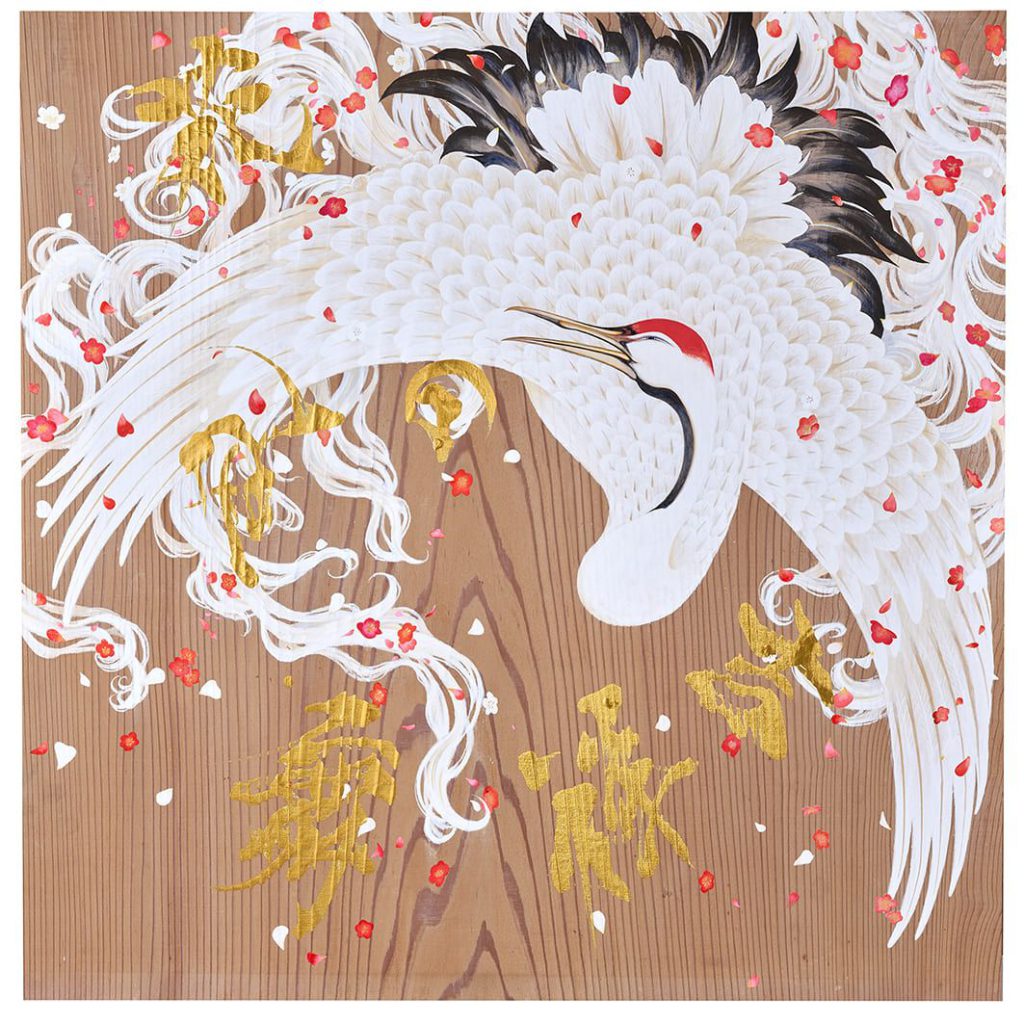
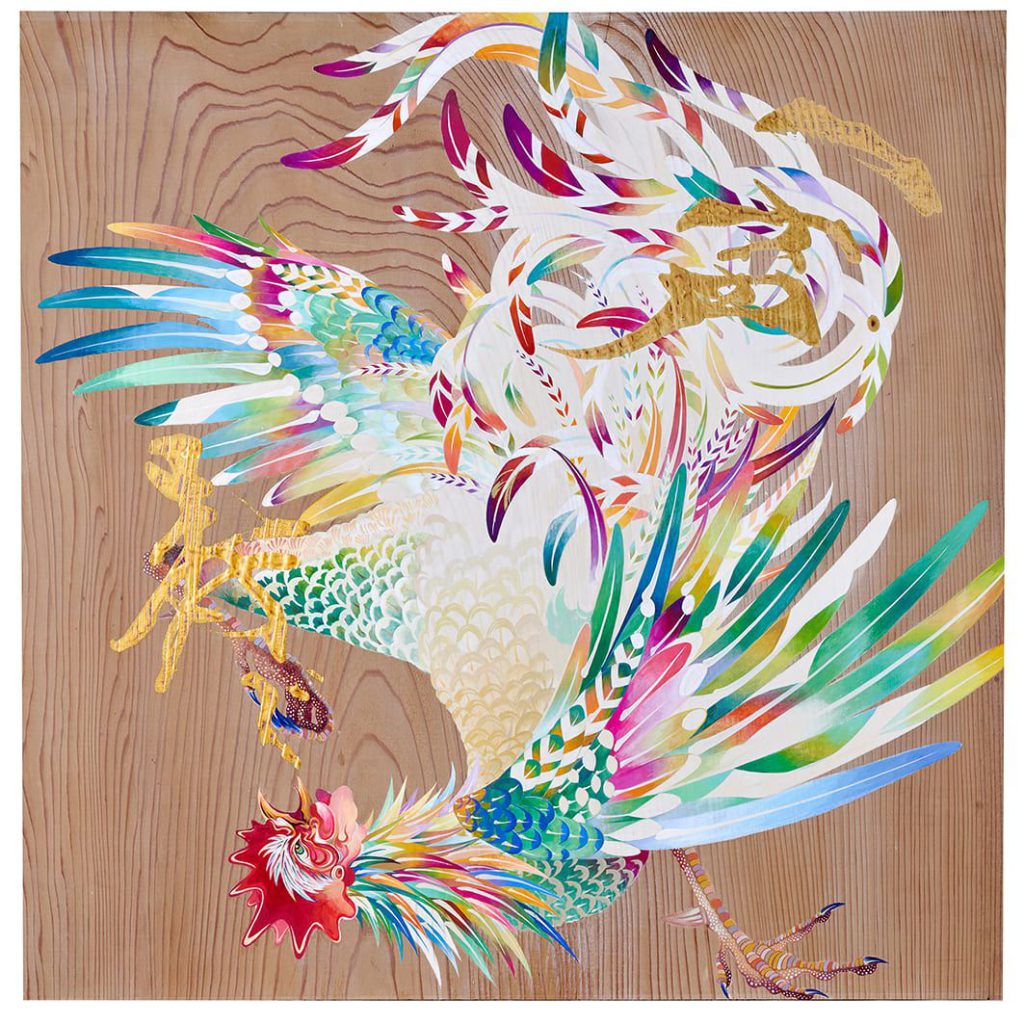
Japan has a long tradition of shoga, in which painting and writing coexist and resonate within a single picture.

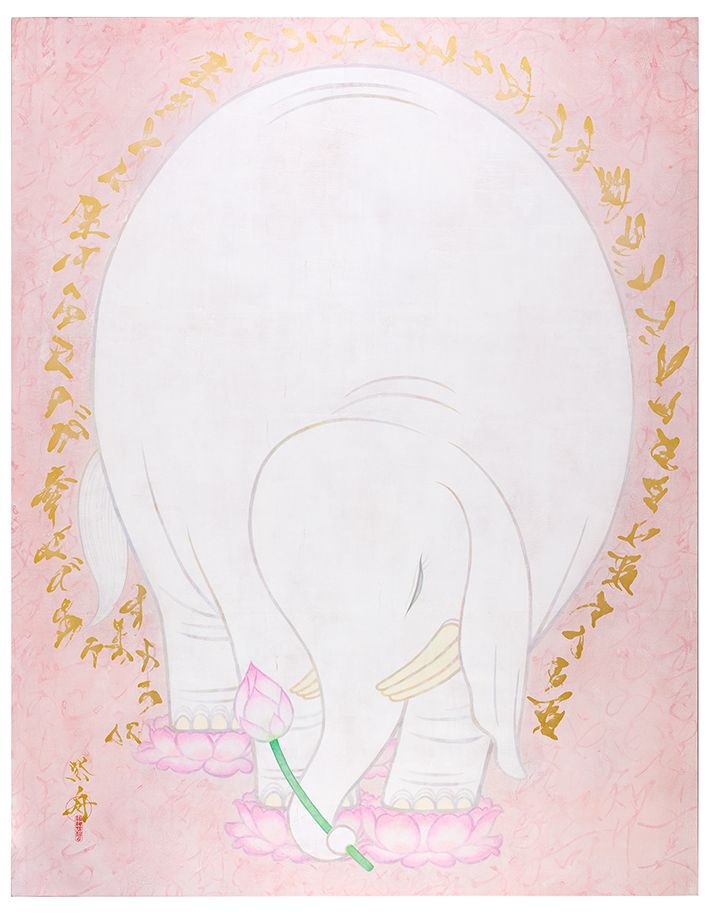
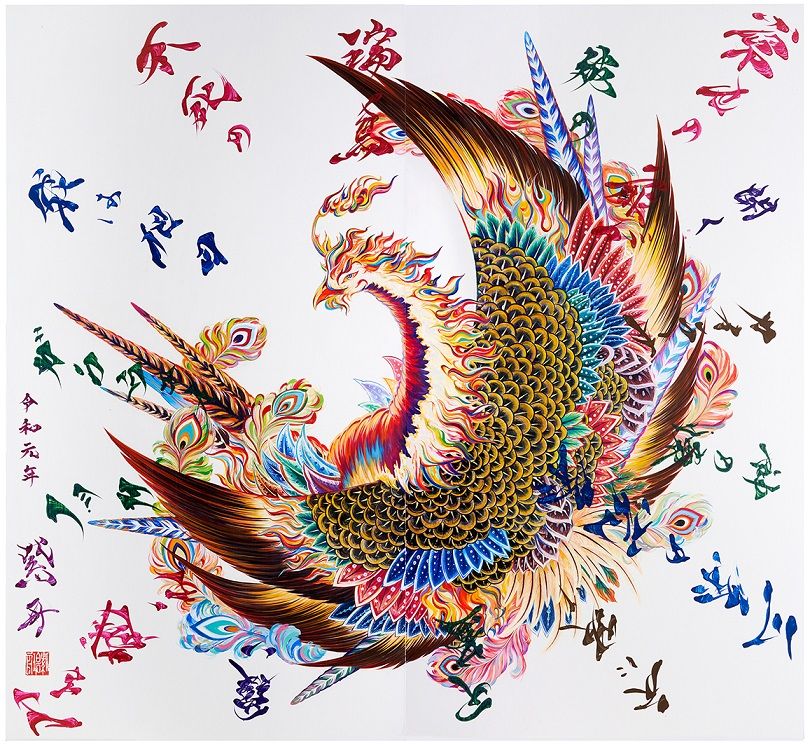
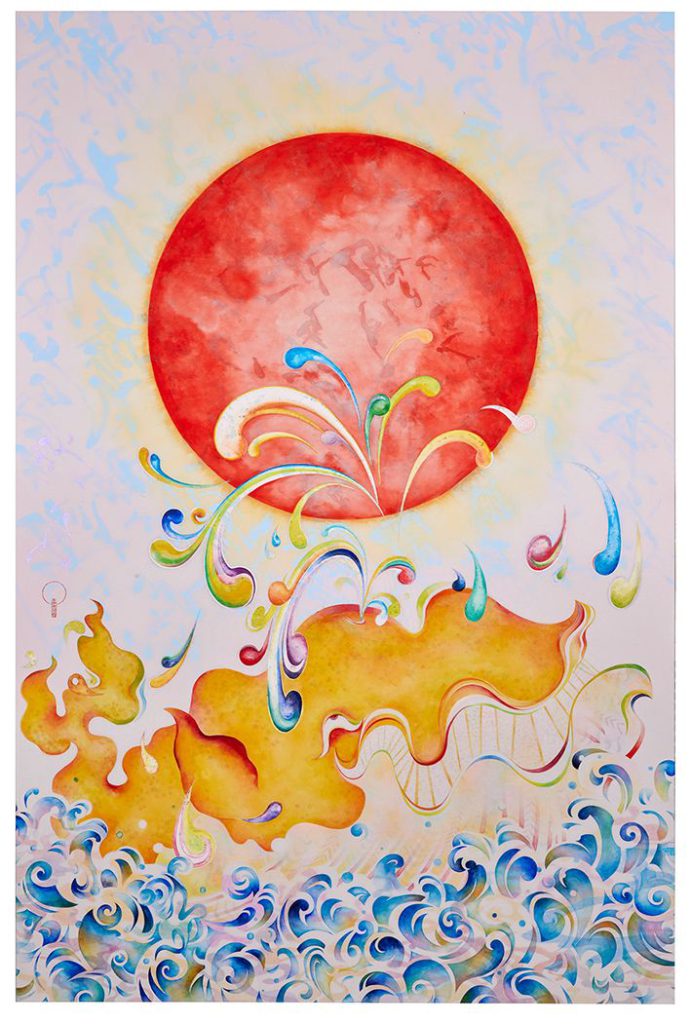
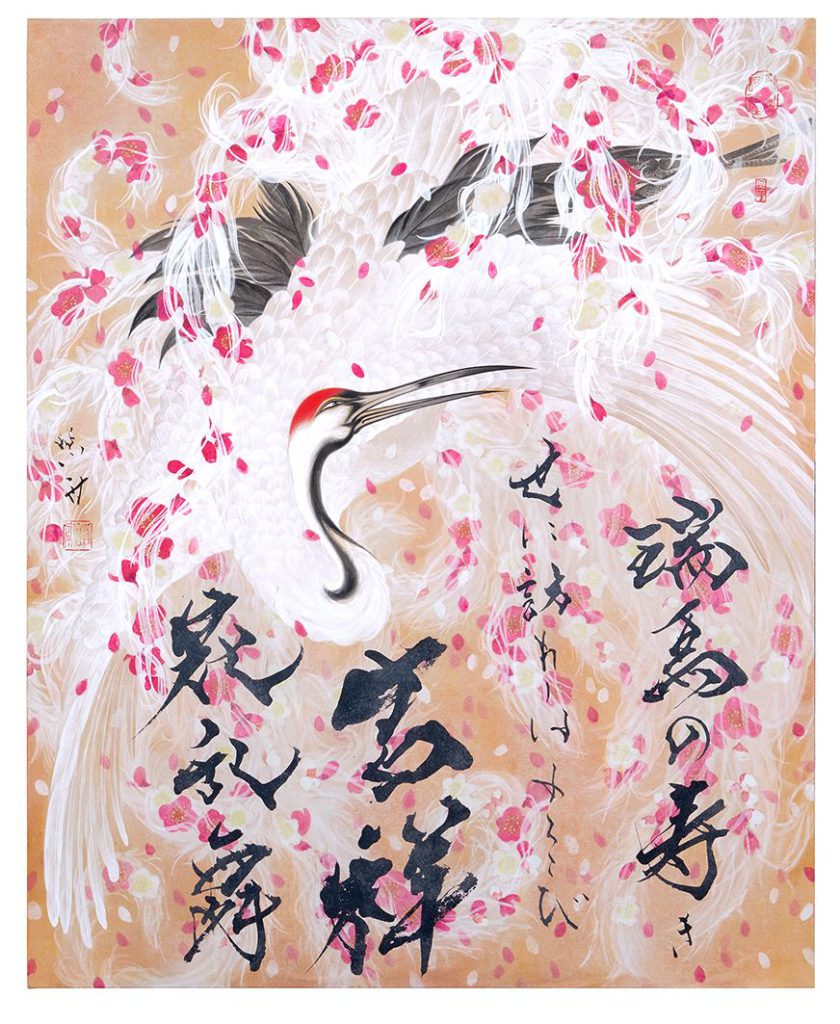
One masterpiece is the Edo-period Scroll of Poems by Thirty-Six Poets with Cranes, with calligraphy by Honami Koetsu and painting by Tawaraya Sotatsu. Following the flowing brush-written characters with the eye, their movement overlaps with the cranes taking flight, bringing the entire picture to life. This traditional Japanese integration of writing and image has also influenced the manga culture for which Japan is renowned. Sisyu focuses on the visual effects created when characters harmonize as part of a painting, and on the power of the words they embody. Her calligraphy, placed in dialogue with the image, conveys meaning while weaving a new narrative through the beauty of Japanese written forms. Characters become part of the painting, and the painting begins to speak.

Ukiyo-e

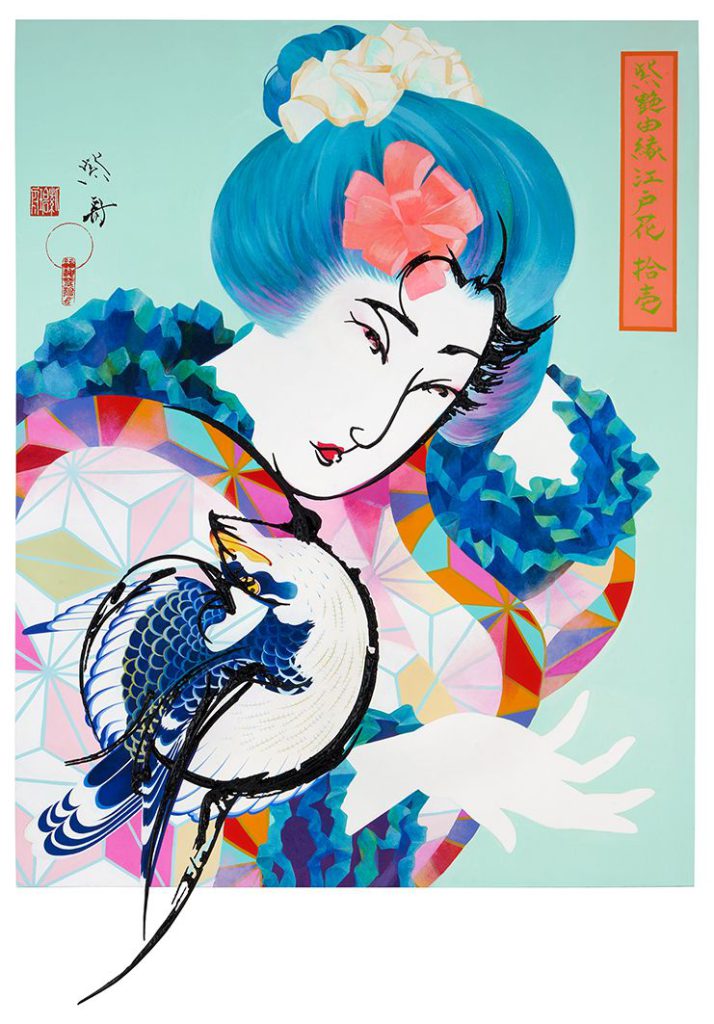
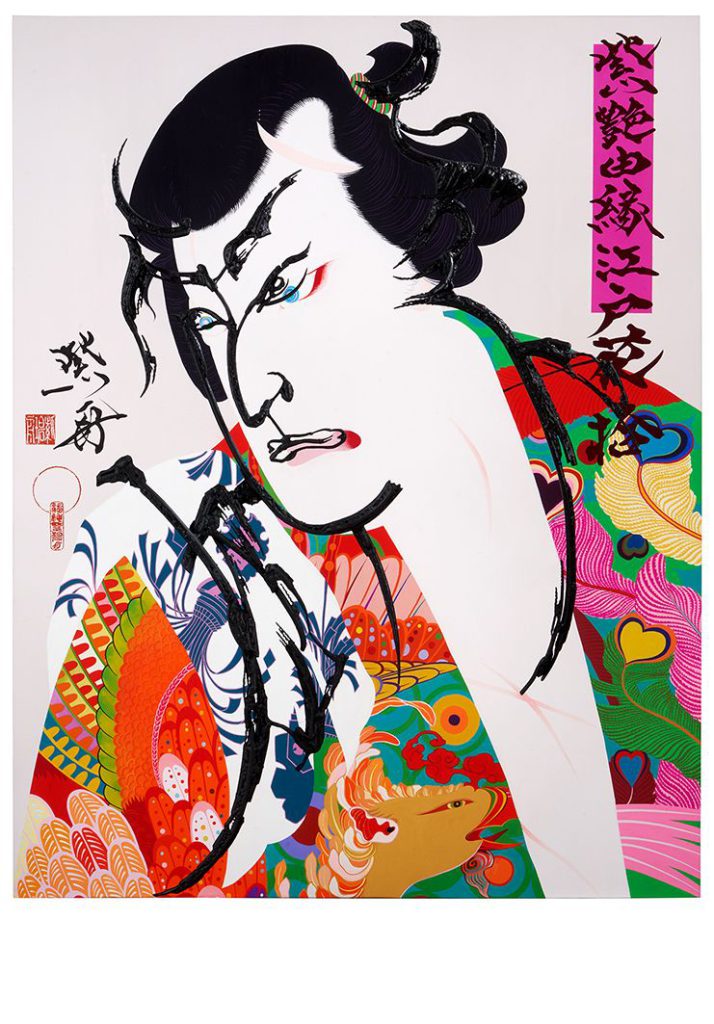
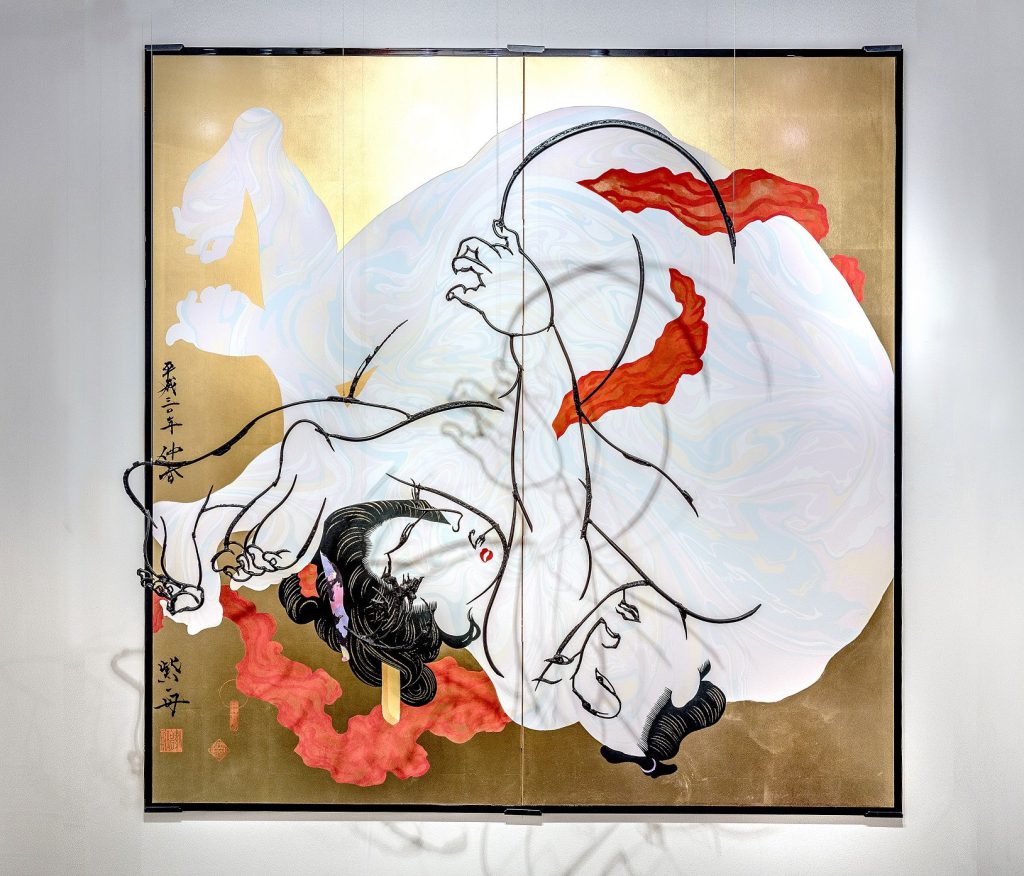
There are no outlines in nature. Yet Japanese art has captured people and natural forms through brush lines shared with calligraphy, one of its oldest cultural traditions. Where Western painting builds images with planes, Japanese art has depicted forms by drawing lines. The distinctive black contours surrounding faces and figures in ukiyo-e are an emblem of this approach. Sisyu reinterprets this beauty of line, which also influenced Western artists such as Picasso and Van Gogh. She frees ukiyo-e, which once translated three-dimensional space into flat lines, from the plane. Removing all outlines from the print, she replaces them with new ink strokes that become the contours of three-dimensional sculptures, moving freely through the air. From one particular viewpoint, the painting and sculptural contours overlap to reveal a single ukiyo-e image. From another angle, line and color shift apart, evoking the misregistration of a woodblock print. As viewers move, the work moves between two and three dimensions and the effect of shifted printing. Just as ukiyo-e once translated three dimensions into two, Sisyu releases its outlines back into the three-dimensional world.

Classic Cars

This series reconstructs the sculptural beauty of timeless classic cars through the ink traces of a calligrapher. Incorporating the gold-ground techniques of the Renaissance, Sisyu builds layer upon layer to express both the substantial presence of these cars and their speed as they cut through the wind. Brushwork that moves freely between restraint and momentum breathes new life into elegant Western forms, creating a vitality that seems ready to drive out of the picture. The beauty of an inanimate machine meets the organic life of calligraphy.
Art for Healing
Prescription for the Future

Prescription for the Future is an exploration of new possibilities in medicine: awakening the imagination that lies within us through the power of art, and connecting it with the capacity for physical and mental recovery and healing.
The human brain responds not only to real experiences but also to vividly imagined ones. Think, for example, of an umeboshi, a sour pickled plum. Saliva begins to fill your mouth. You have neither eaten nor seen a plum; you have only imagined one. Yet your body responds. Could this power be put to use in medicine? Prescription for the Future seeks to draw out the capacity of people to heal themselves through imagination. What is prescribed is not medicine, but imagination. And on that prescription is written: Art. Toward a day when art is prescribed in Japanese healthcare. Welcome to the hospital of the future.

Media Art

Ancient people created pictographic characters by translating the movement of living creatures and the changing forms of nature into still, symbolic shapes. For more than 3,000 years, life has been held within those characters. Through contemporary technology, Sisyu releases it once again. When visitors touch the pictographs in her media art, the creatures and natural phenomena residing within them begin to move, creating new life and landscapes in digital space. Nature is neither something to fear nor something to dominate. Human beings, too, are part of nature: all things interact, influence one another, and live together. Returning to the origins of writing, these works use cutting-edge technology to question the fundamental relationship between people and nature. The union of traditional culture and technology illuminates that connection and offers a light toward a richer future.

Shunga
Shungu Higa

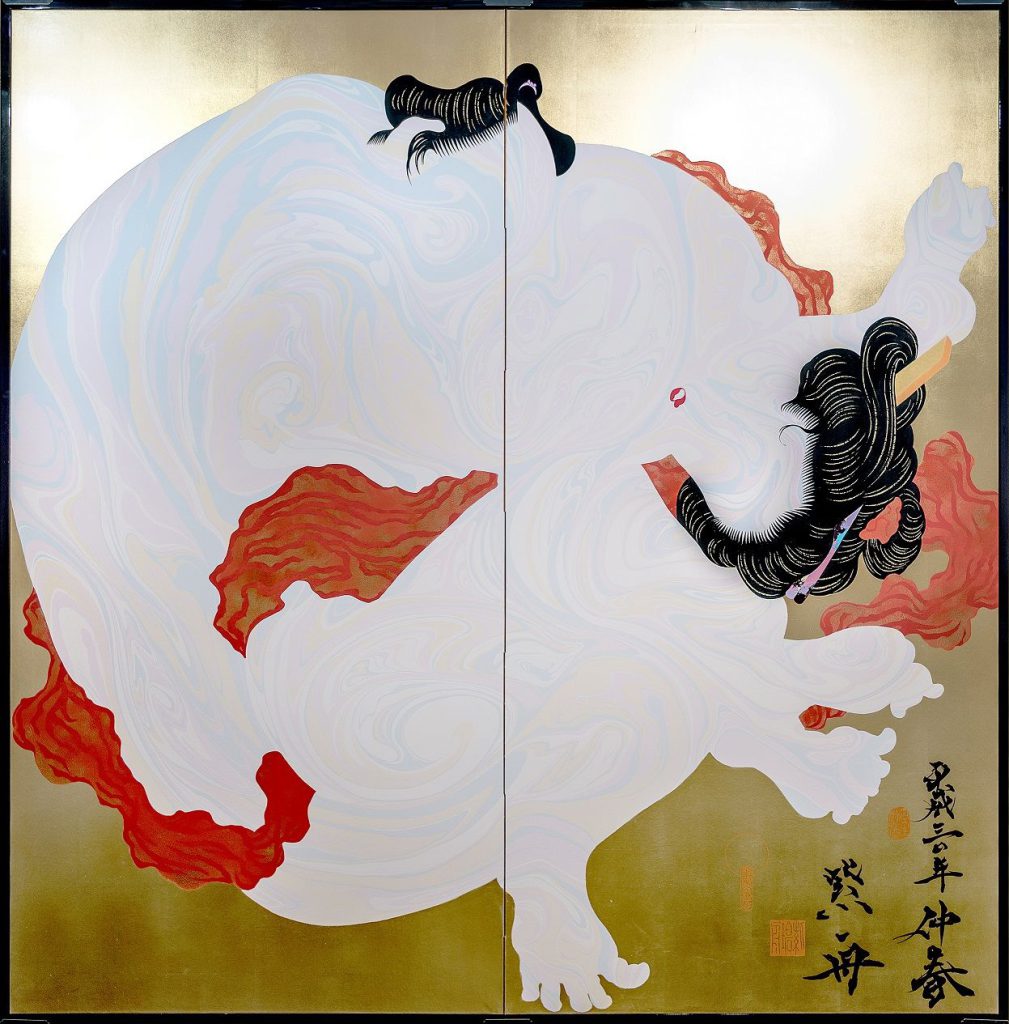
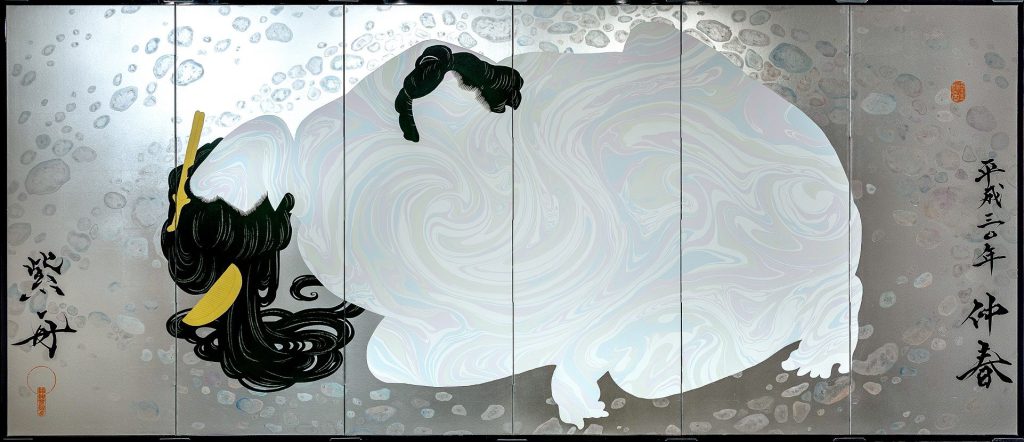
During the Edo period, shunga, a form of ukiyo-e, was widely enjoyed from ordinary townspeople to the upper classes and developed into a distinctive Japanese culture. In Shungu Higa, Sisyu frees the outlines of ukiyo-e from the plane, redrawing them as ink traces and reconstructing them as the contours of three-dimensional sculpture. Changes in viewing angle produce an effect resembling the misregistration of a woodblock print. Only from one particular point do painting and sculpture overlap, allowing a concealed image to emerge. Just as people in the Edo period enjoyed shunga in private, this device lets each viewer alone discover its hidden form. Since the modern era, expression in Japan has been constrained by debates over whether such work is obscene or artistic. Sisyu deliberately takes on this challenge with the aspiration that her generation can bring this long-running, unproductive debate to an end and pass on a free and richly creative environment to the next. Art plants seeds of doubt in accepted beliefs and conventions. It expands thought and offers new perspectives beyond what has been taken for granted. That moment is the essence of art and the reason artists exist.

CI & Logos
Logo / Corporate Identity

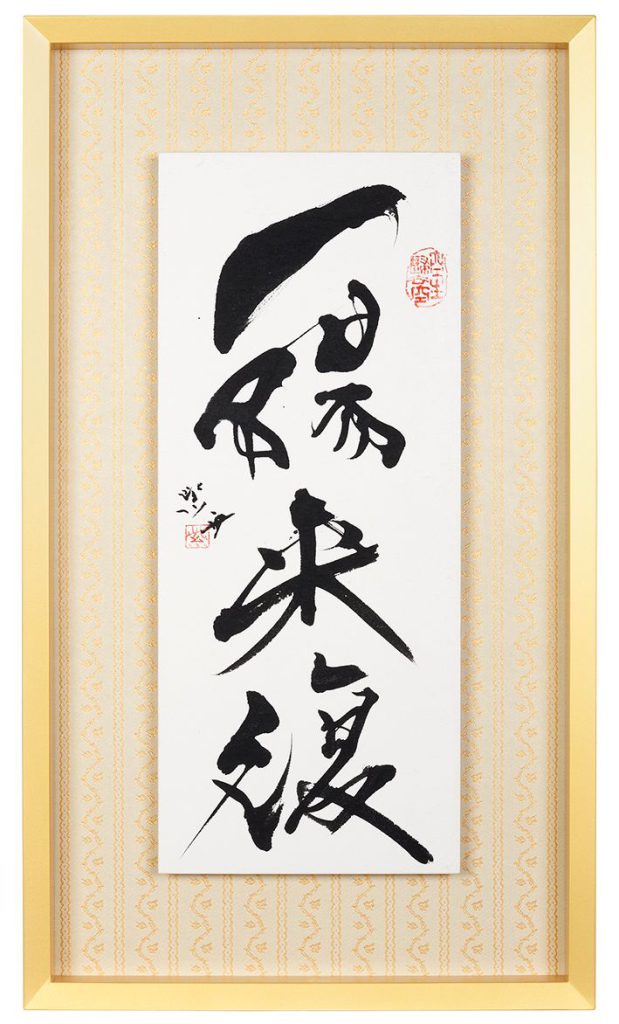
Through dialogue, Sisyu personally draws out the values cherished by a company or brand, its history and achievements, and its hopes for the future, giving visible form to their essence. She seeks the closest possible alignment between the intentions of the client and the resulting form, with no contradiction between them. Unbound by established calligraphic conventions, she explores expressions that go beyond both expectation and imagination. Her aim is to create an authentic, unique logo that feels new in every era.

Client Work

Through direct dialogue with each client, Sisyu draws out the thoughts and wishes held within words and creates unique calligraphy that gives them form. Throughout the process, she presents multiple proposals, continues the conversation, and takes up the brush again and again. At times, she makes as many as 500 studies before arriving at the final work. Her brushes are specially commissioned from a brushmaker in Yoshino. Her paper is washi by Living National Treasure Ichibei Iwano. She repeatedly blends her own ink to achieve the expression she seeks. To instill deep spirituality in the work, she also practices restraint, abstaining from meat and alcohol. Rather than relying on habit or technique, she devotes her entire being to every stroke, allowing the feelings behind the words to dwell within the calligraphy.