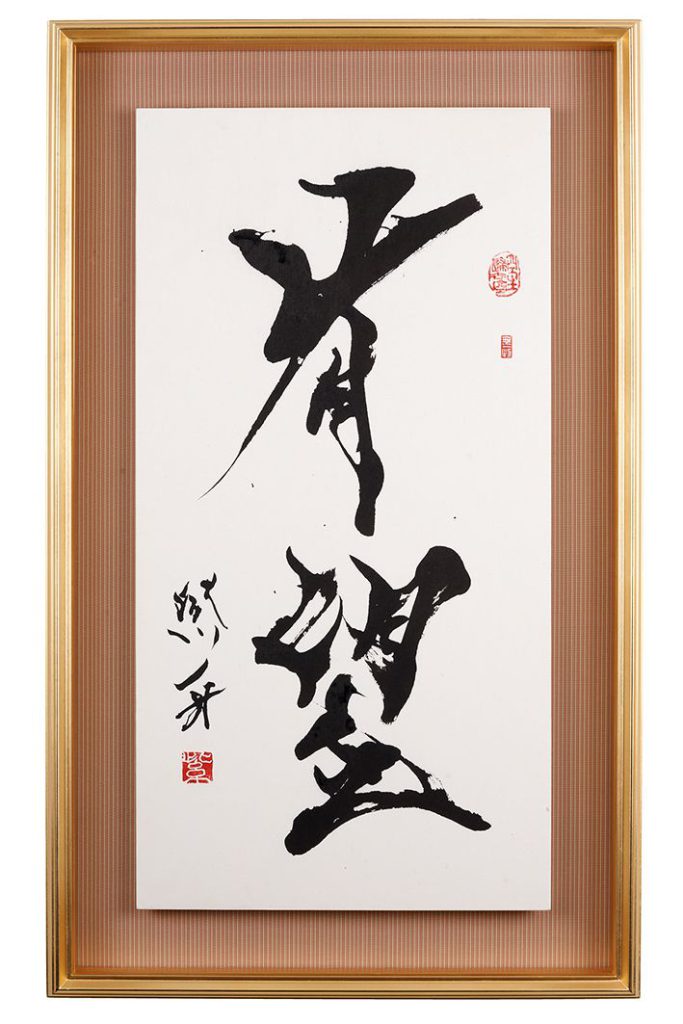
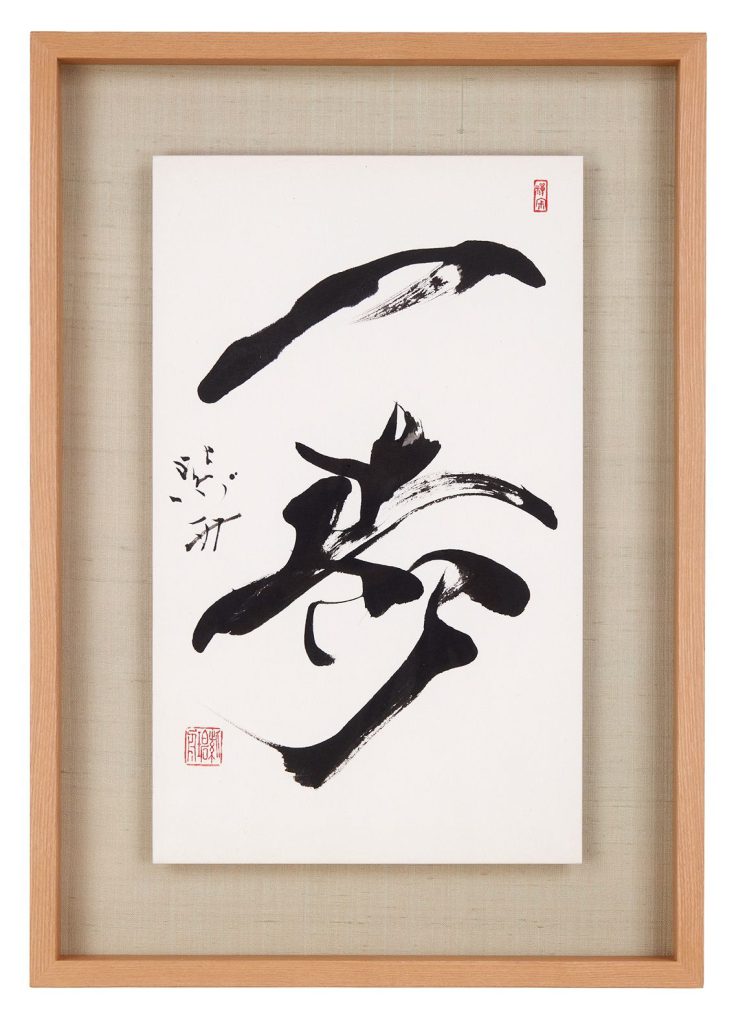
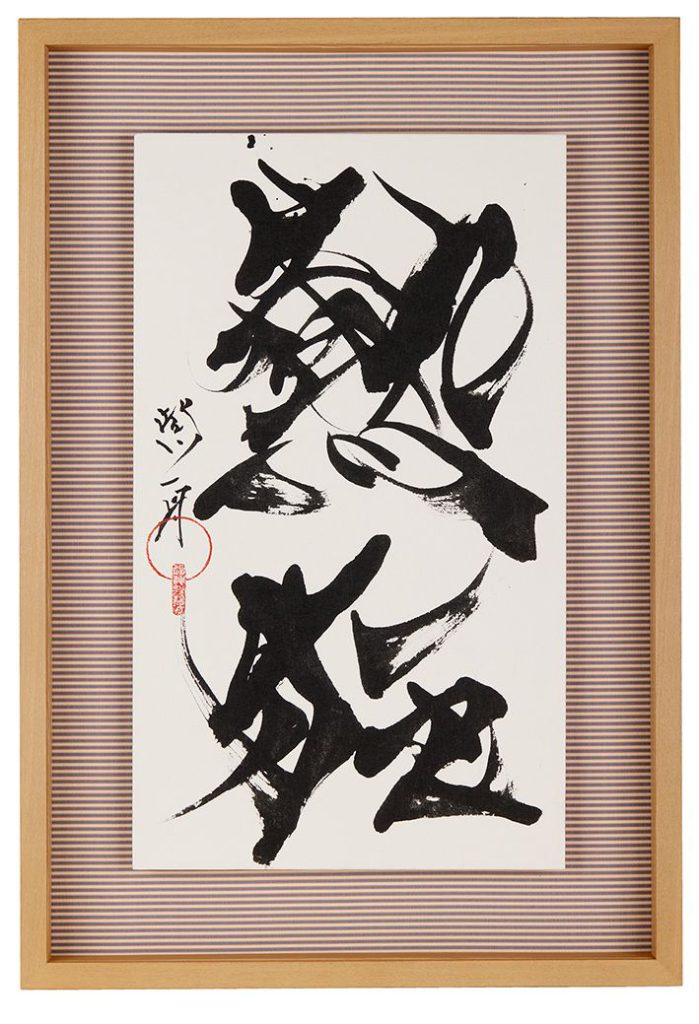
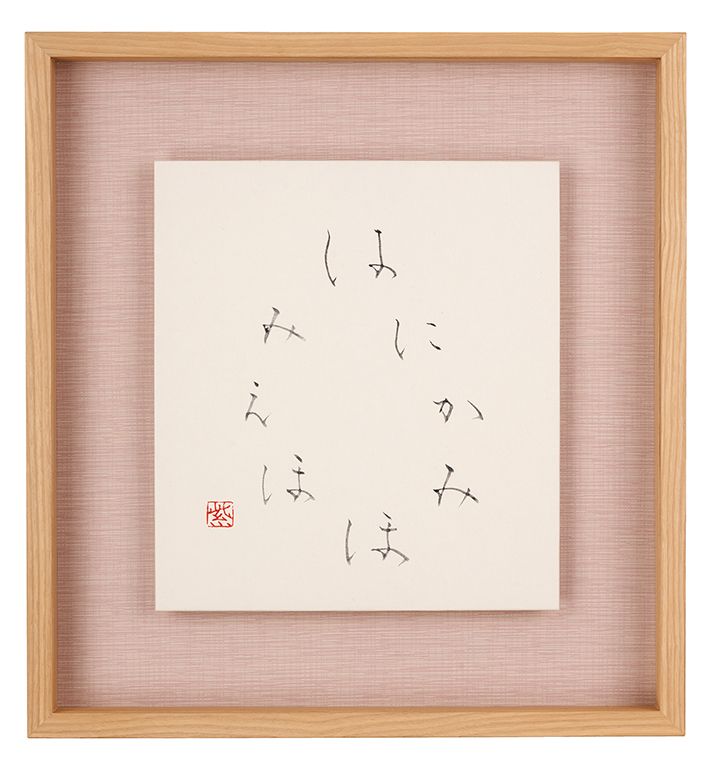
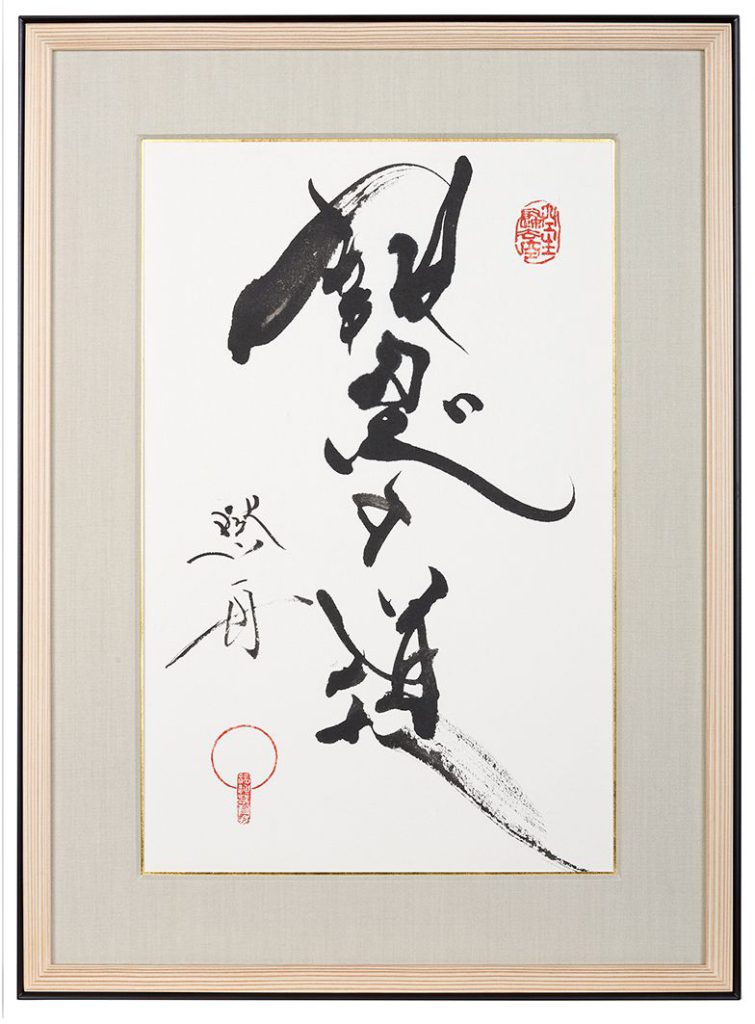
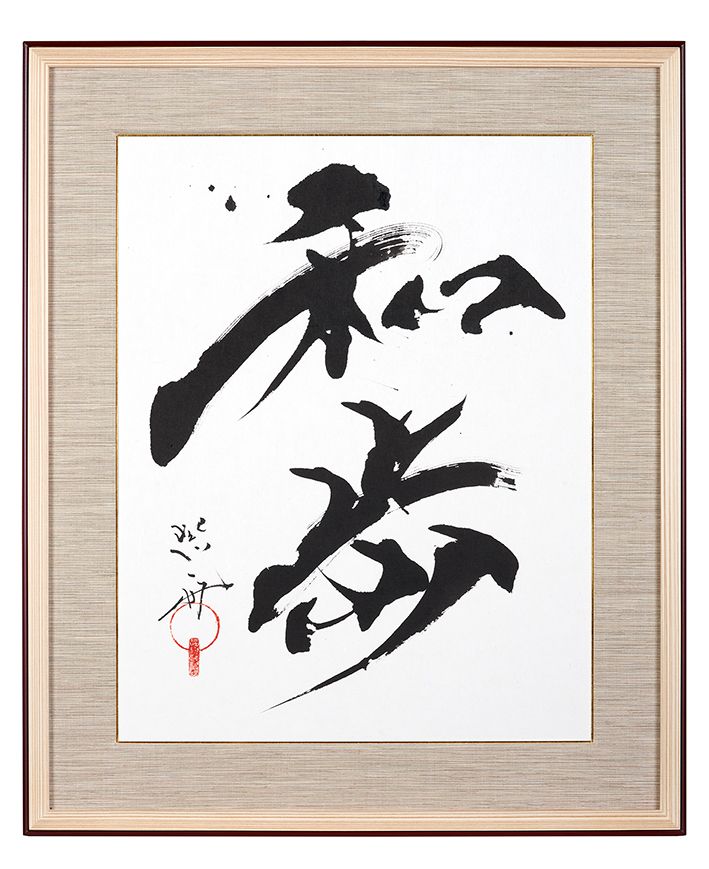
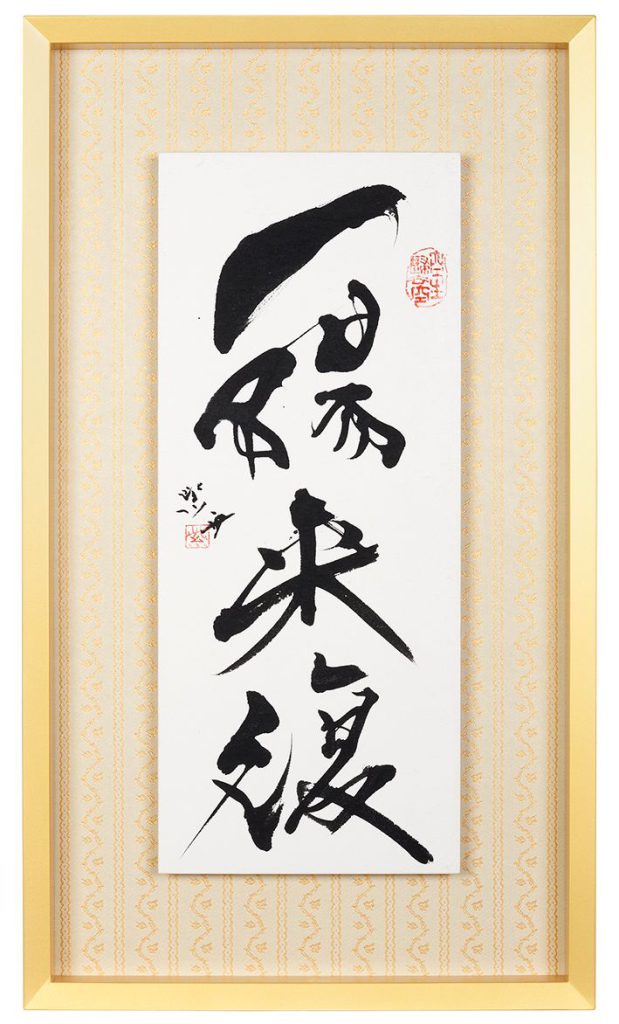
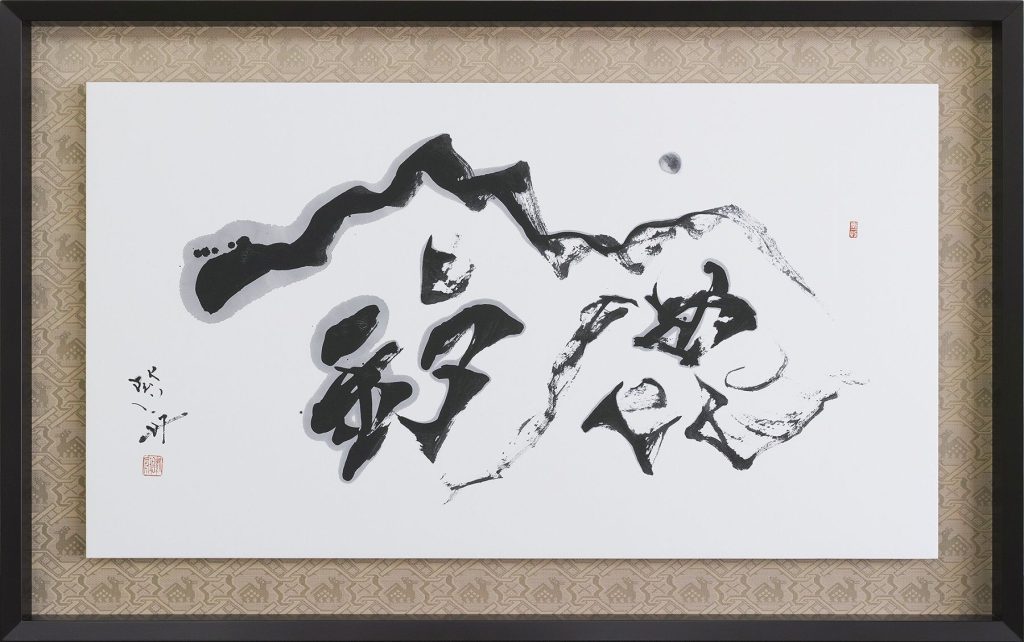
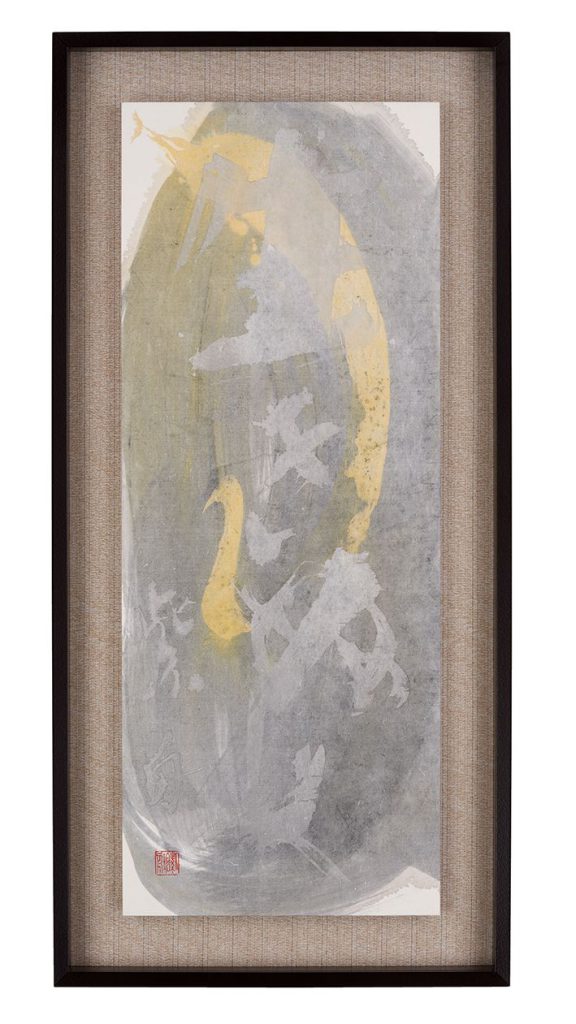
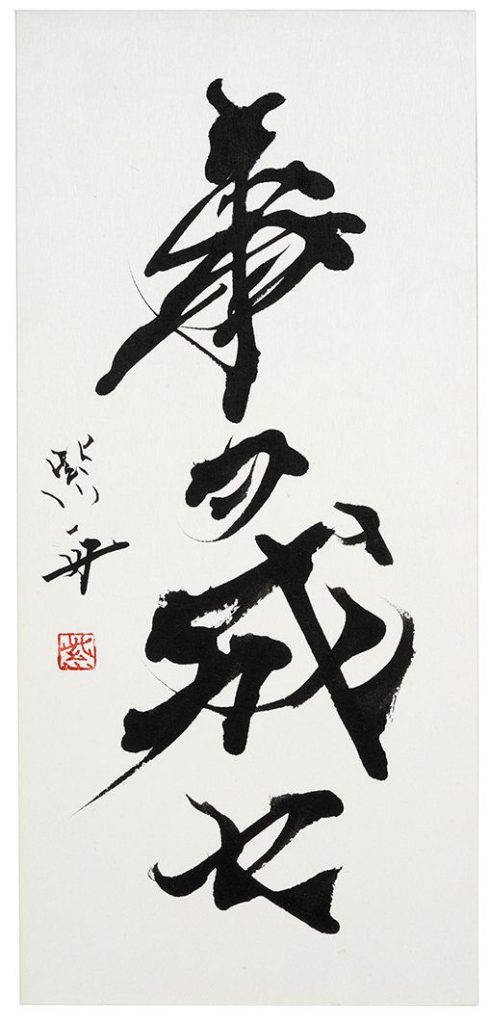
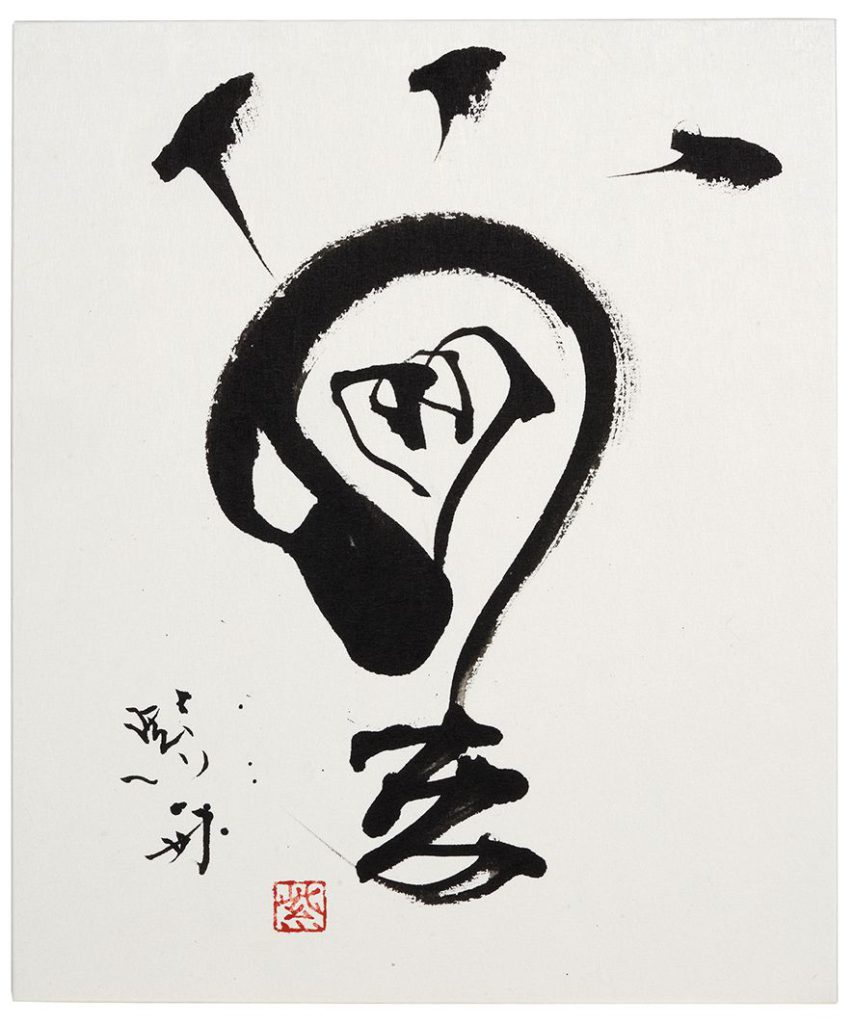
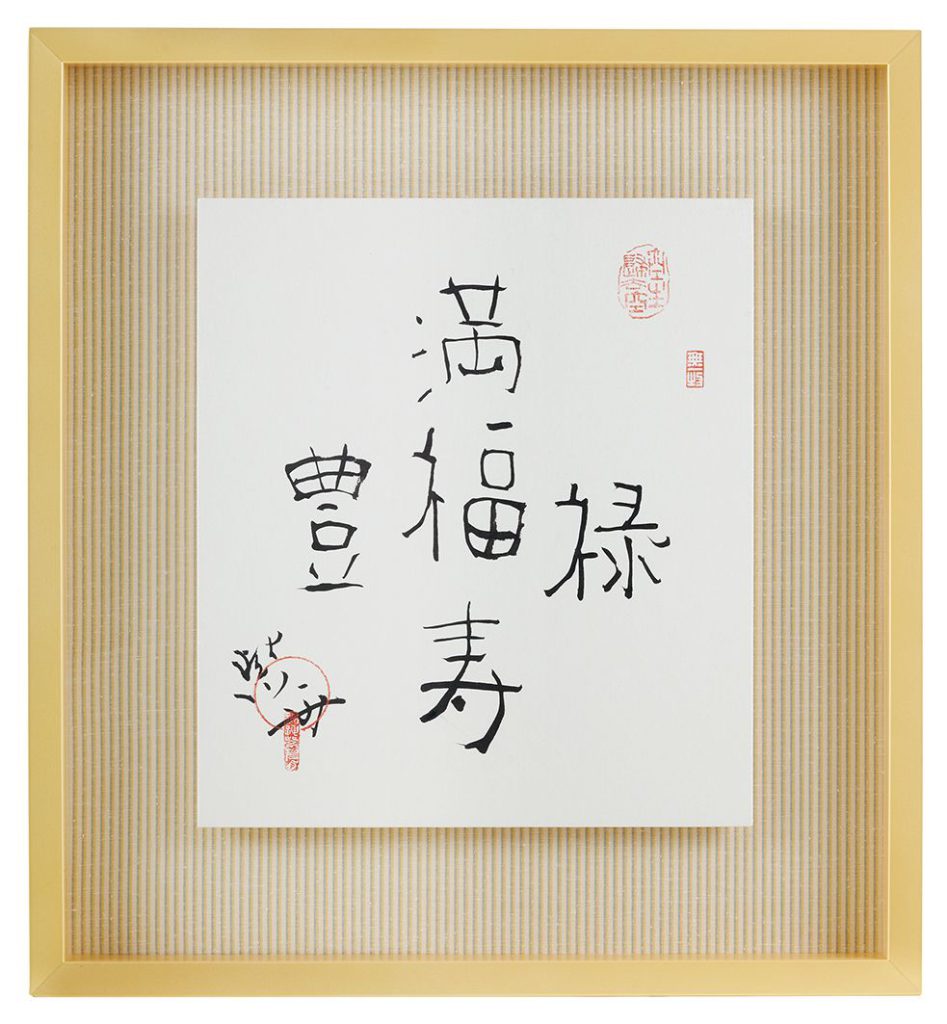
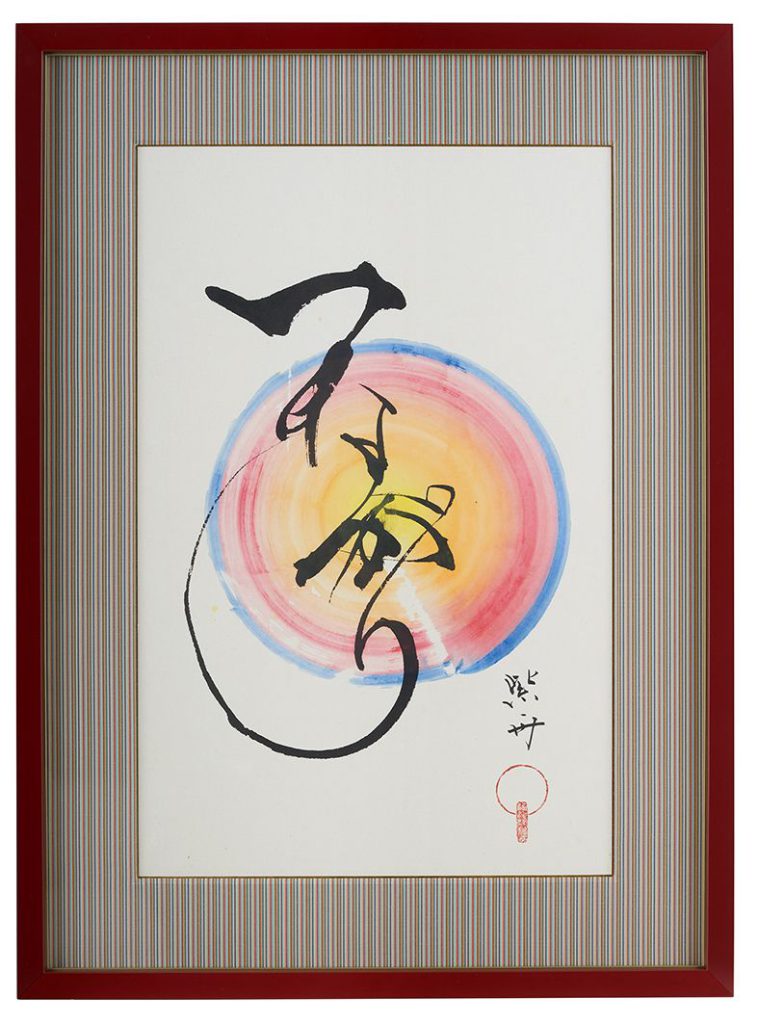
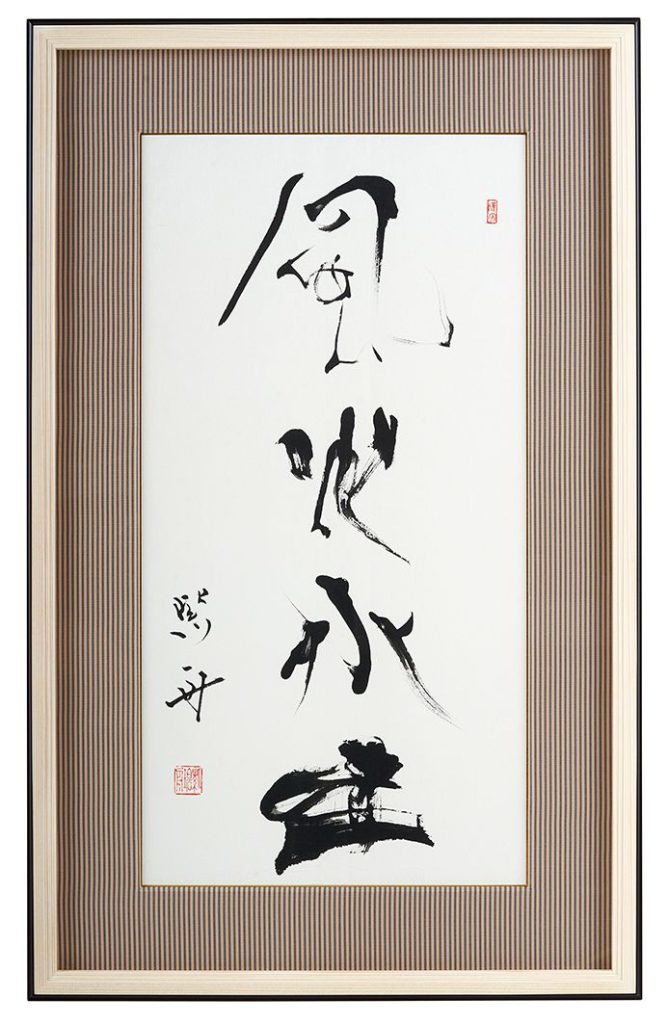
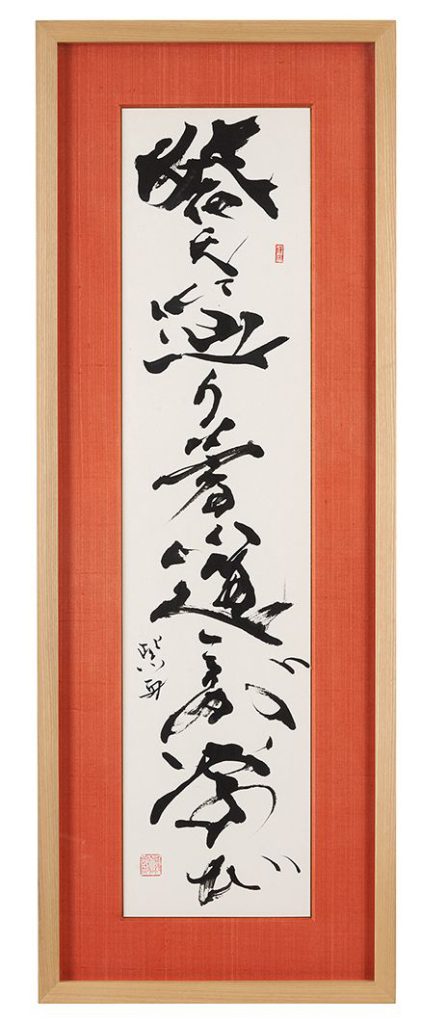
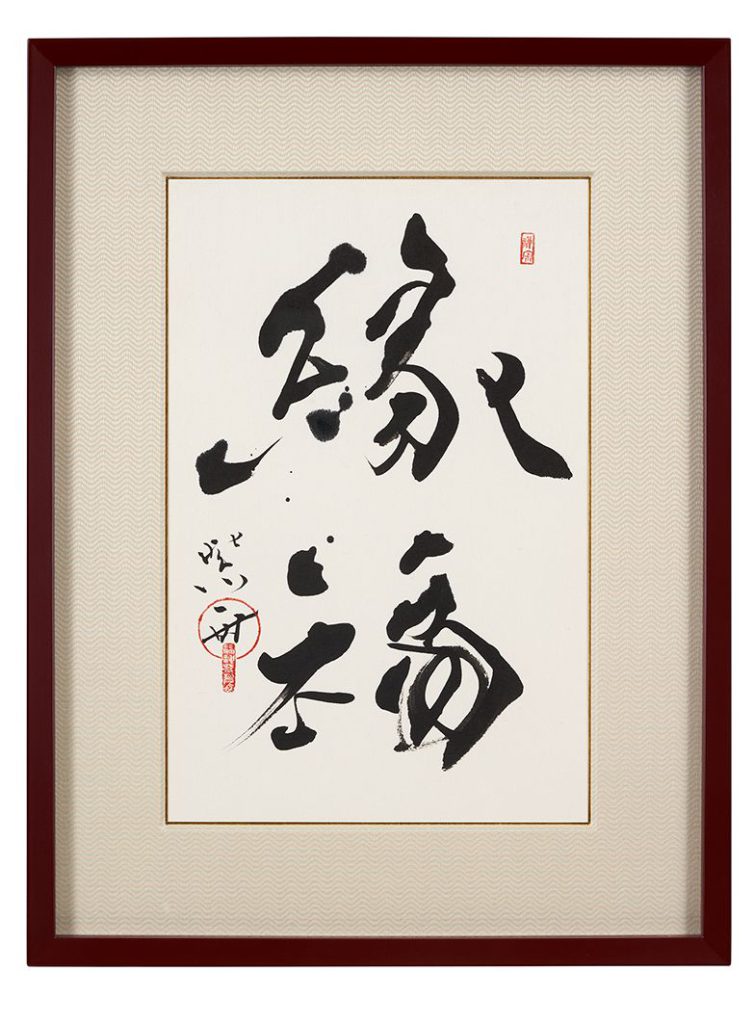
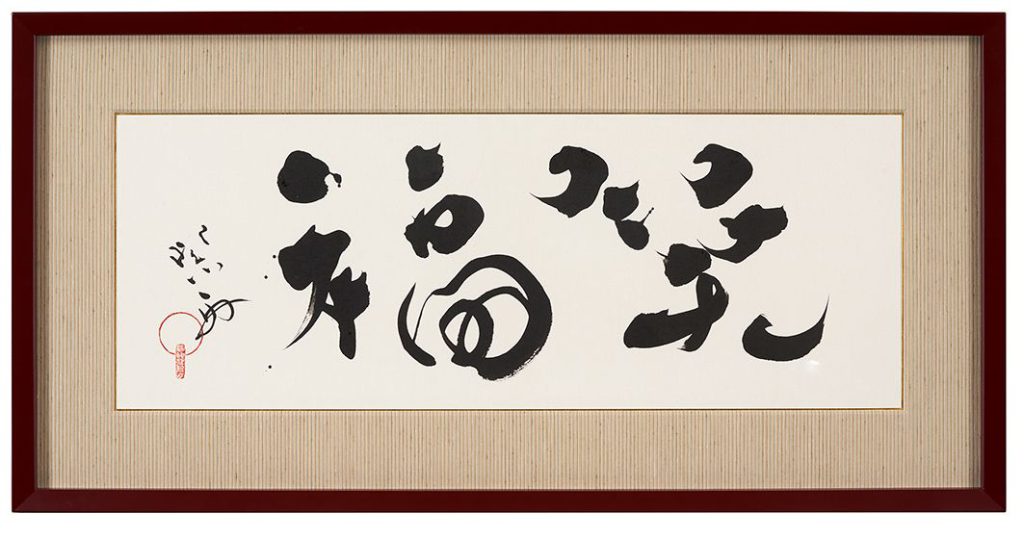
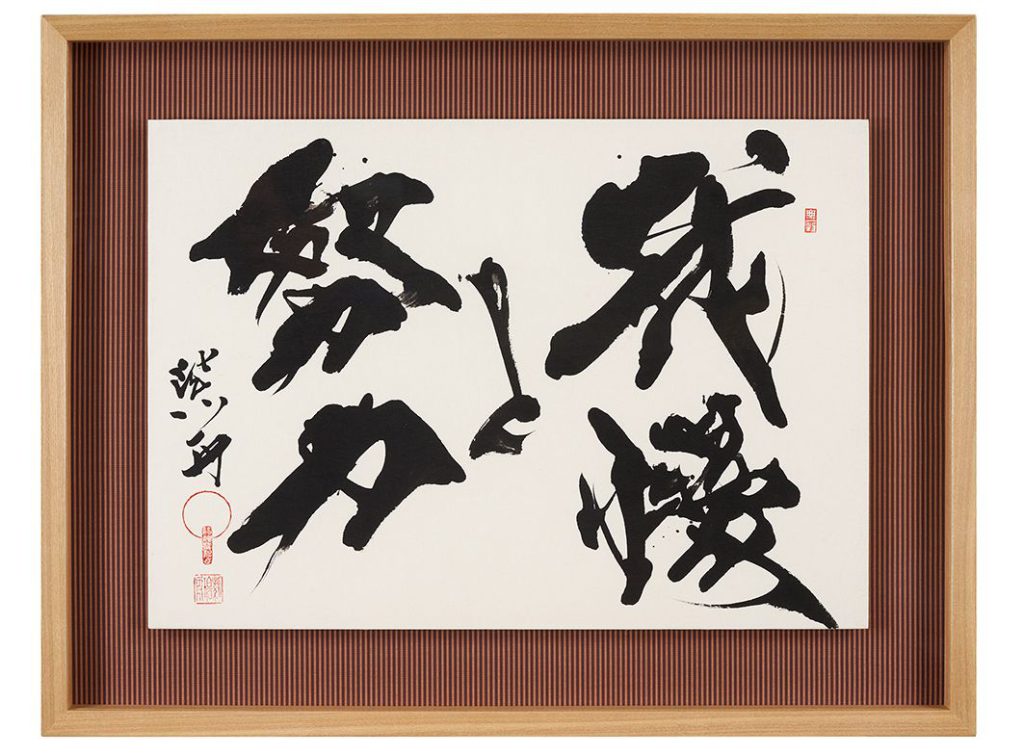
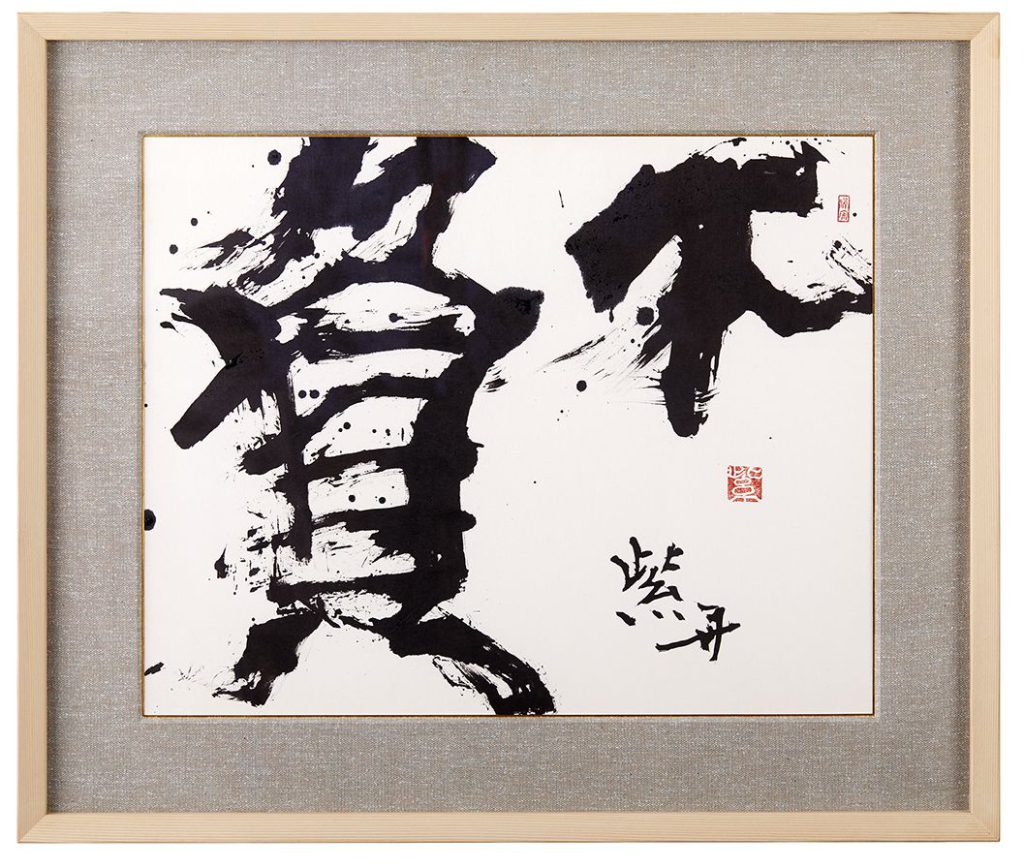
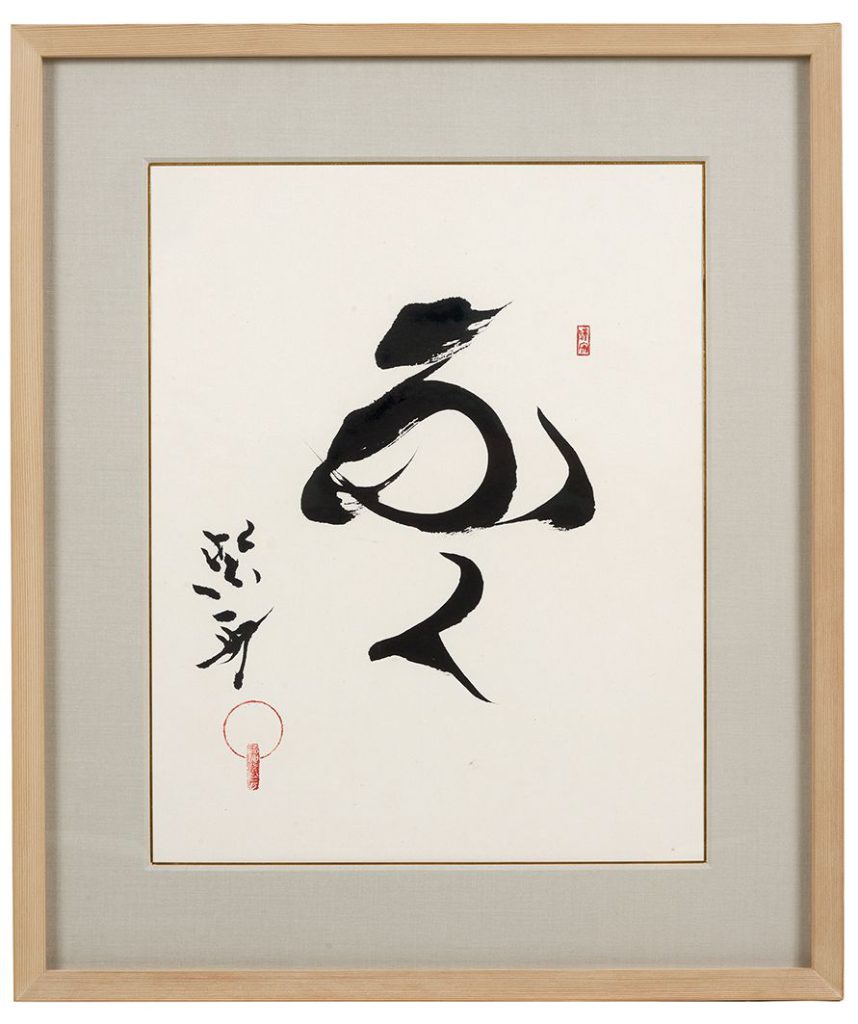
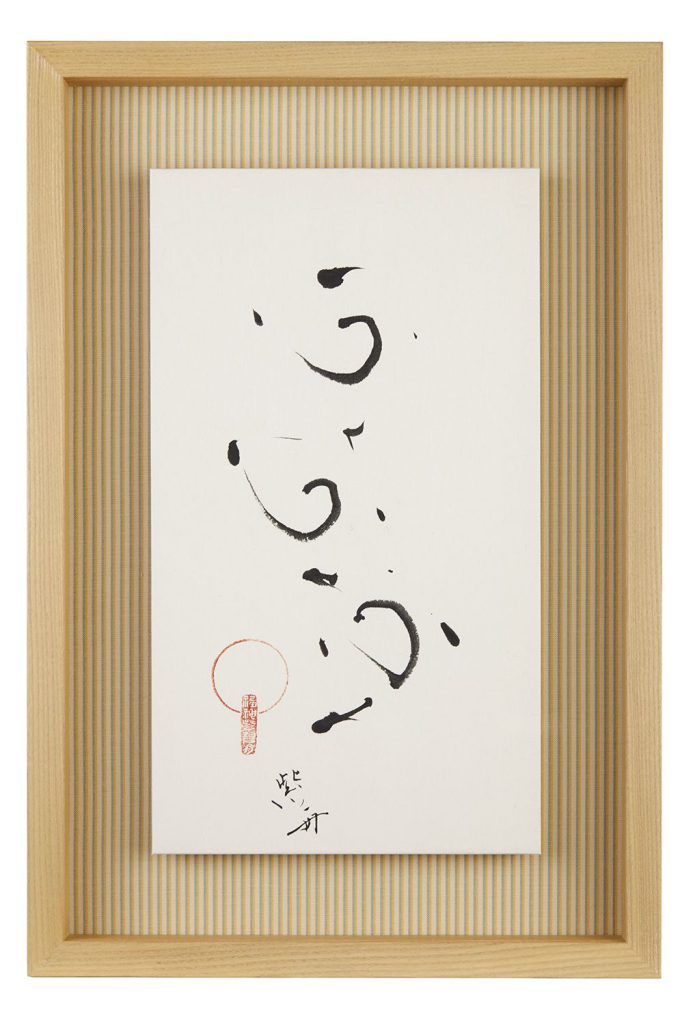
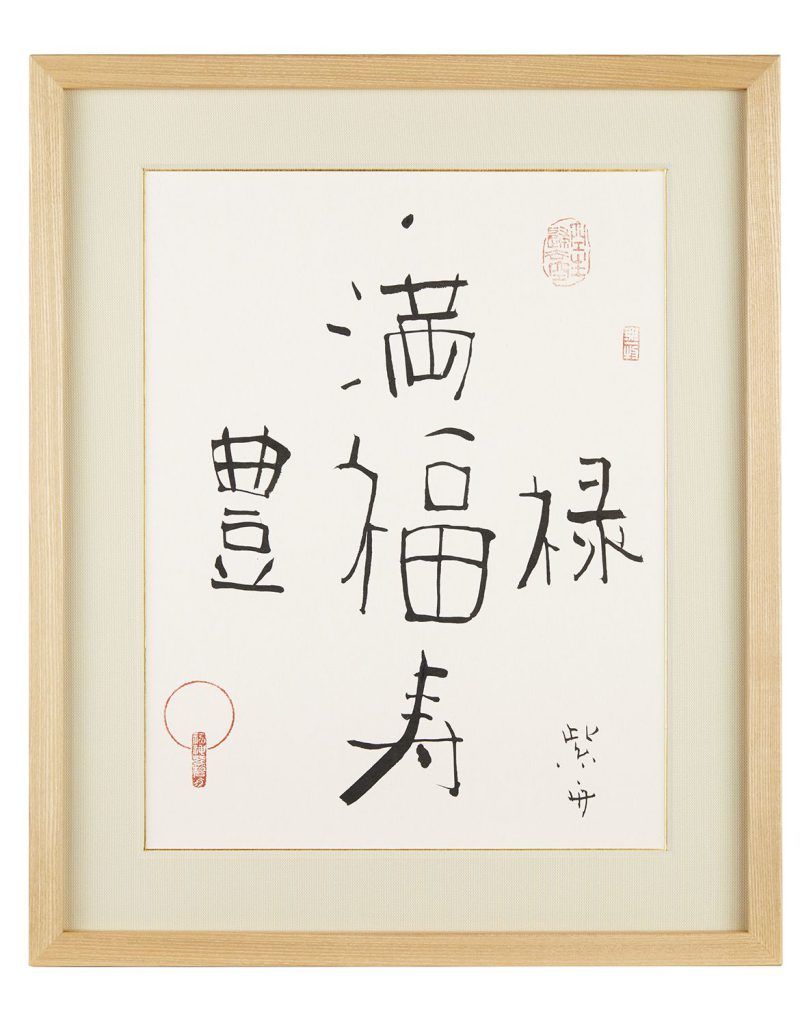
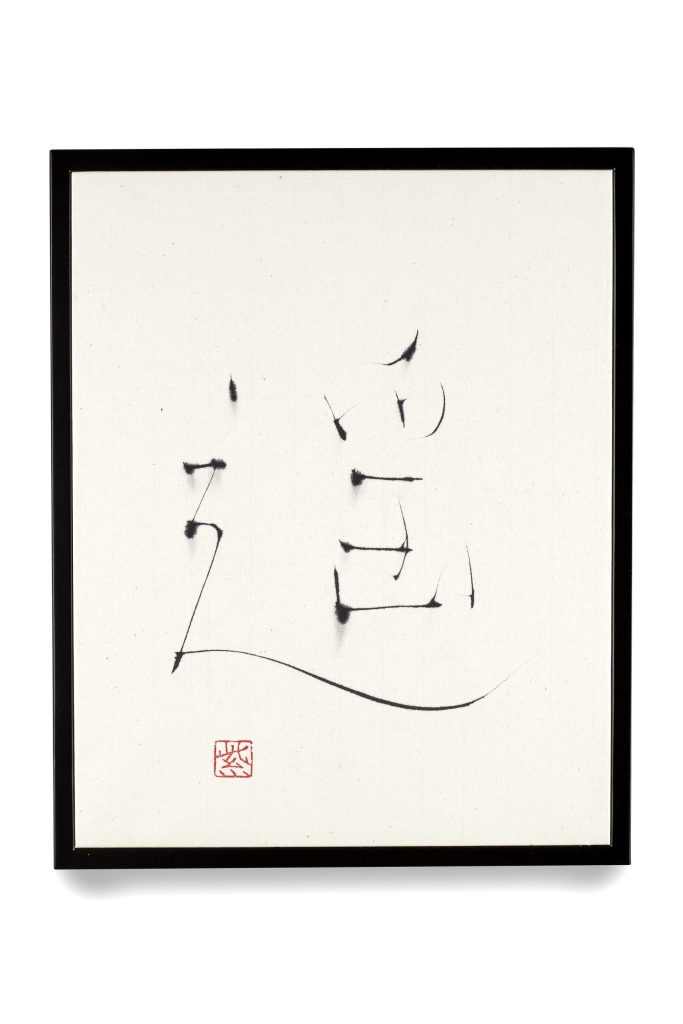
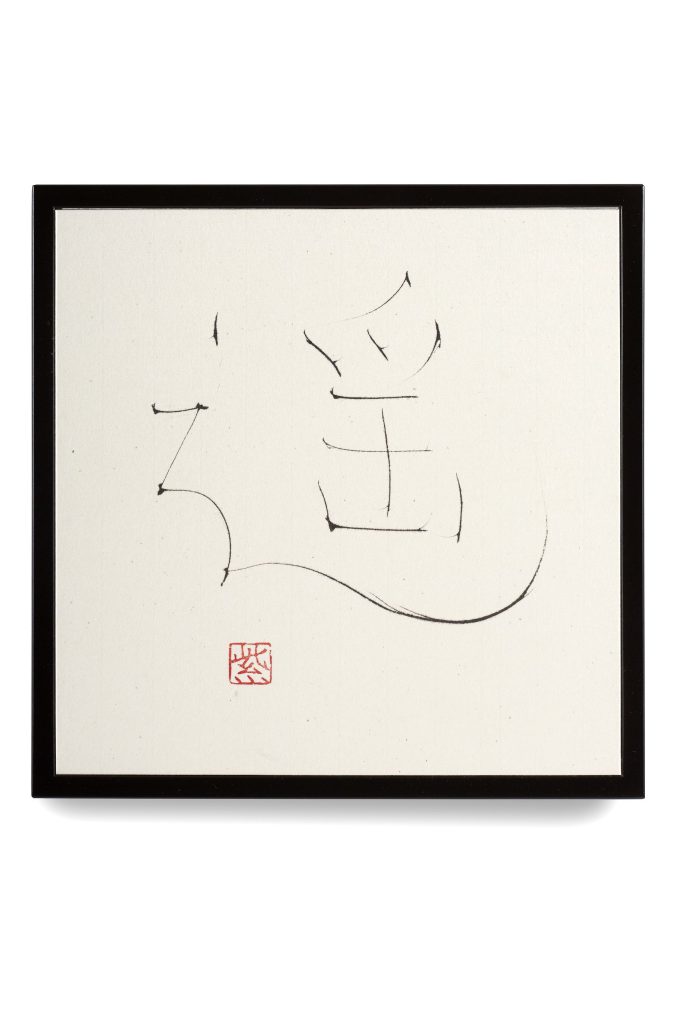
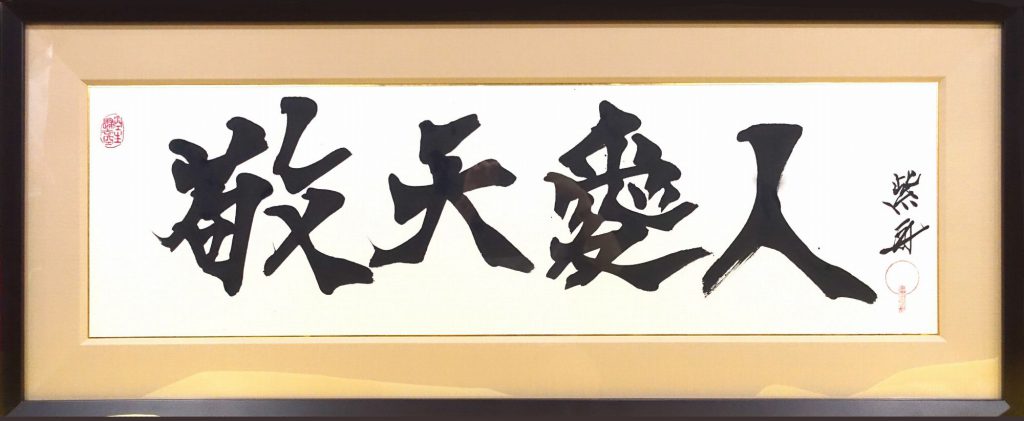
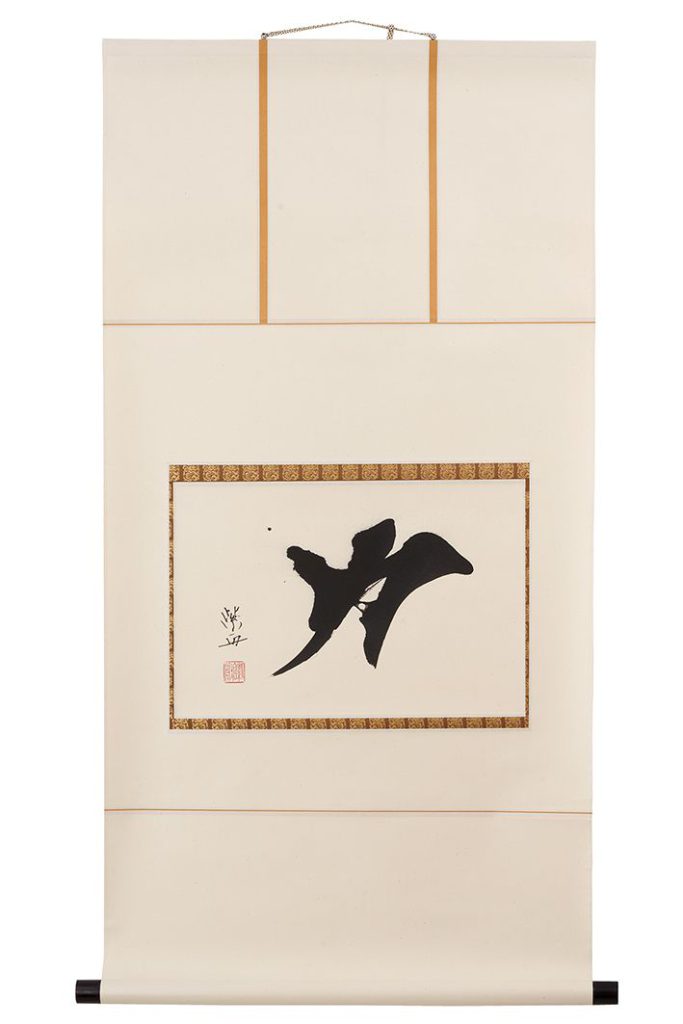
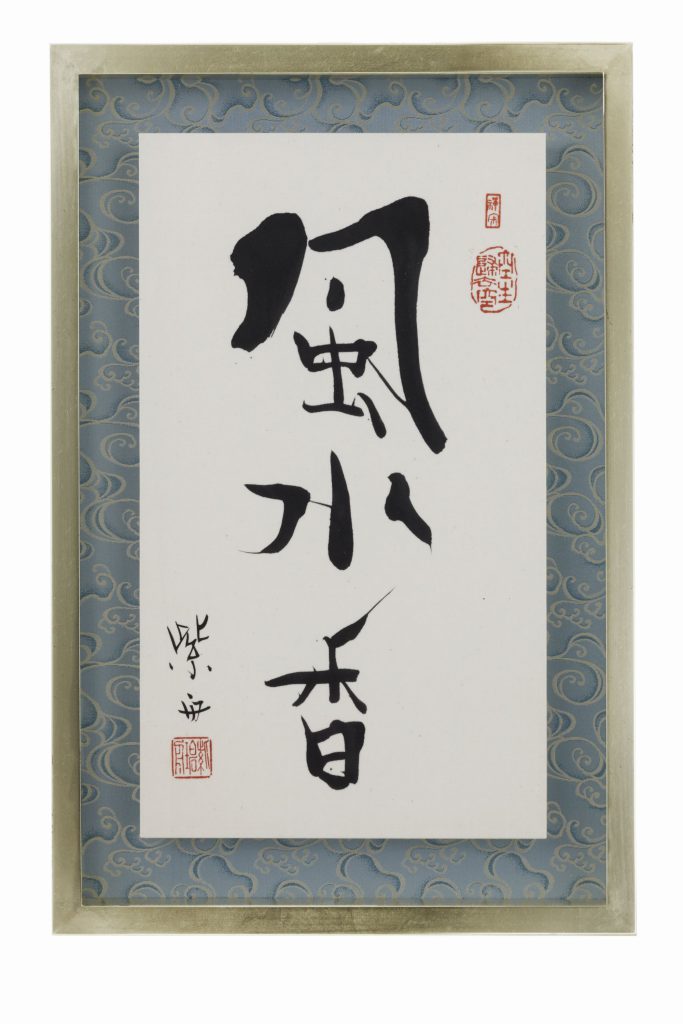
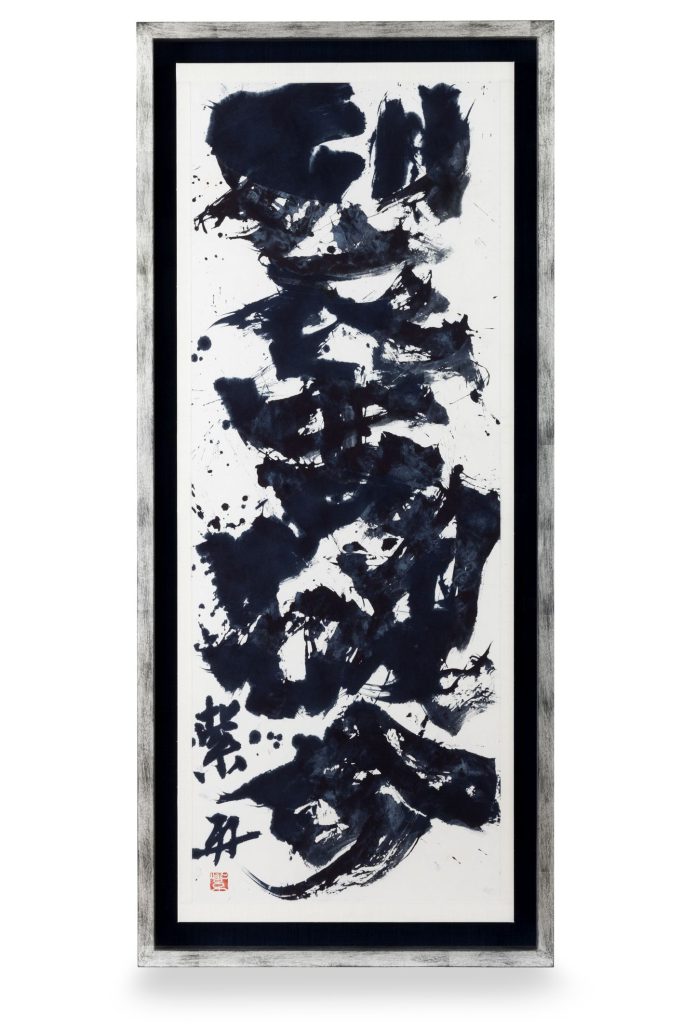
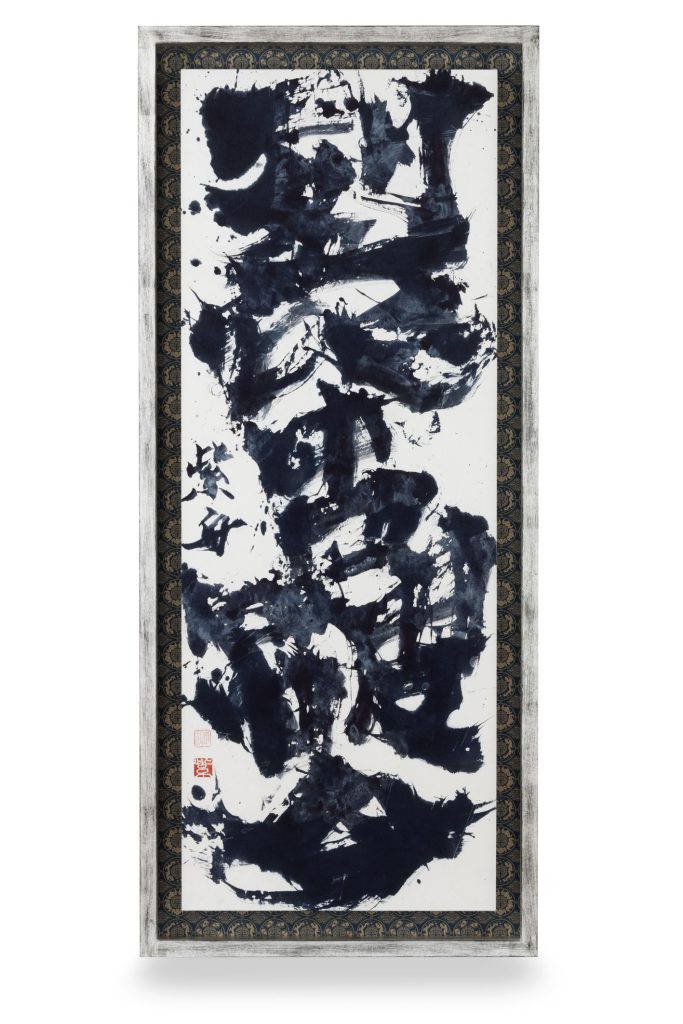
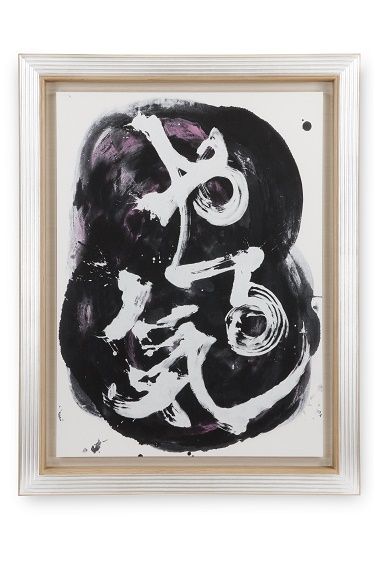
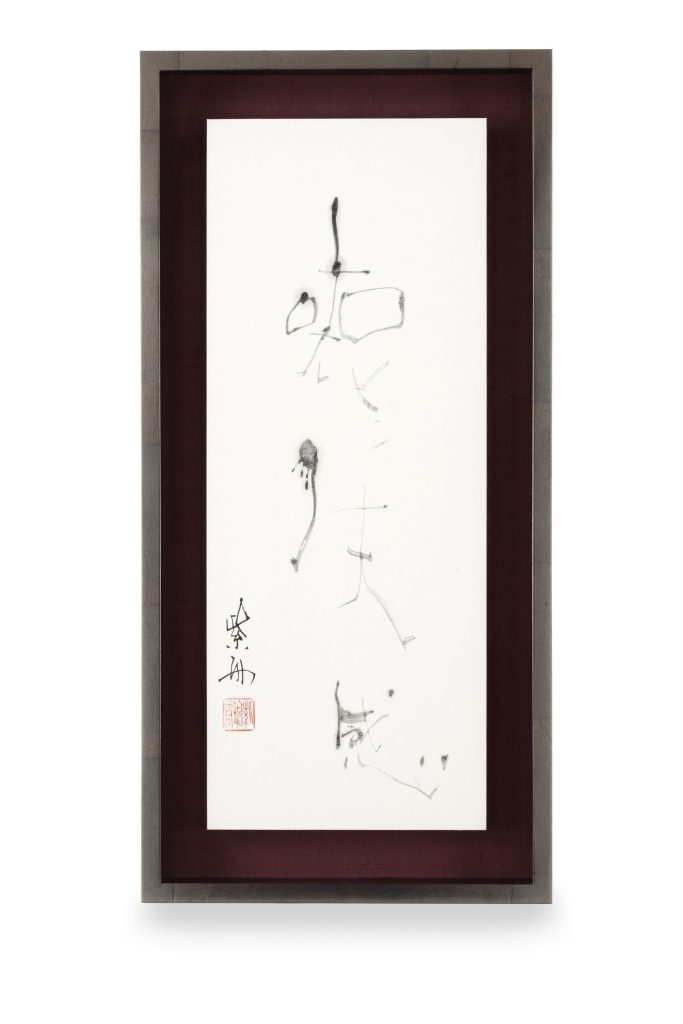
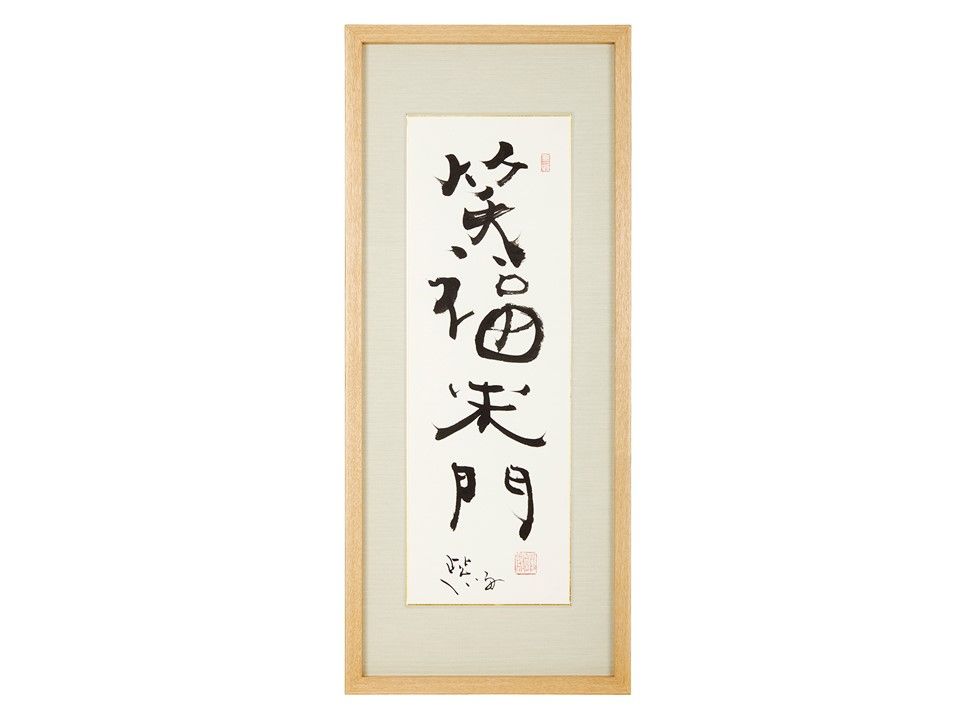
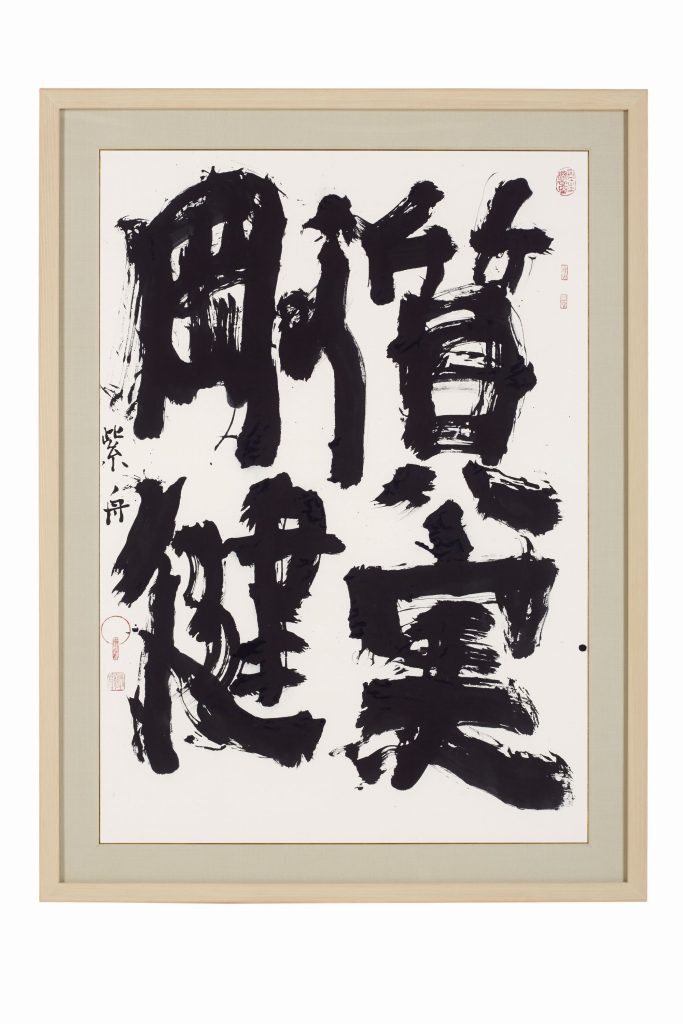
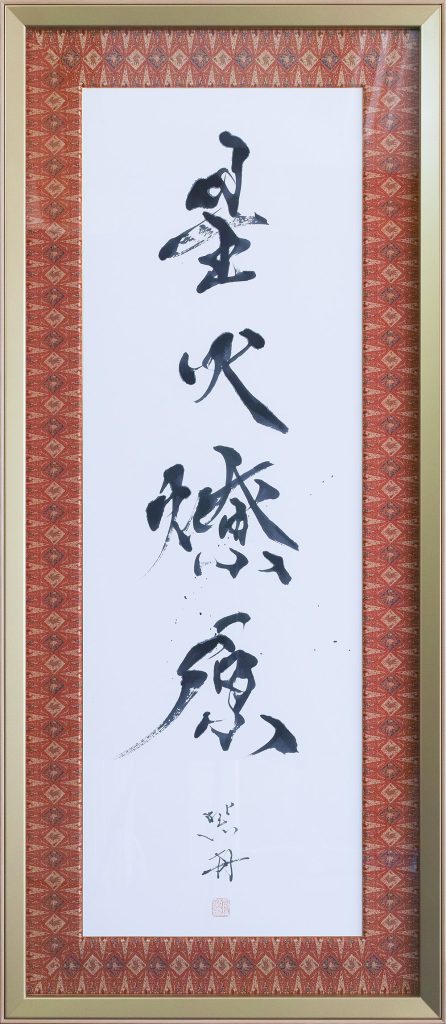
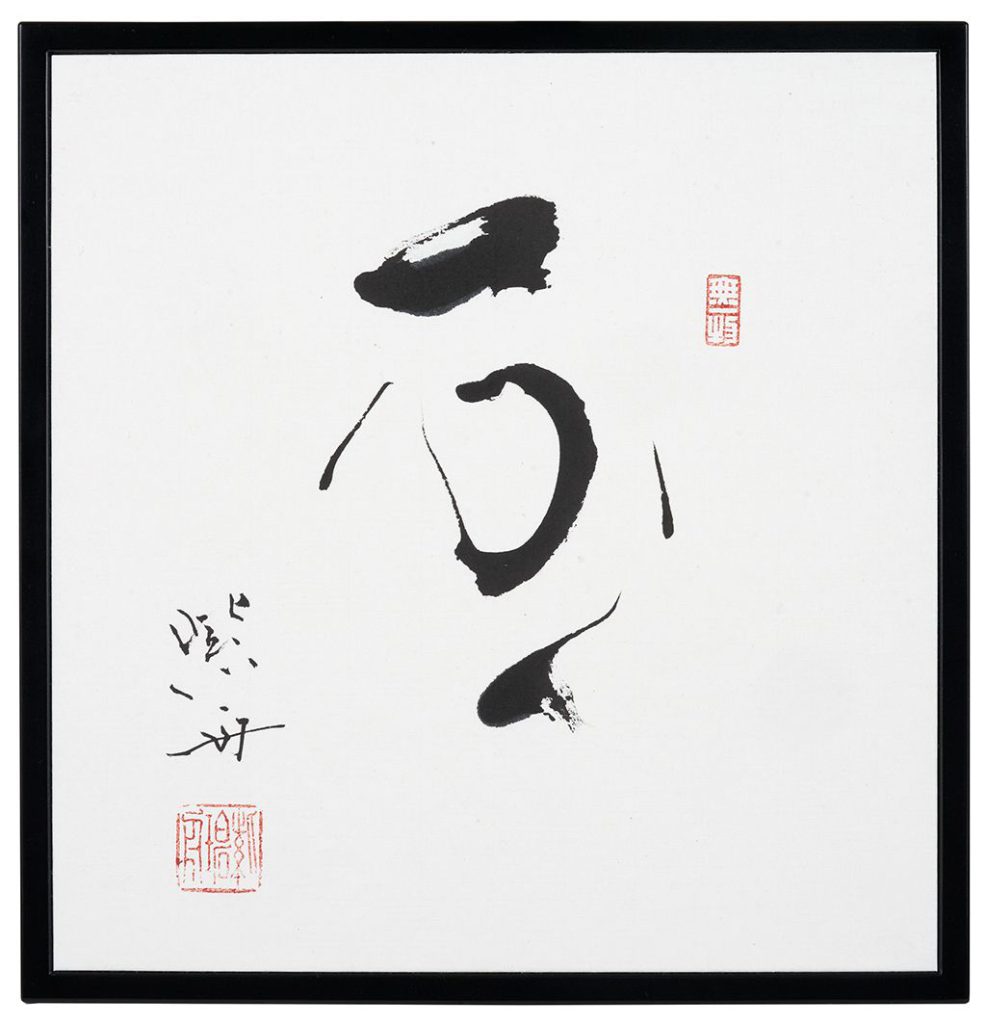
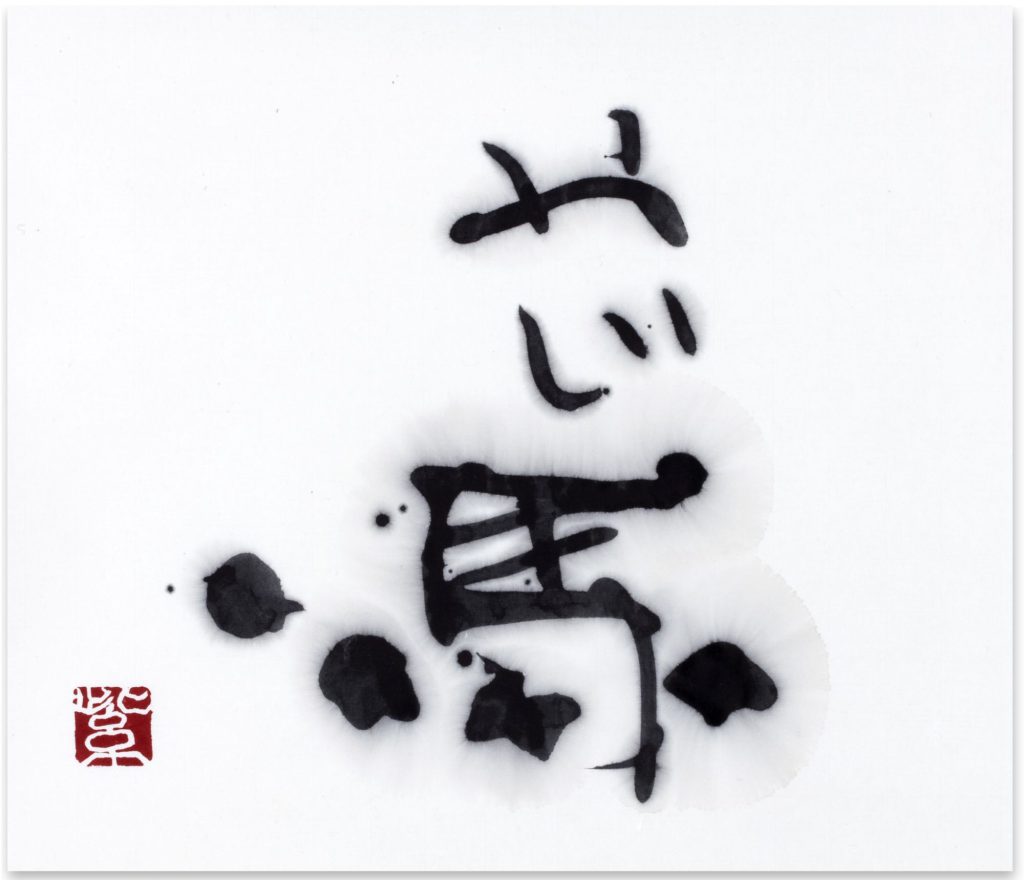
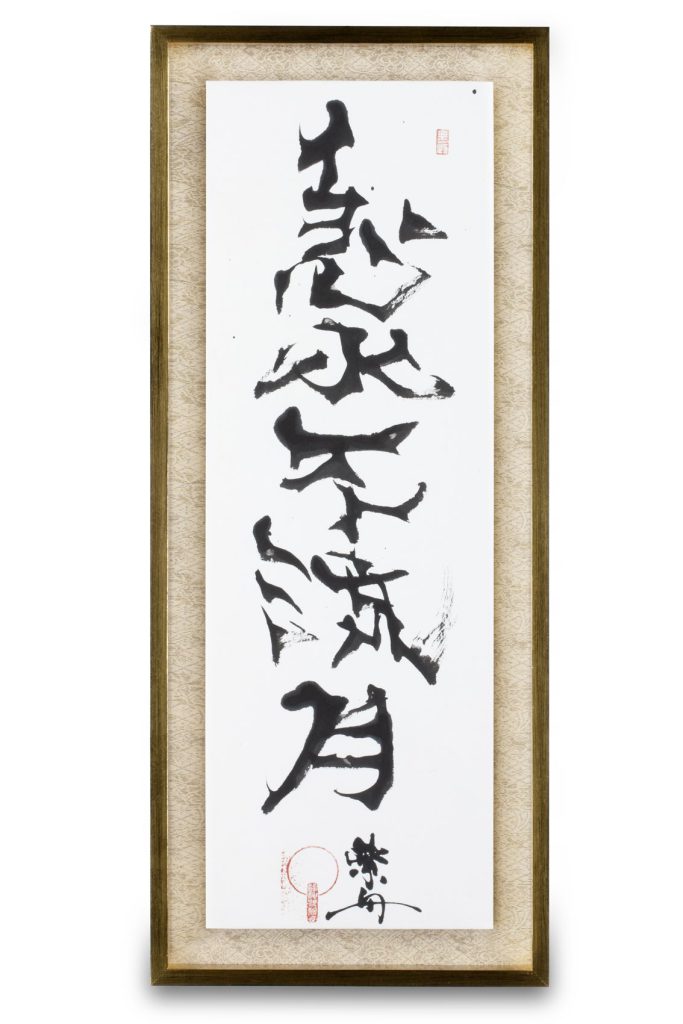
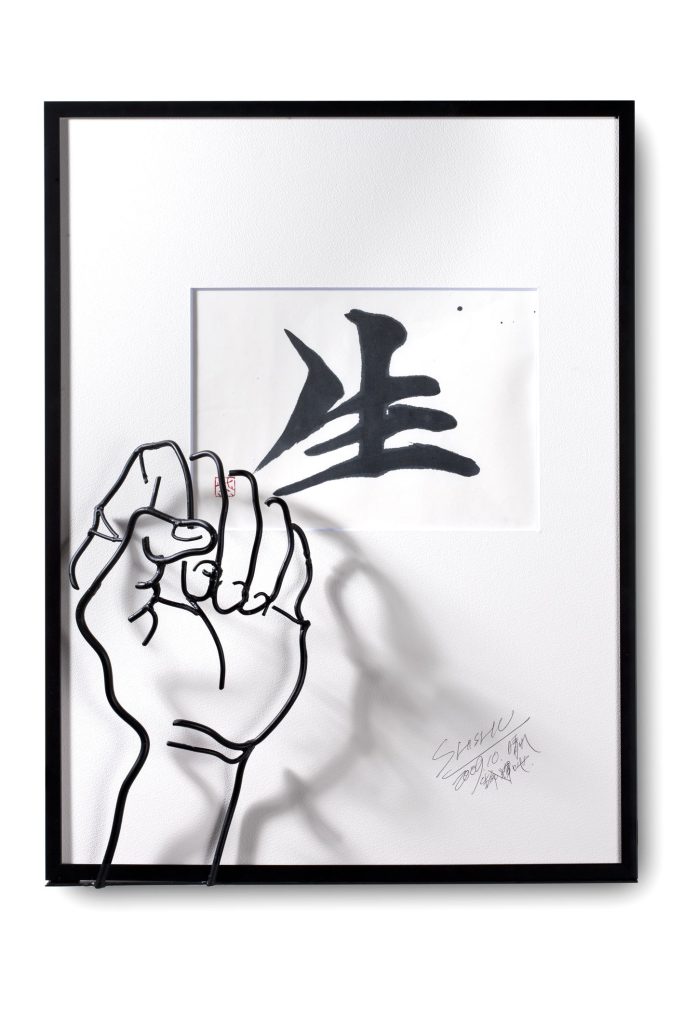
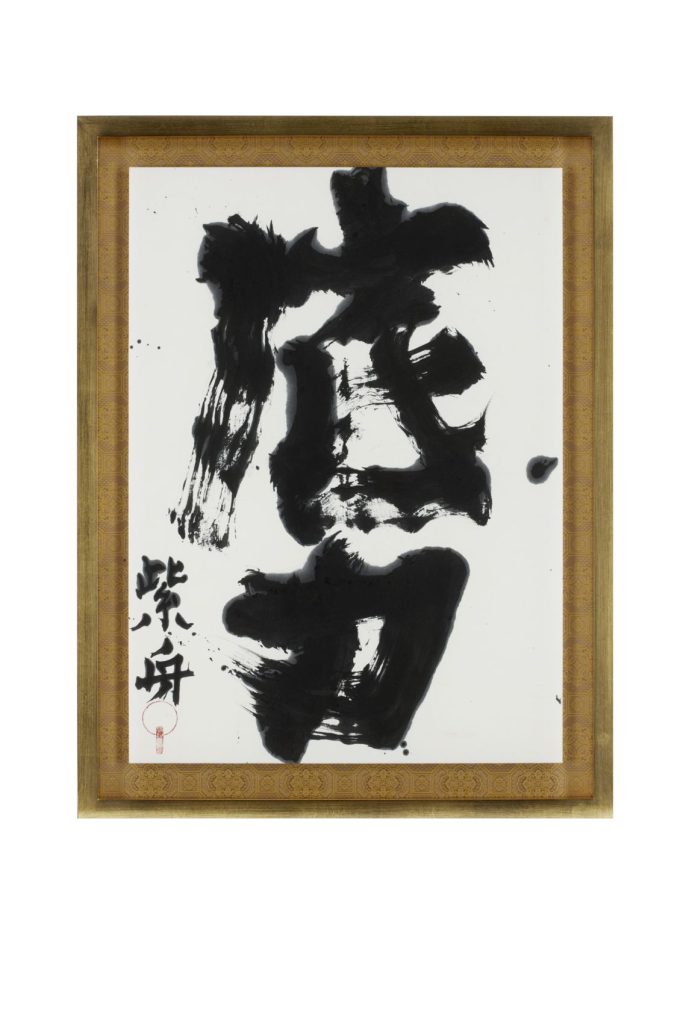
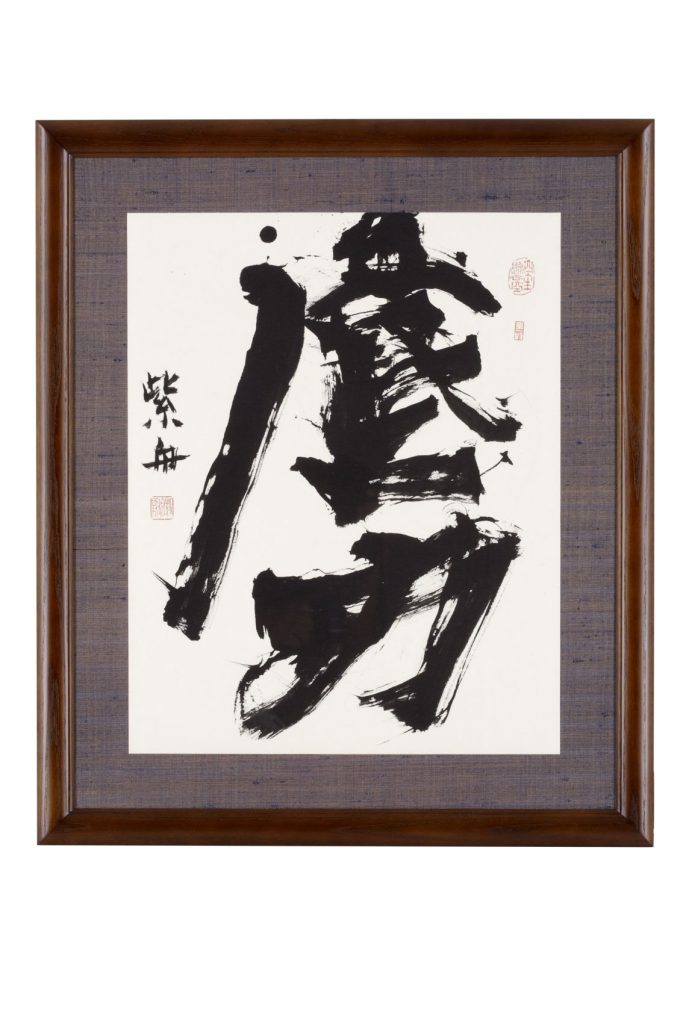
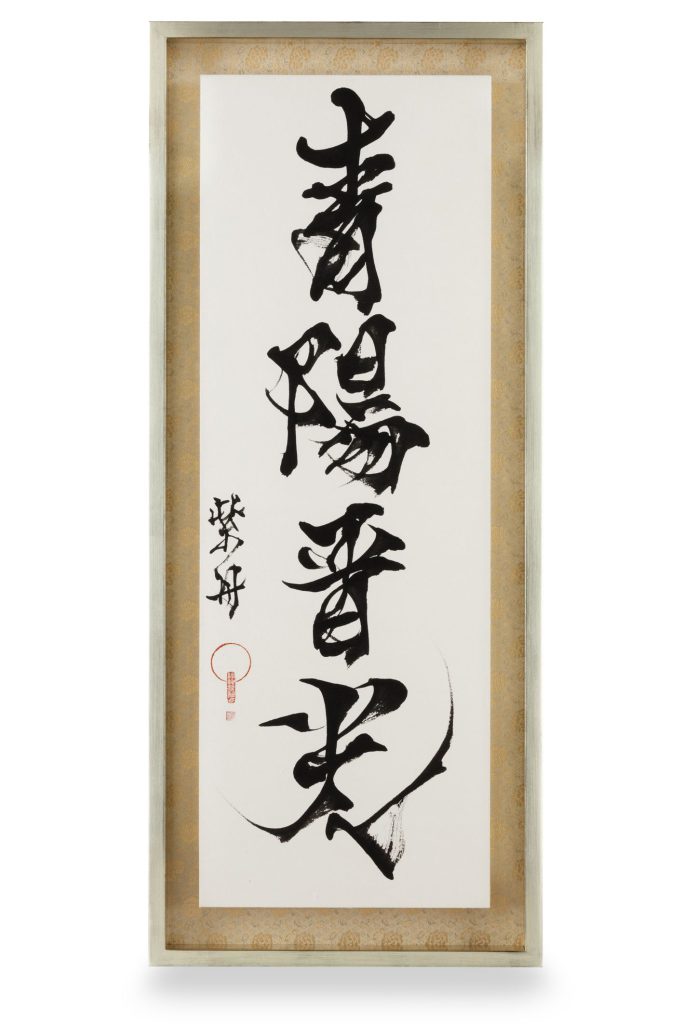
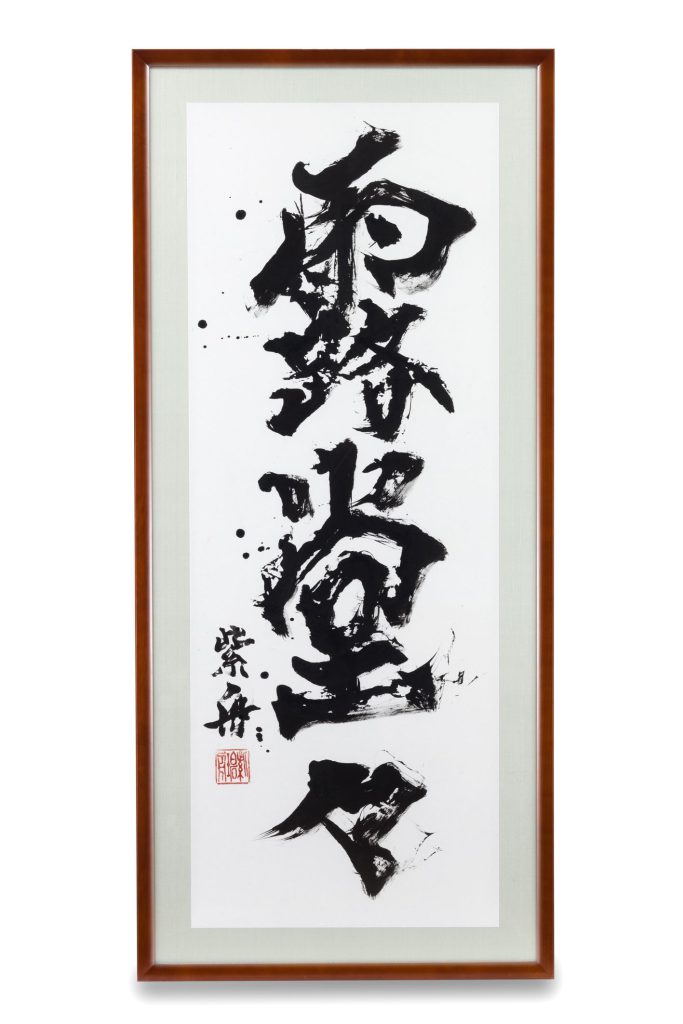
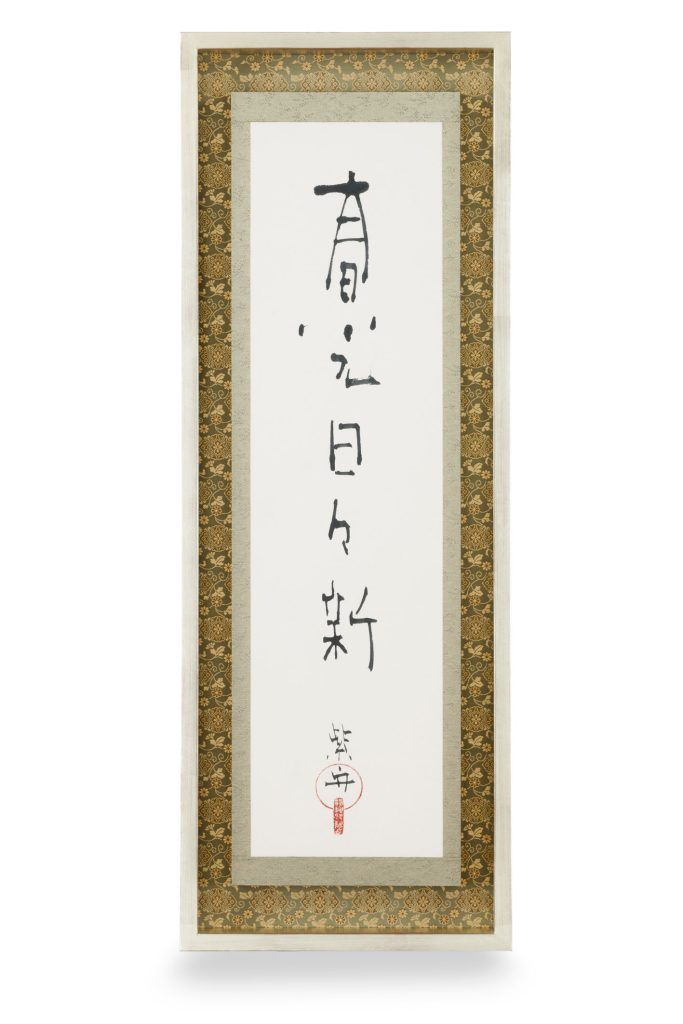
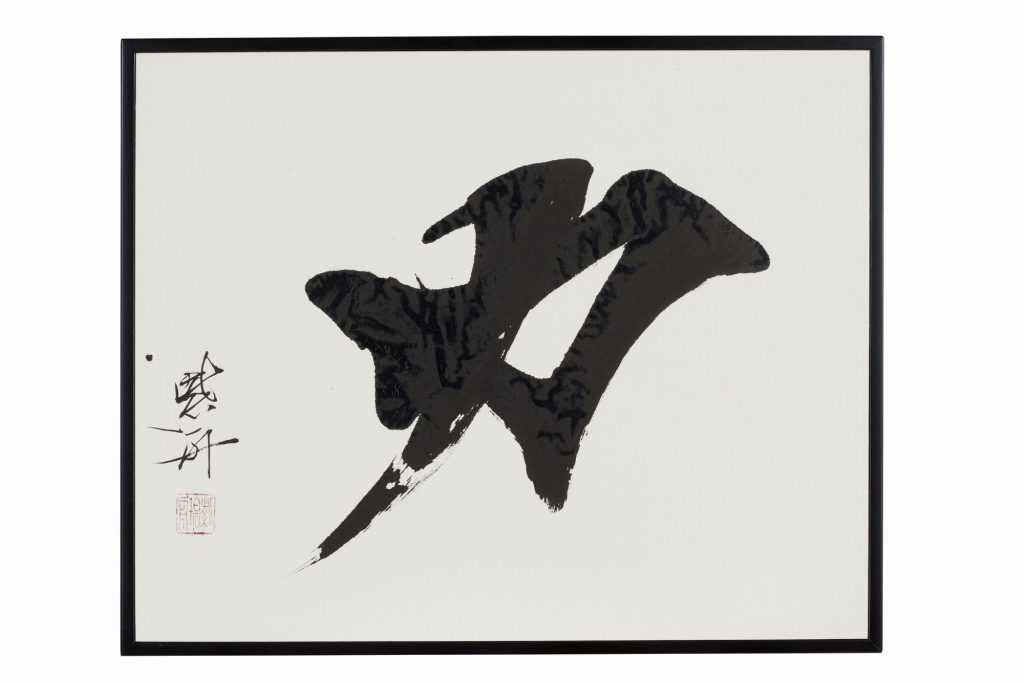
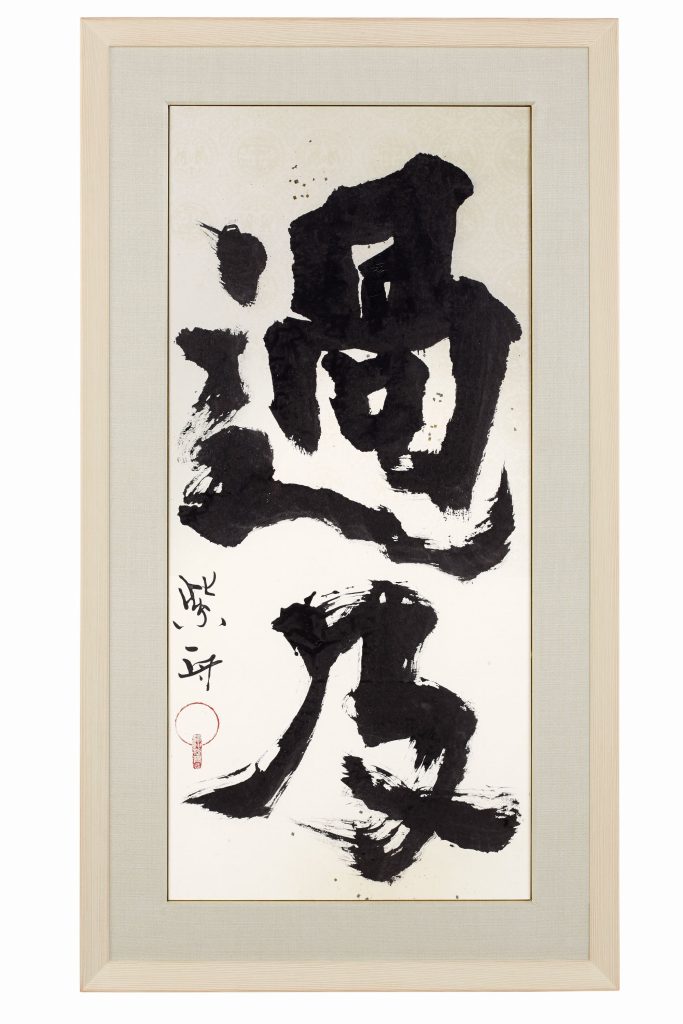
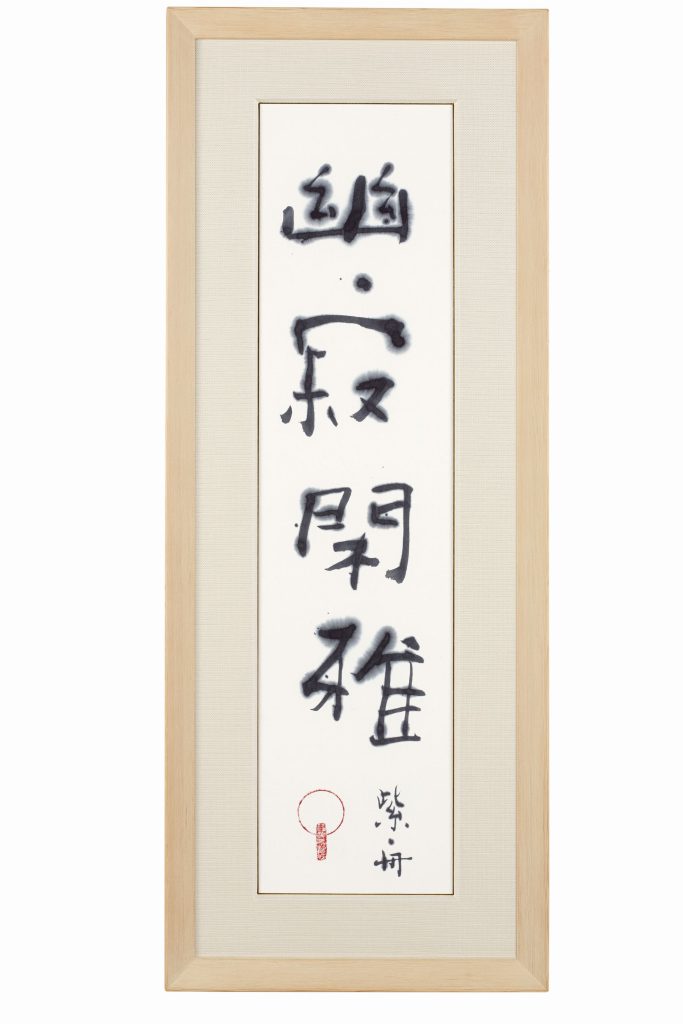
In Japanese painting, an unpainted or lightly worked background suggests distant space. In Western painting, by contrast, a background built up with thousands of layers of paint creates depth and distance. This reversal in methods of depiction and spatial expression is a major divide between Japanese and Western art, and an obstacle to understanding Japanese expression in Europe. Moreover, the blank space prized in Japanese art can imply incompleteness by Western standards. To bridge these aesthetics through calligraphy, Sisyu deliberately breaks with the Japanese tradition of leaving the background unpainted and constructs the background itself. Drawing on the gold-ground techniques of the Renaissance, she builds layers across the entire work. To incorporate the solidity of Western painting, she combines four elements: ink, gold, silver, and sulfur. Finally, to move beyond the traditions of calligraphy, she burns the work. Each piece takes months to create, as she consults old texts, searches for lost techniques, and builds successive layers. Grounded in the spirituality of Japanese calligraphy, she incorporates Western painting techniques and a final burning process to transcend established concepts of writing. From this process emerges a new aesthetic realm: Otherworldly Calligraphy.