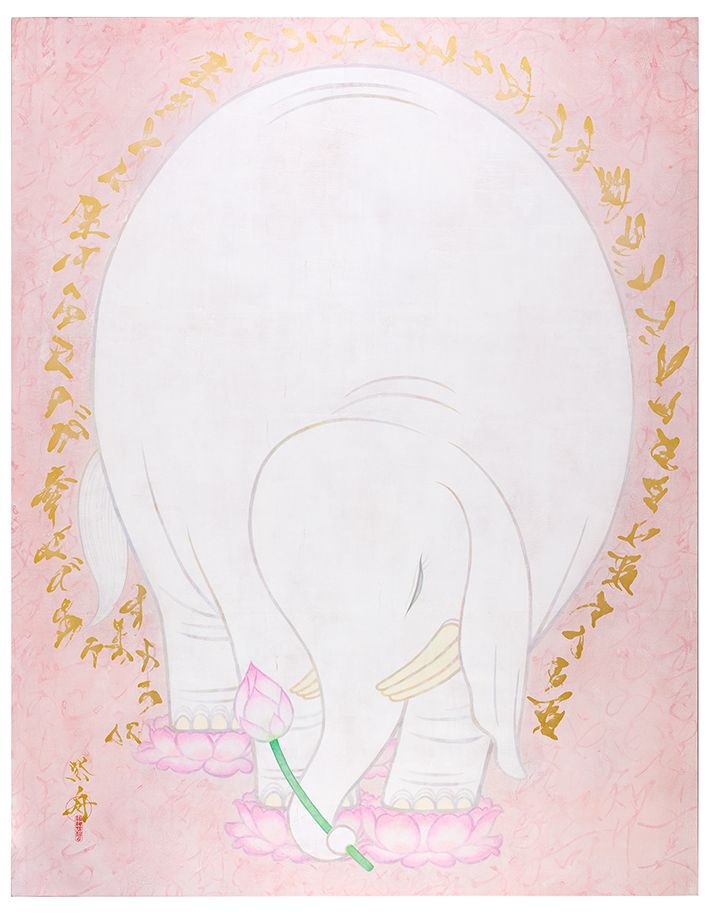
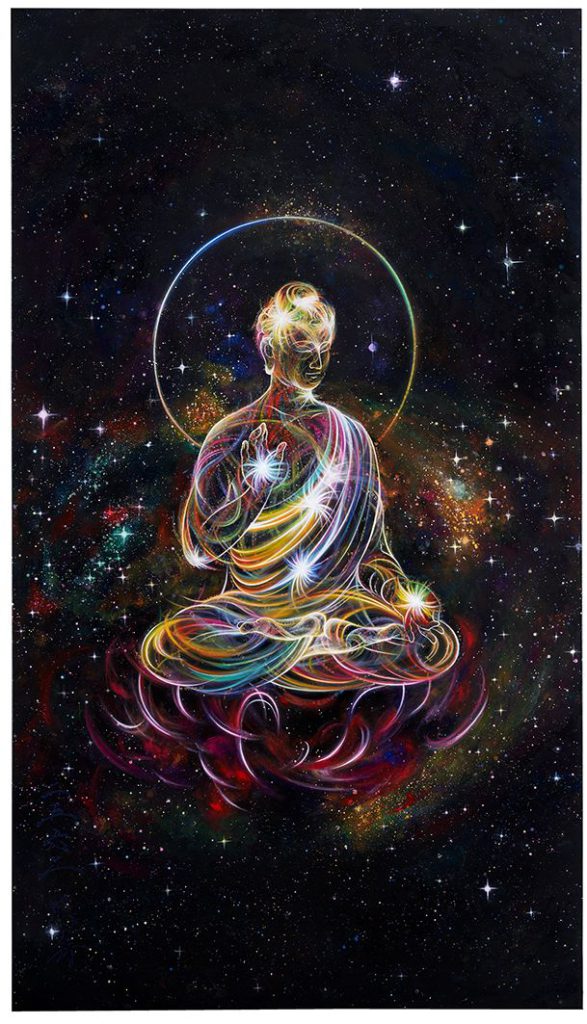
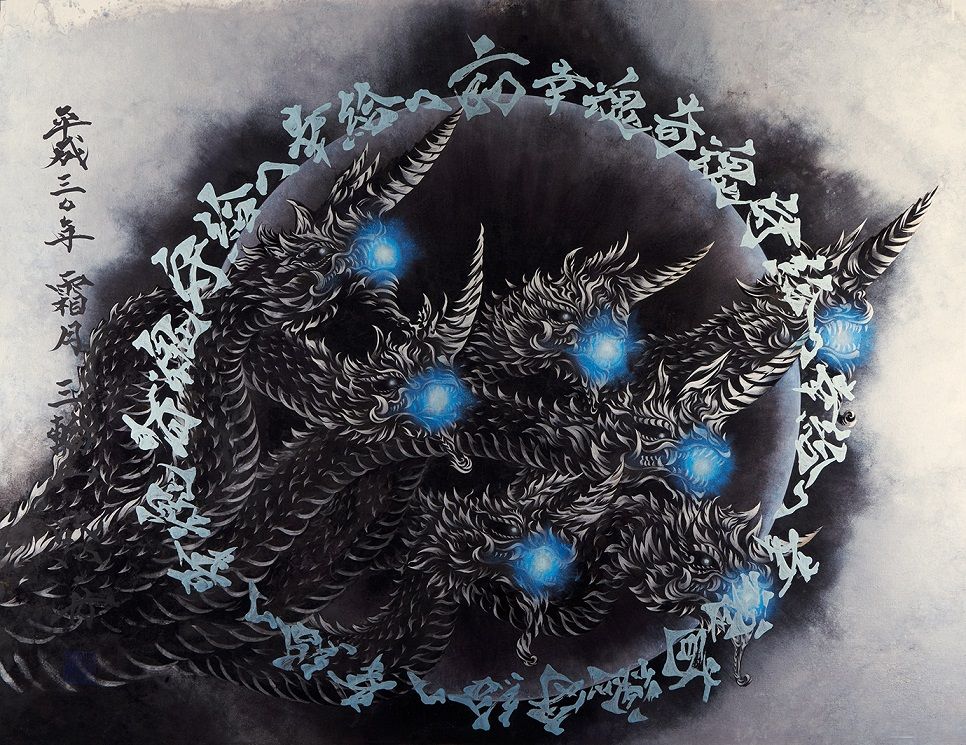
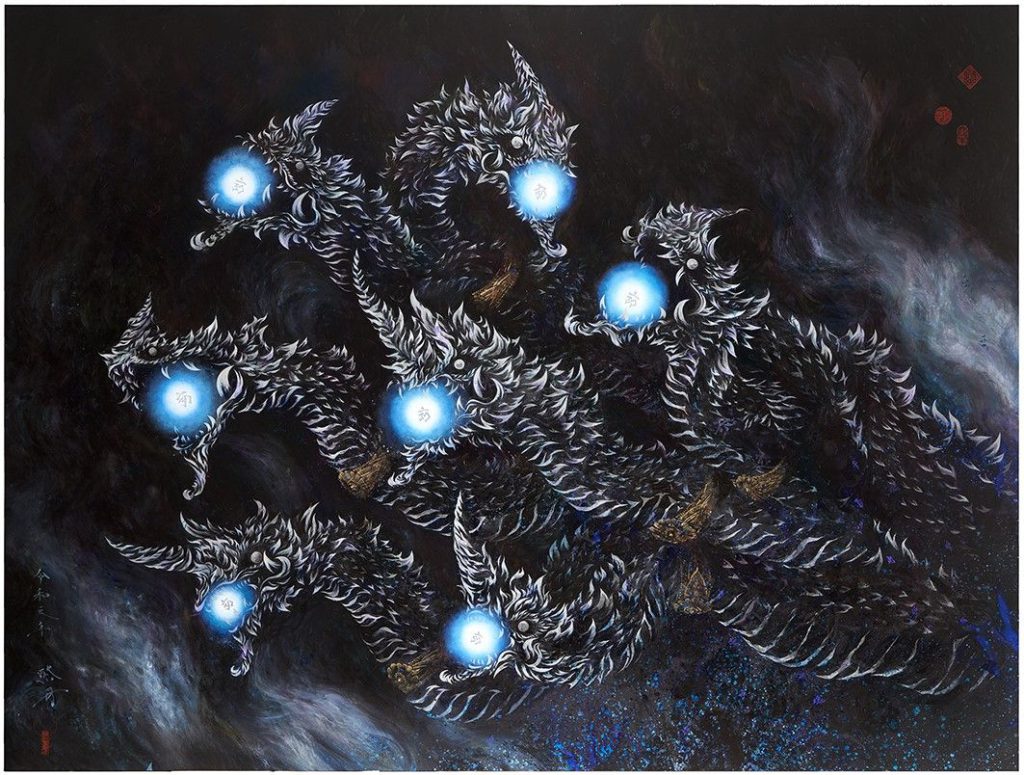
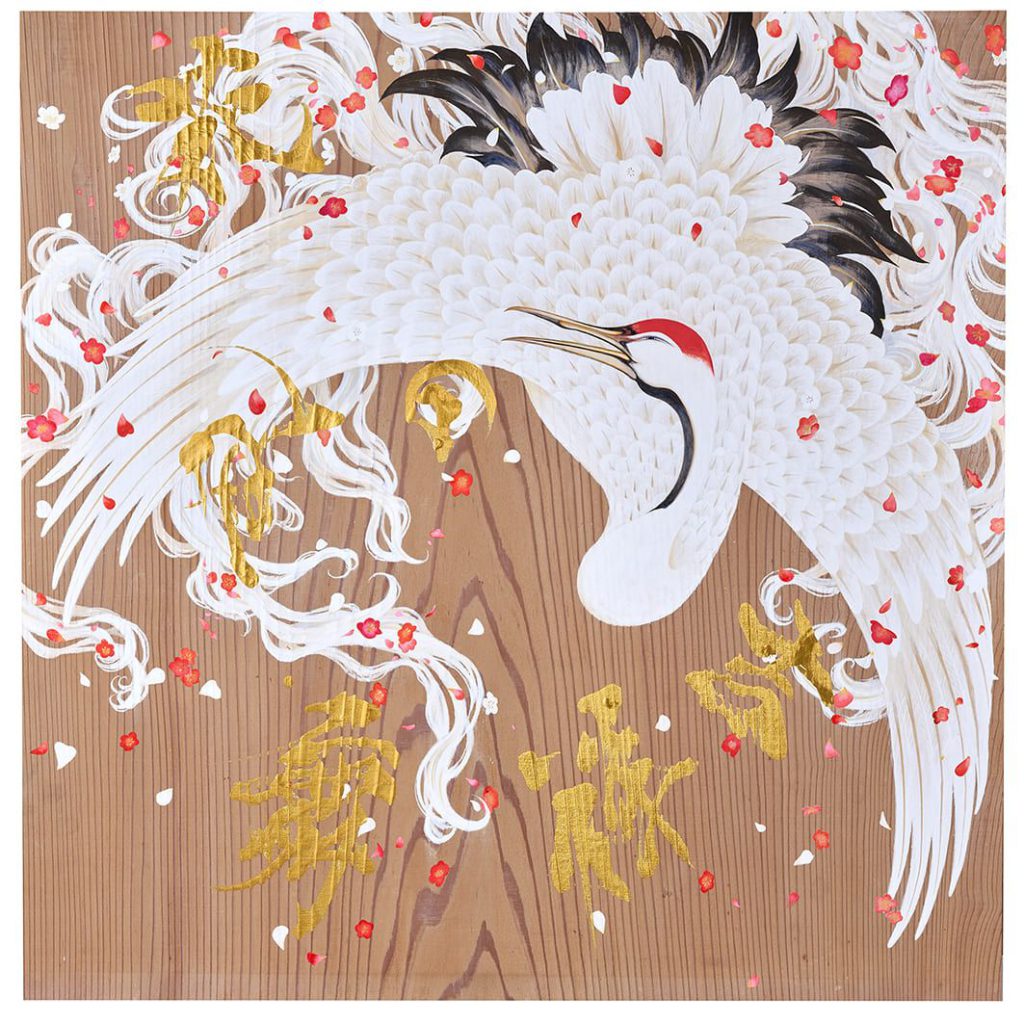
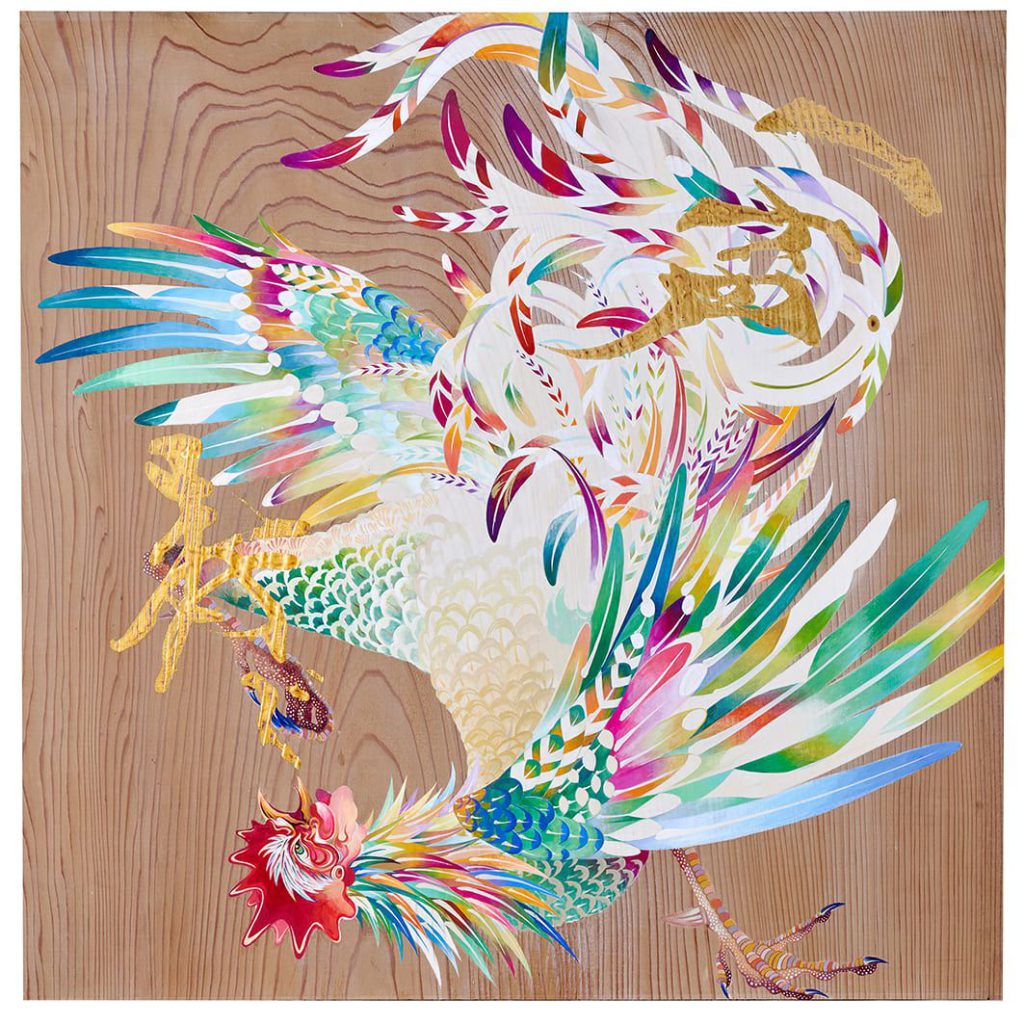
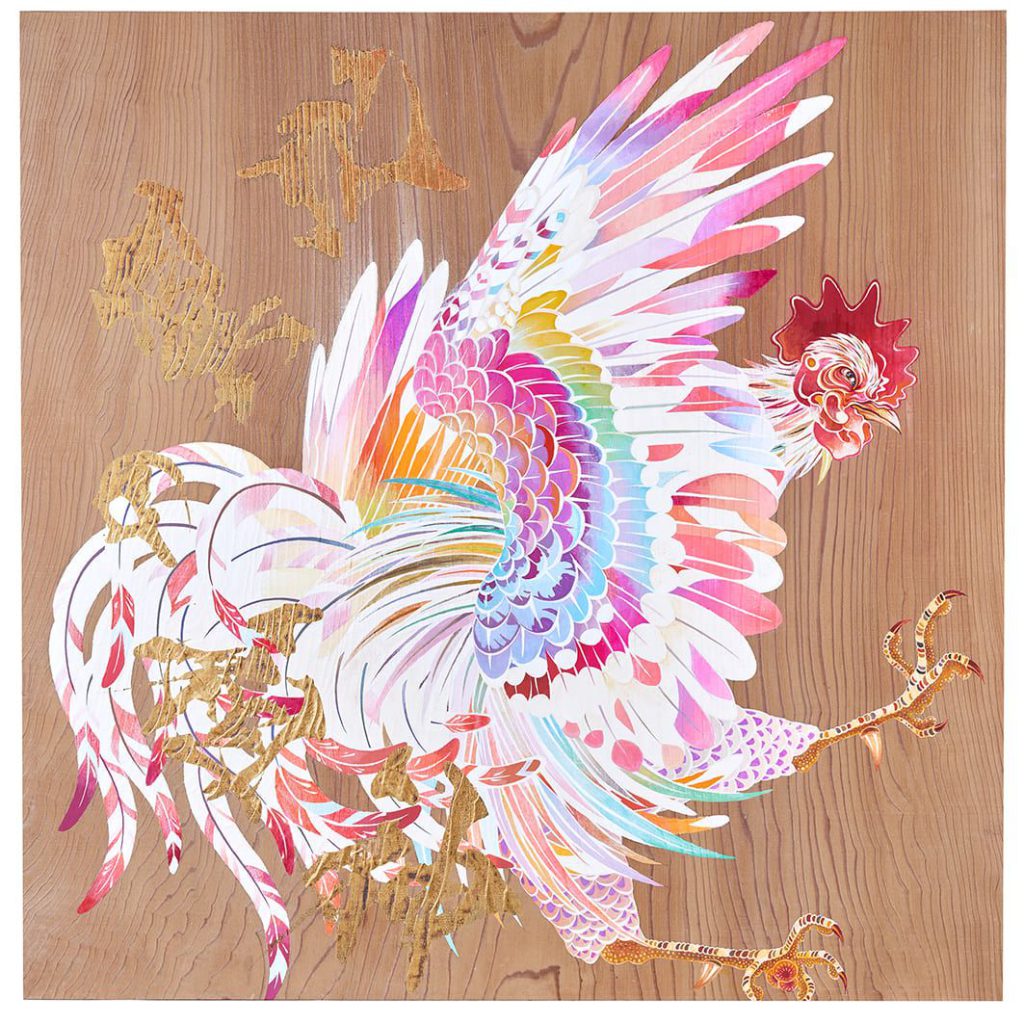
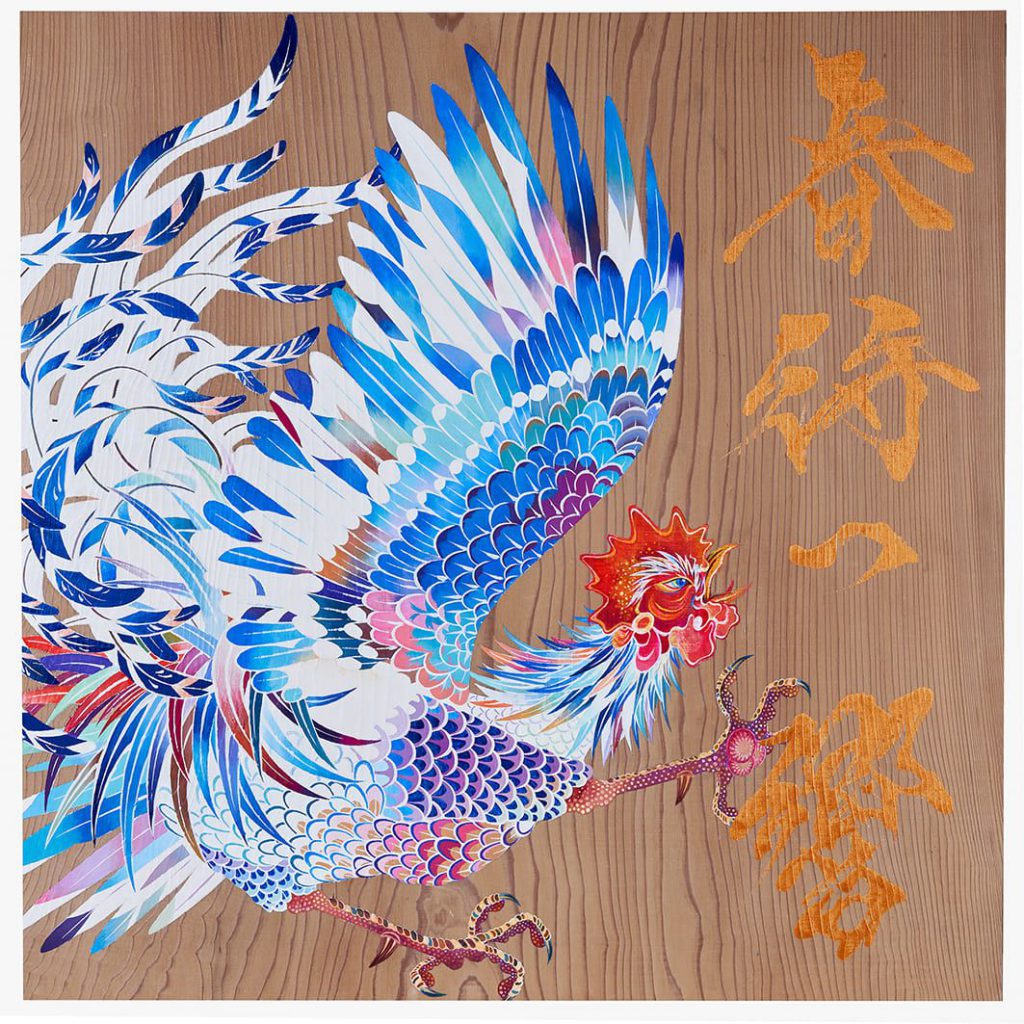
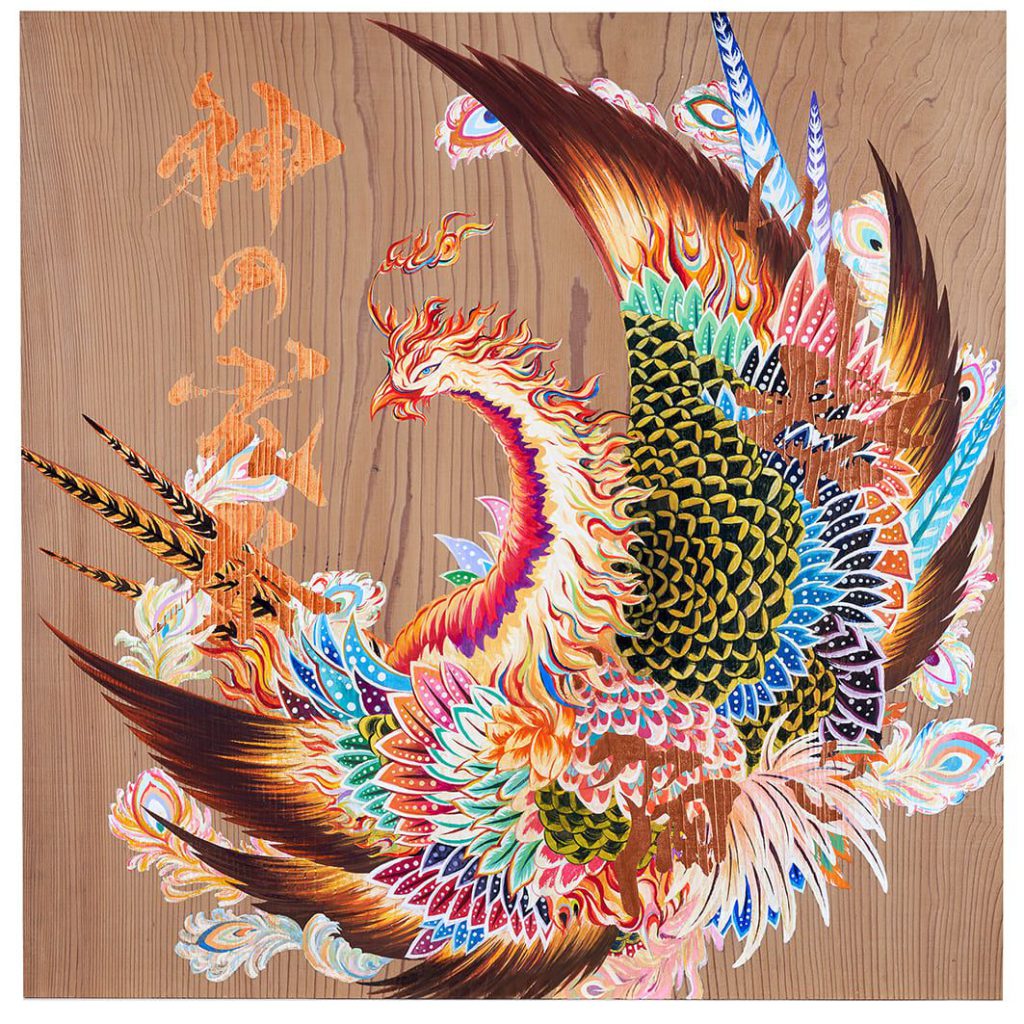
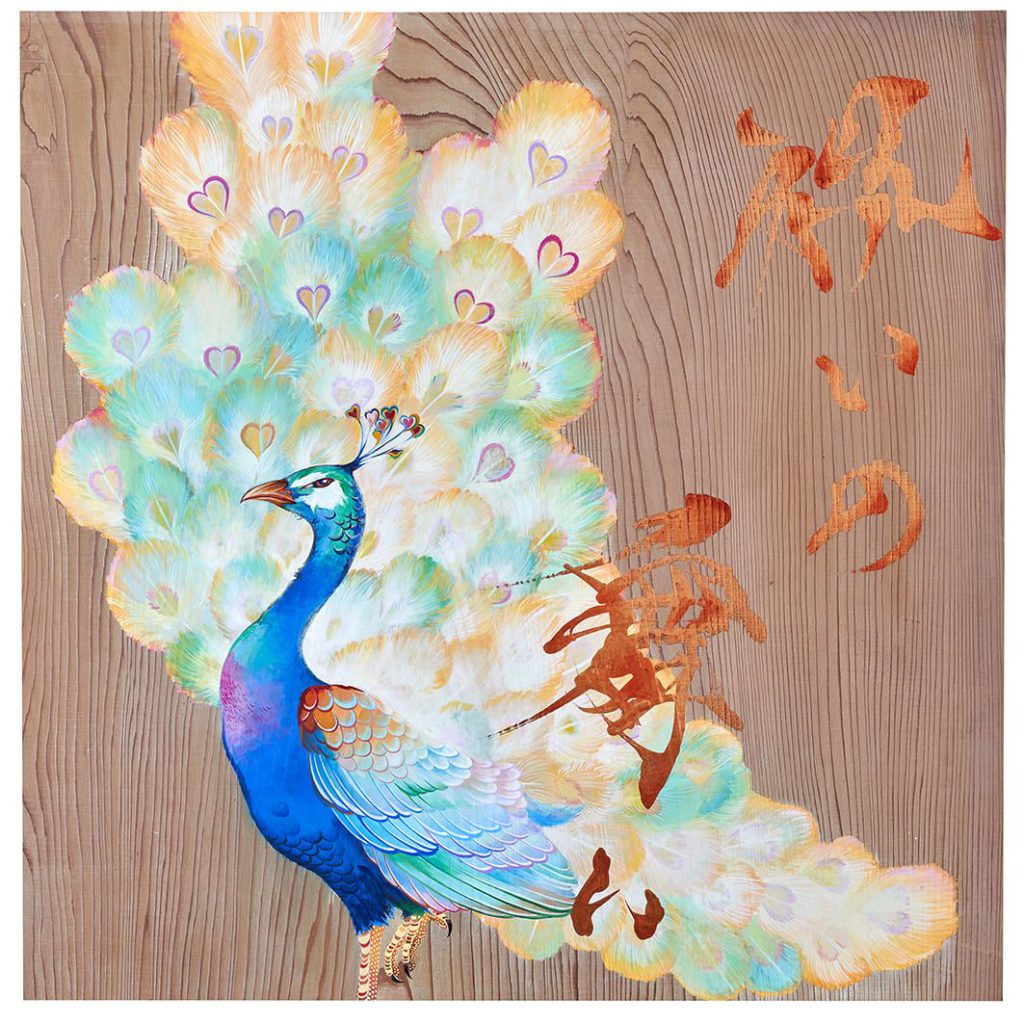
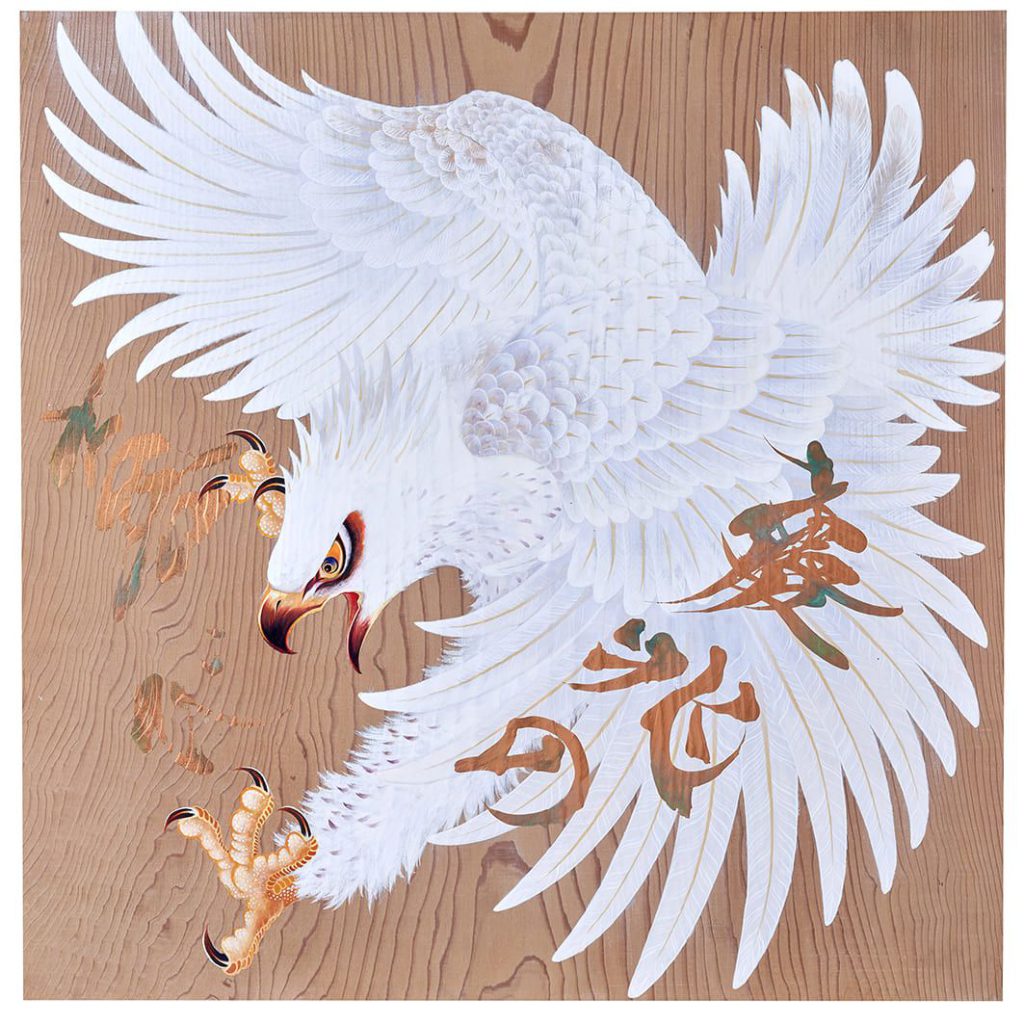
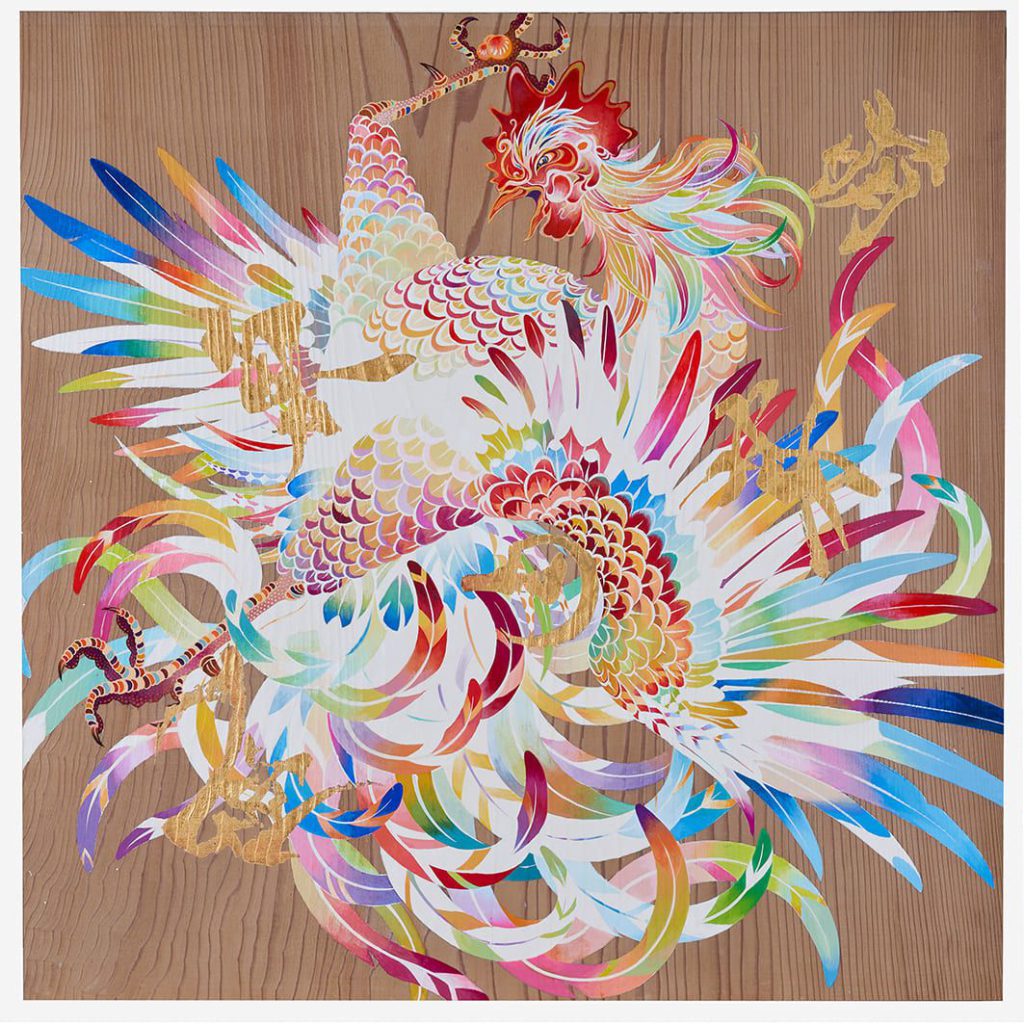
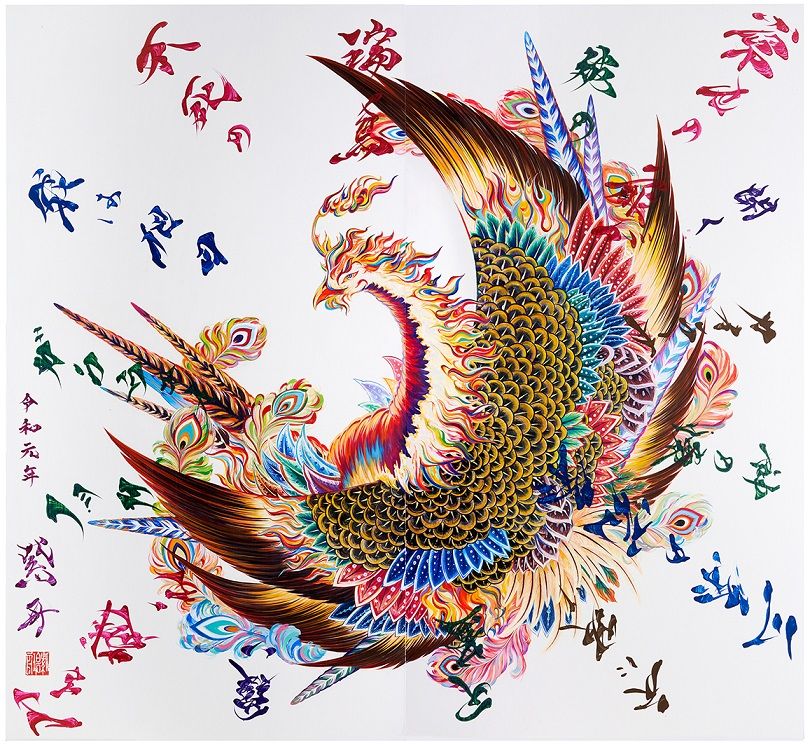
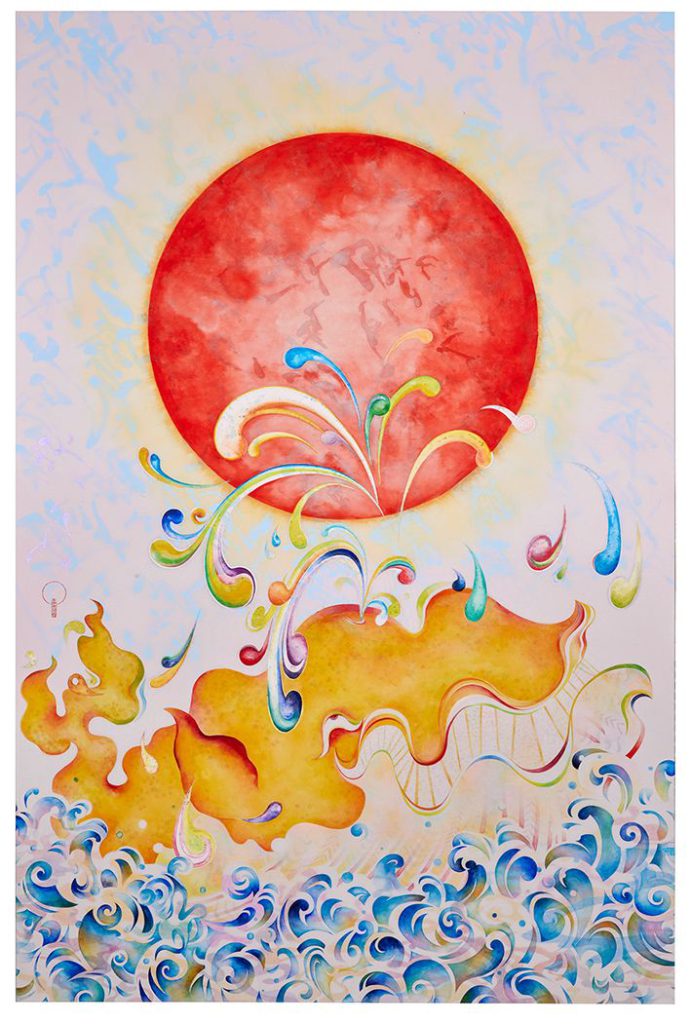
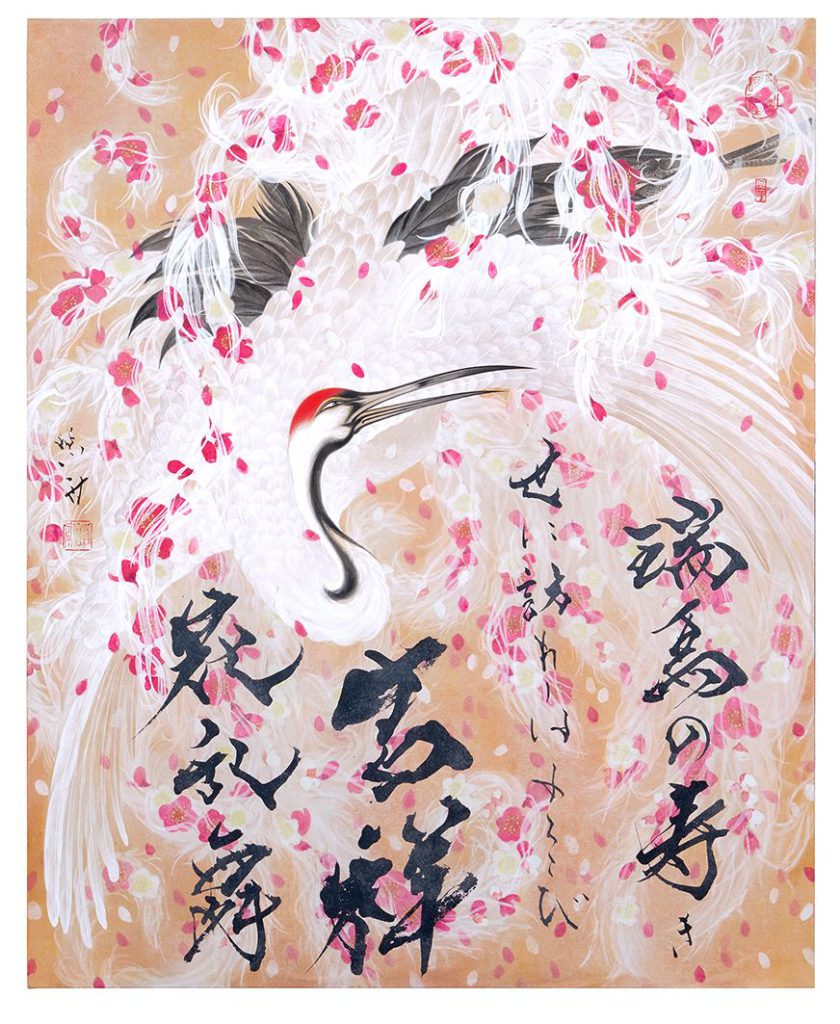
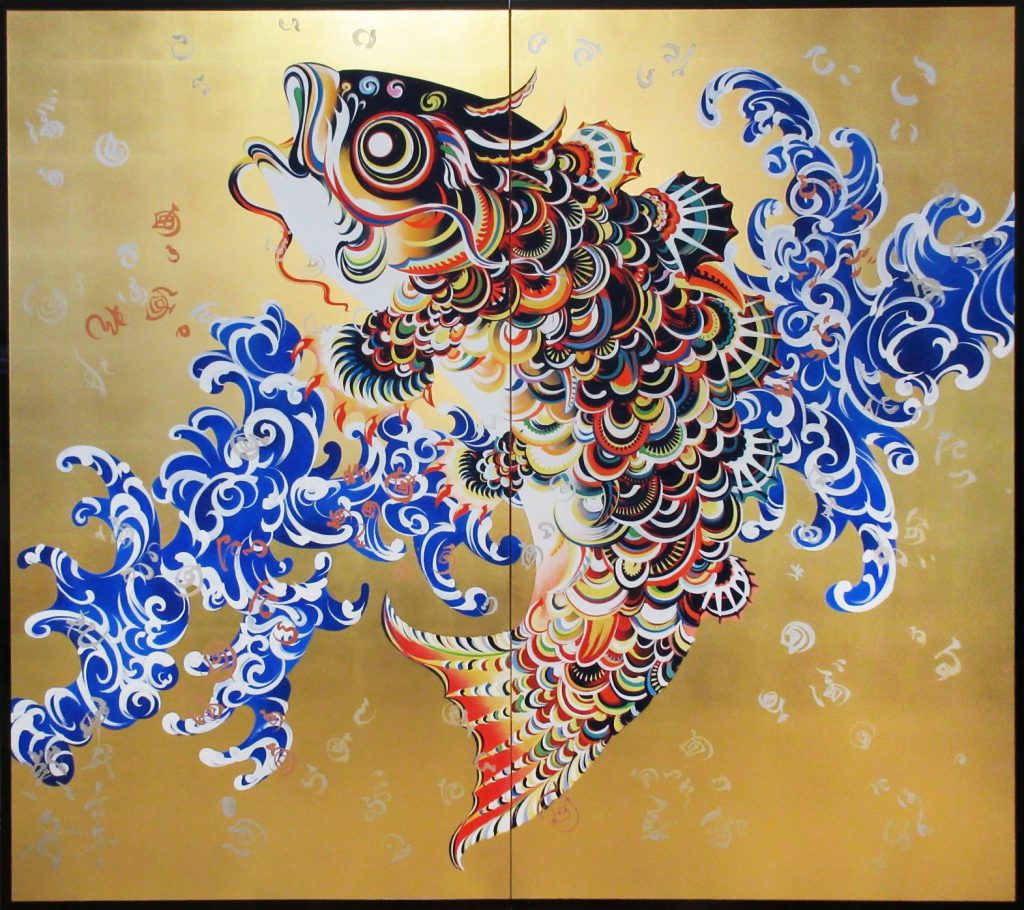
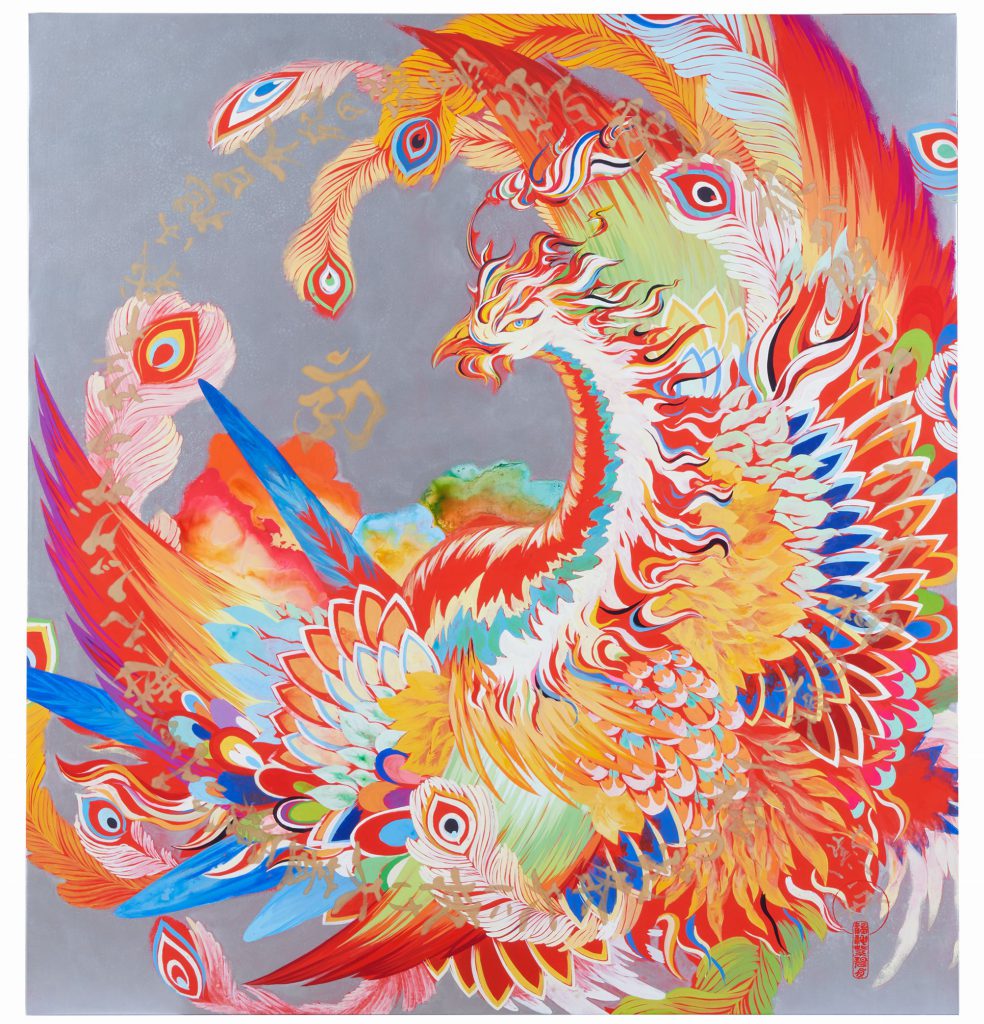
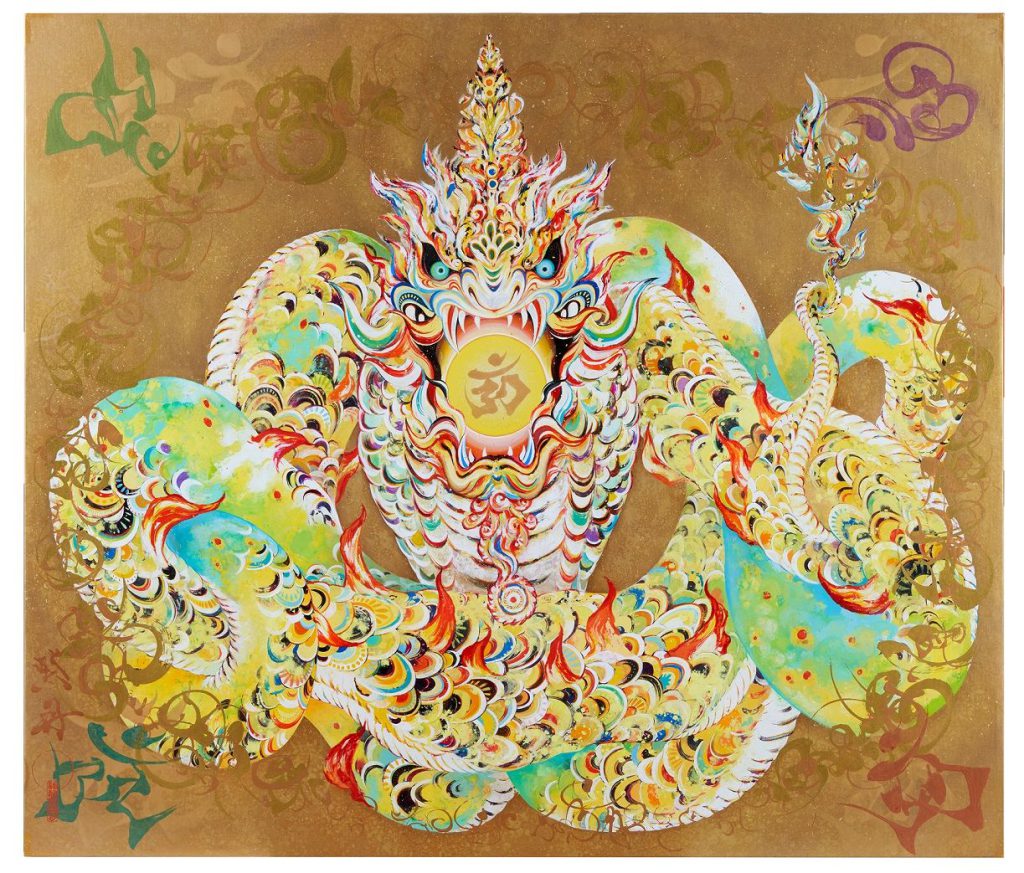
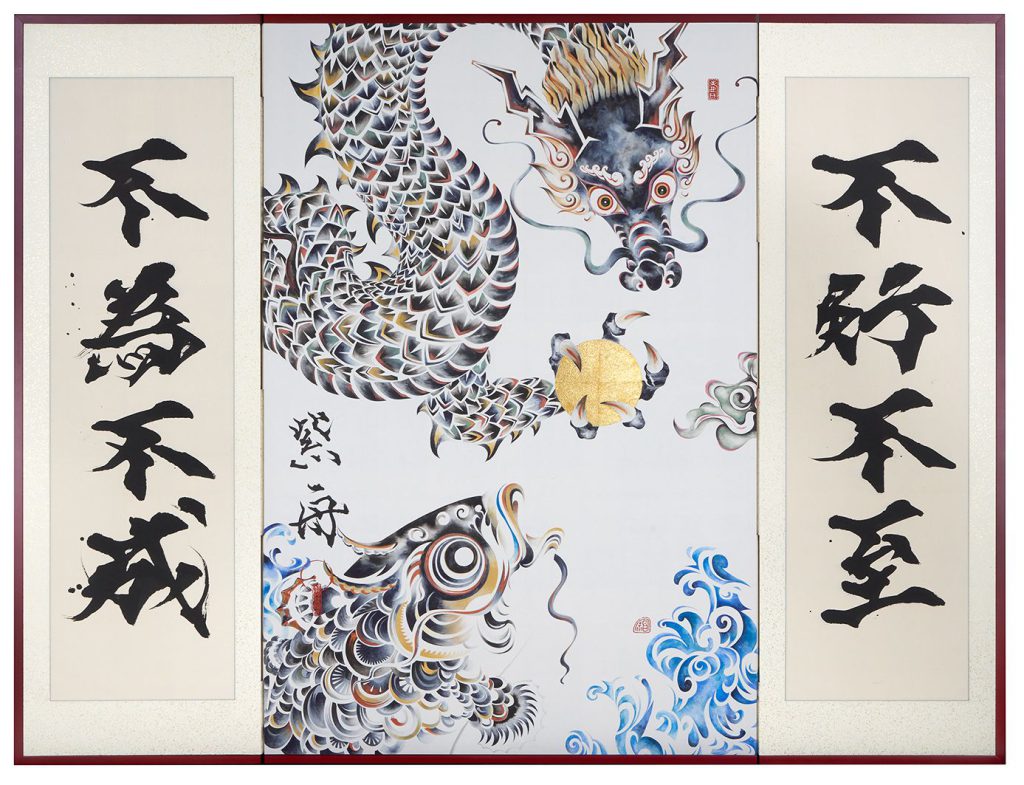
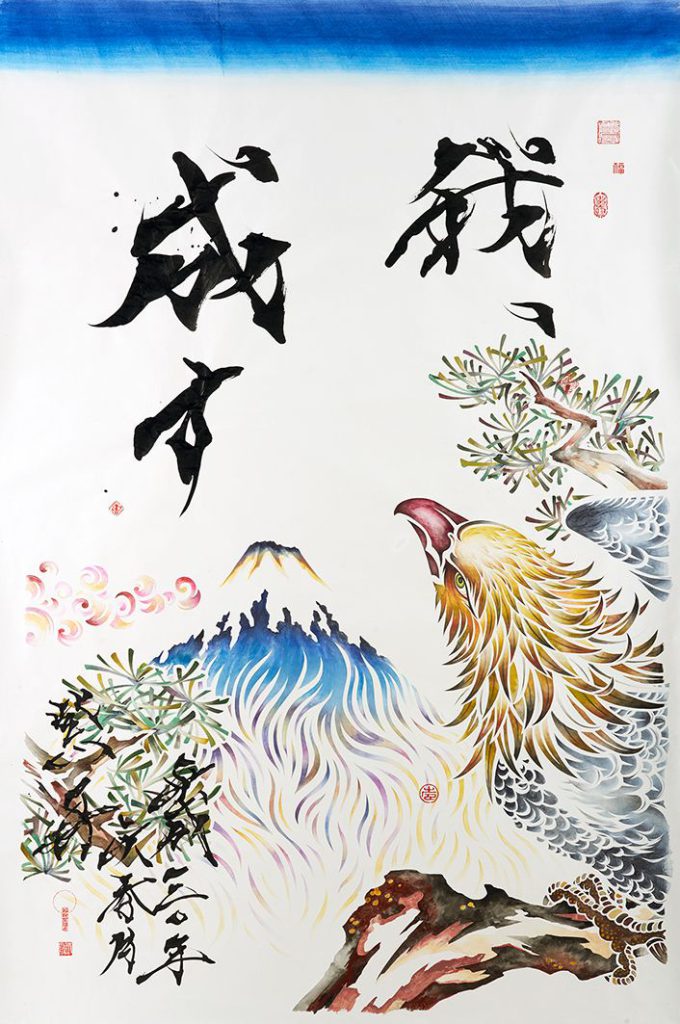
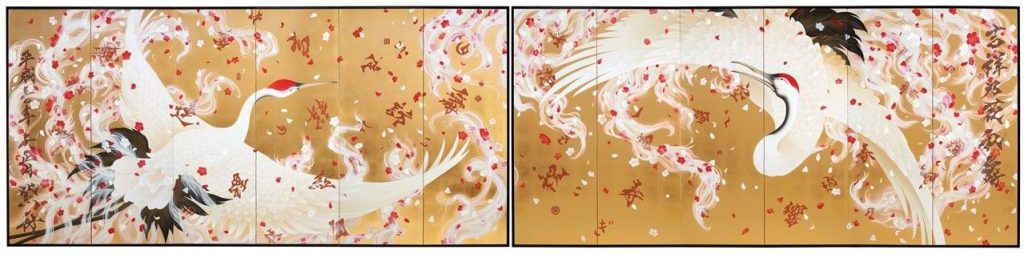
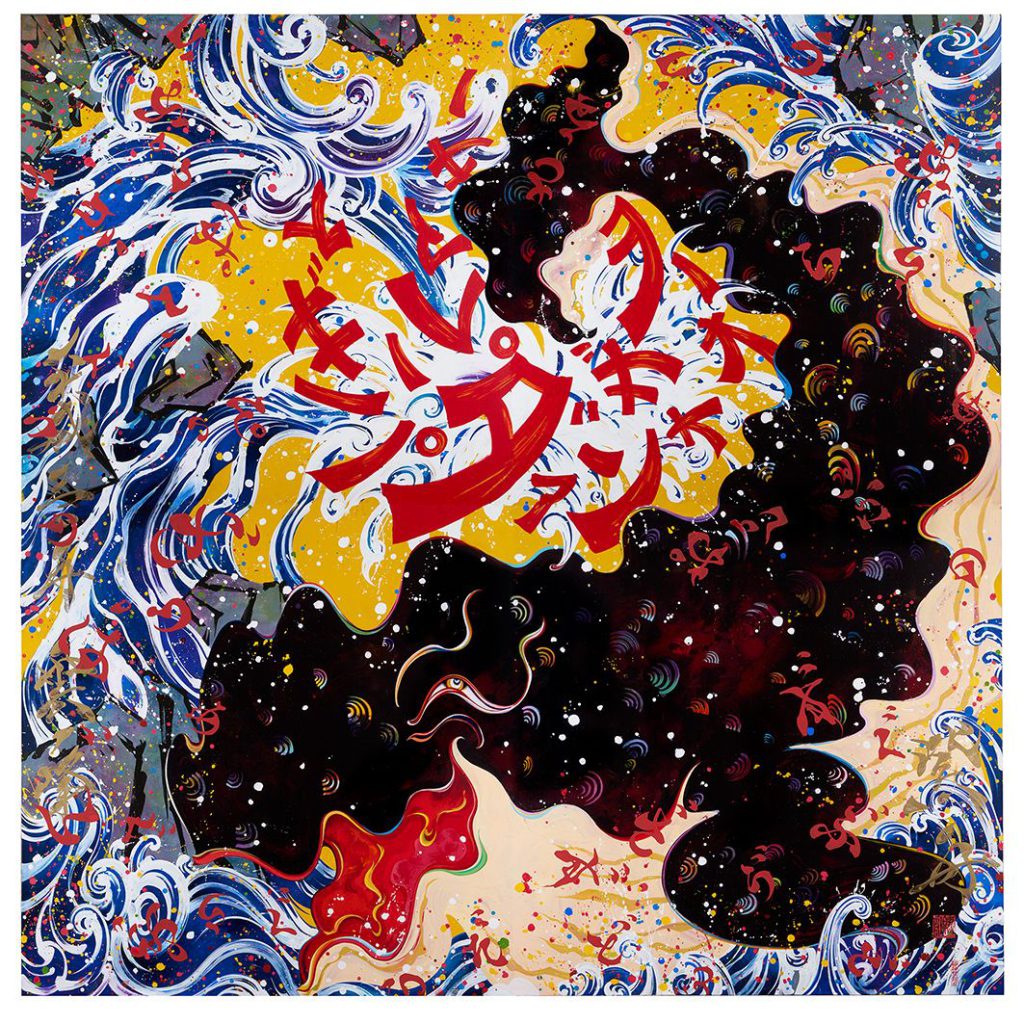
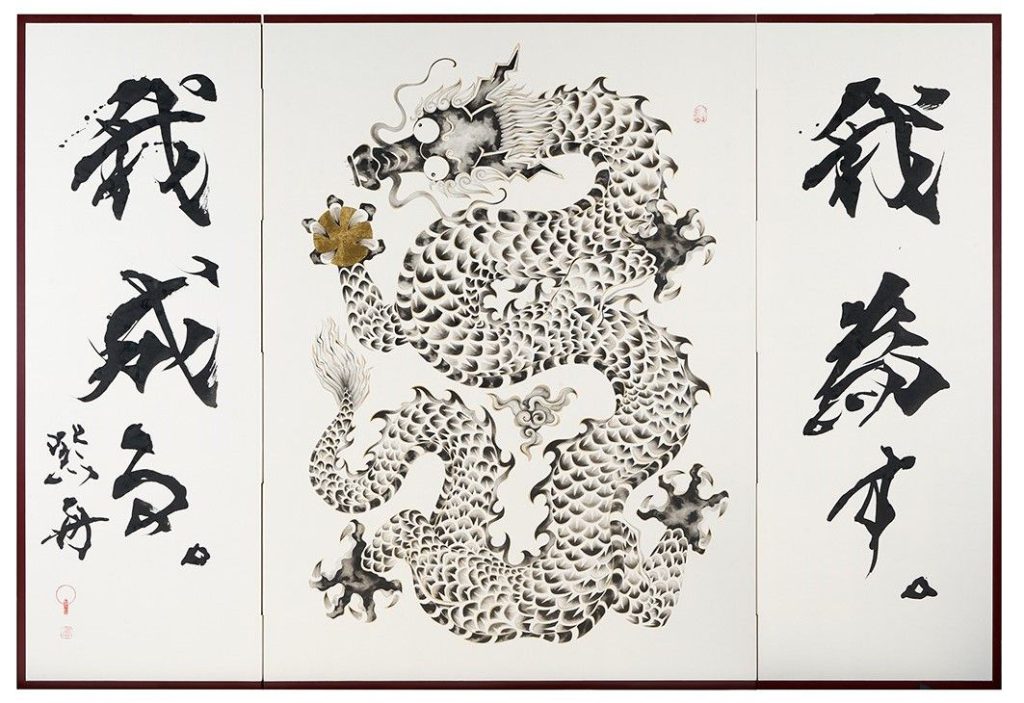
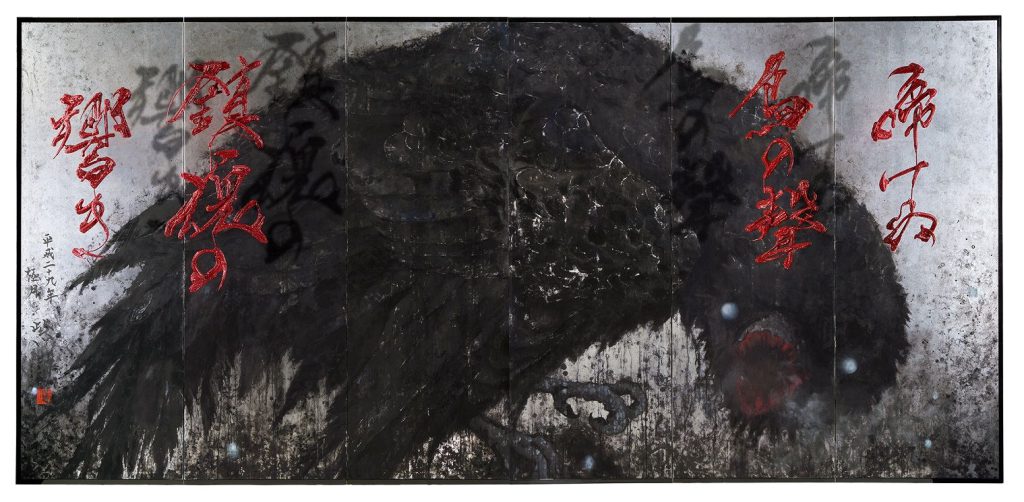
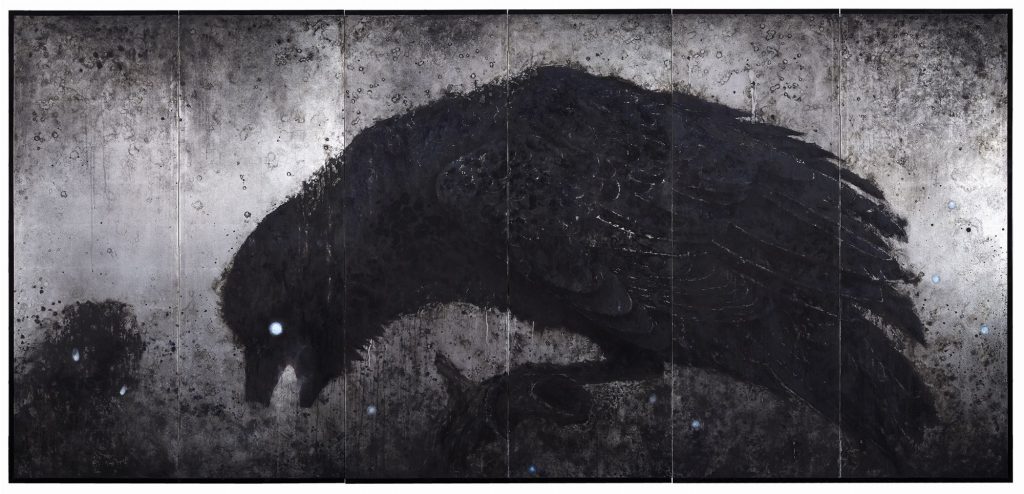
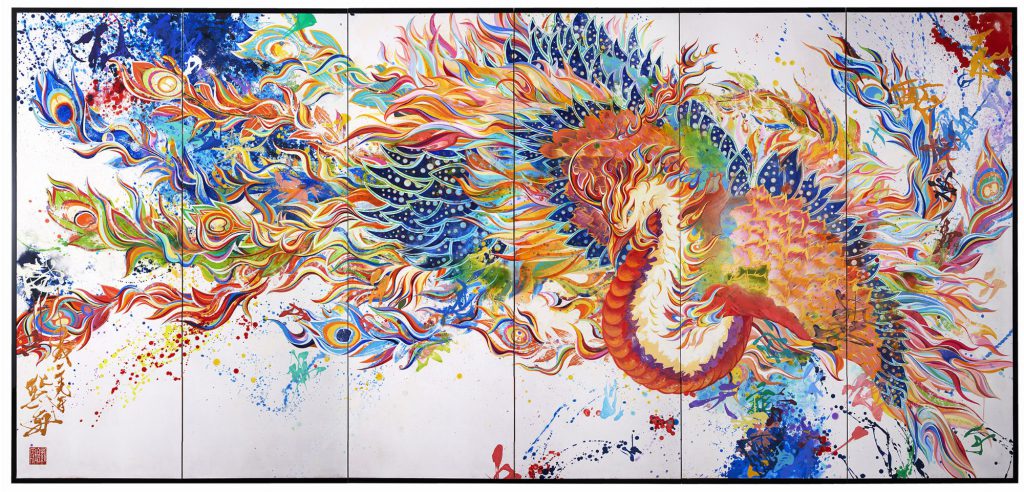
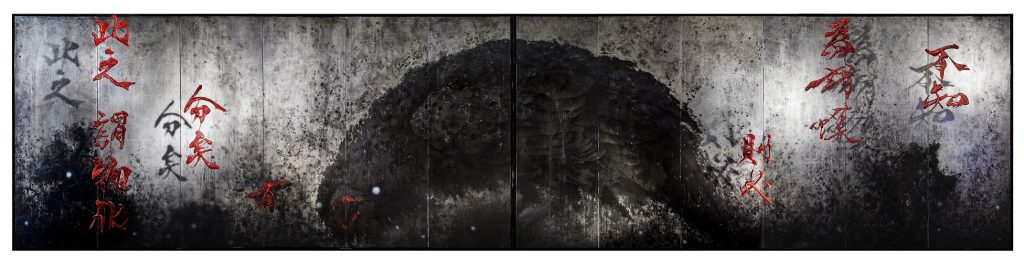
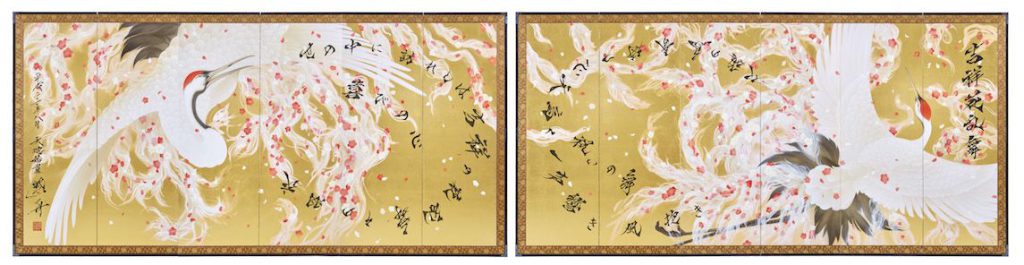
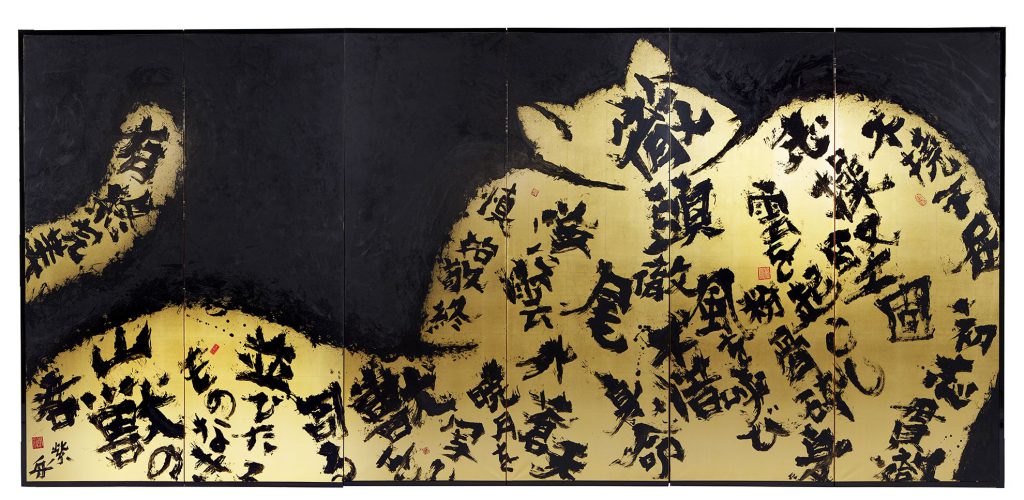
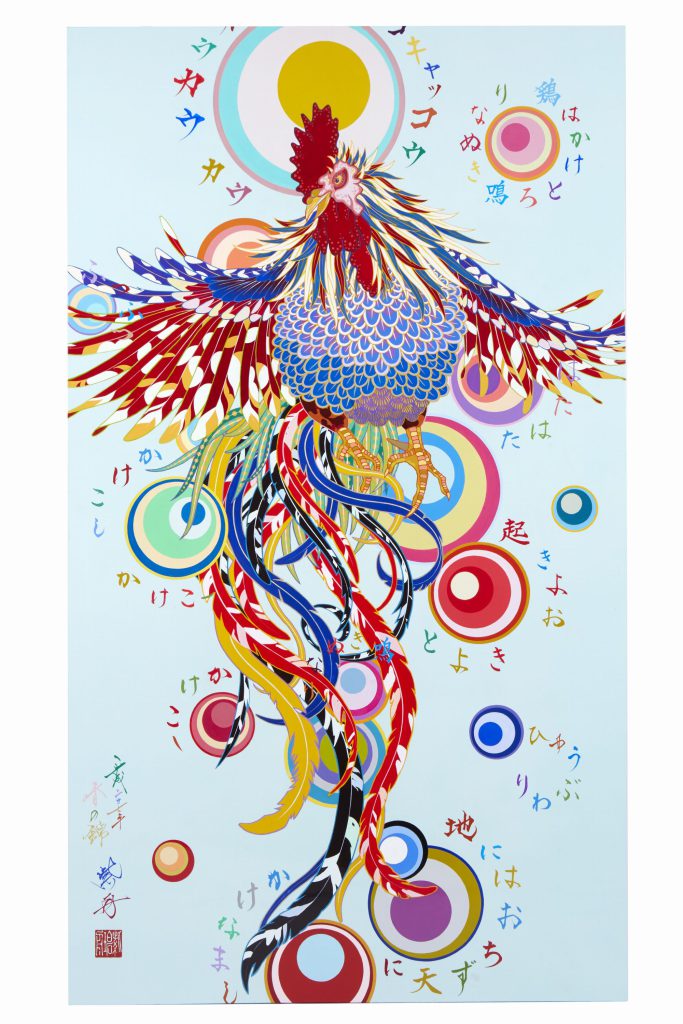
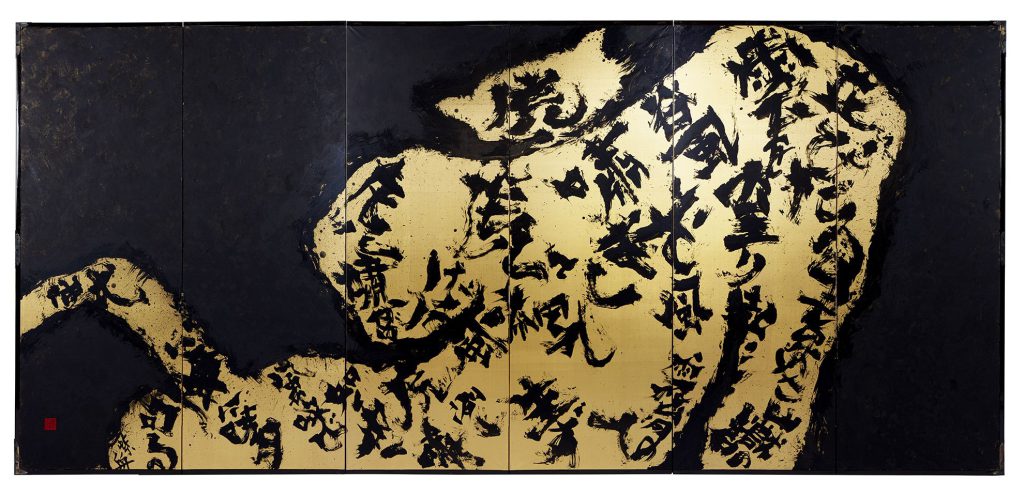
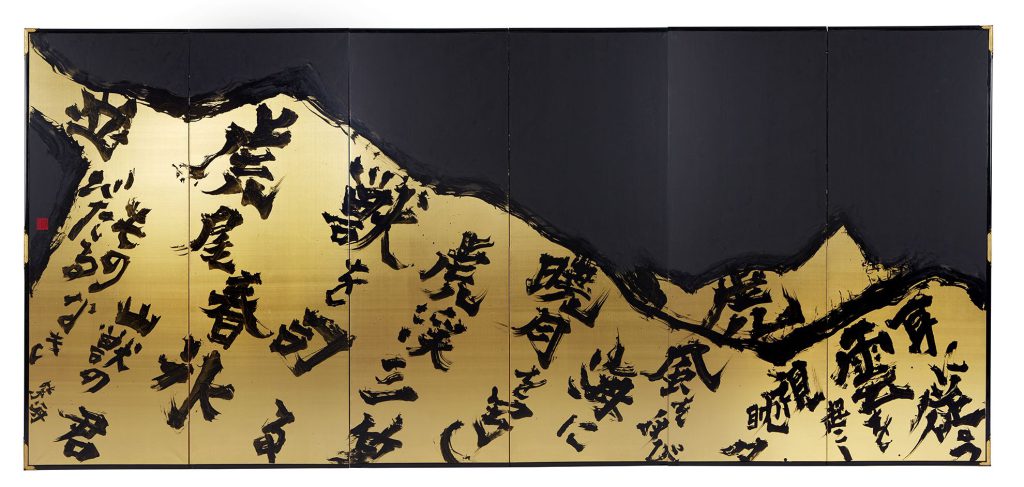
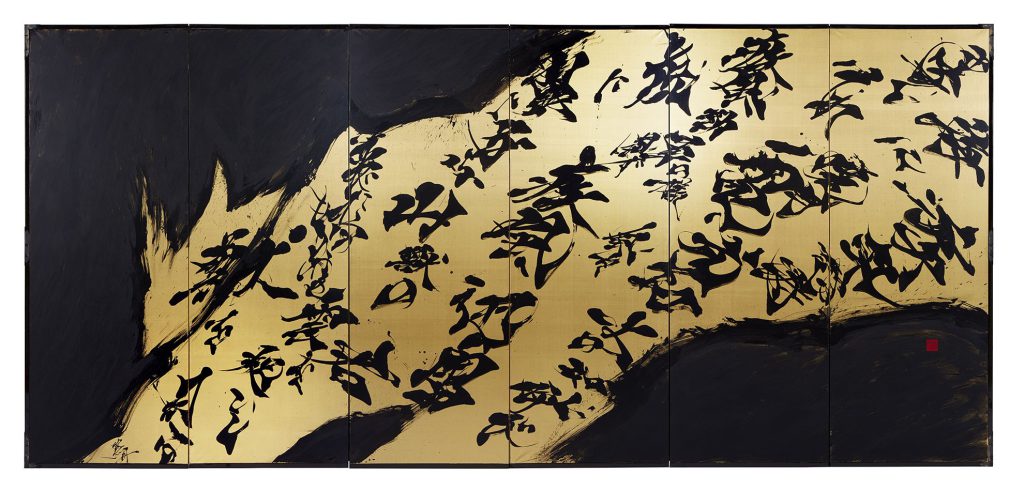
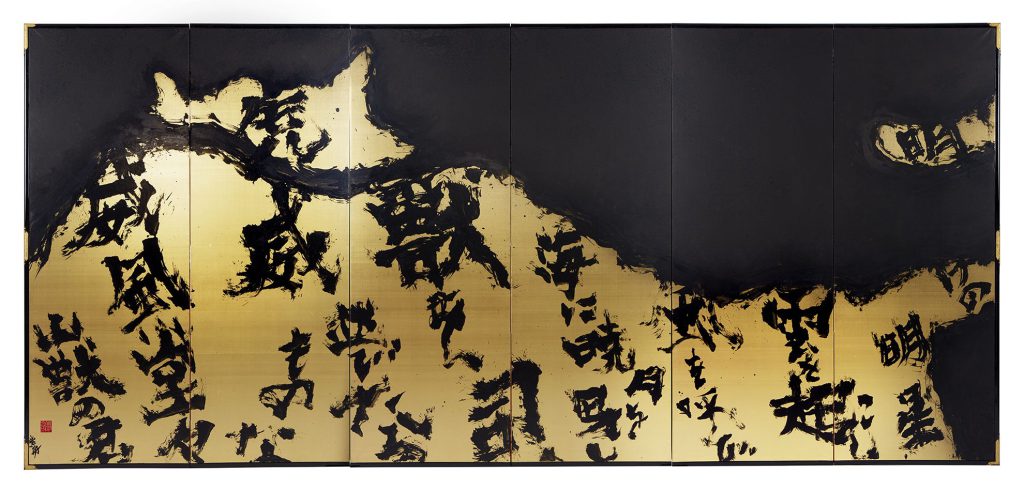
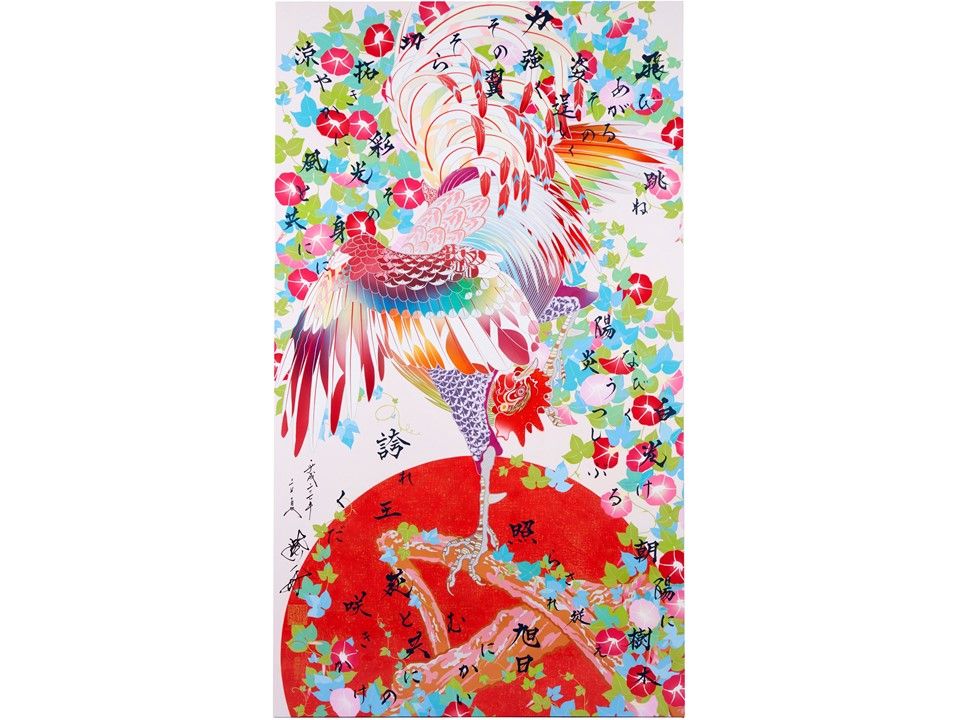
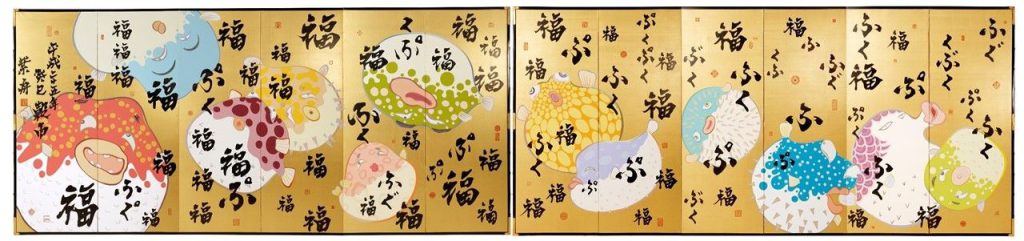
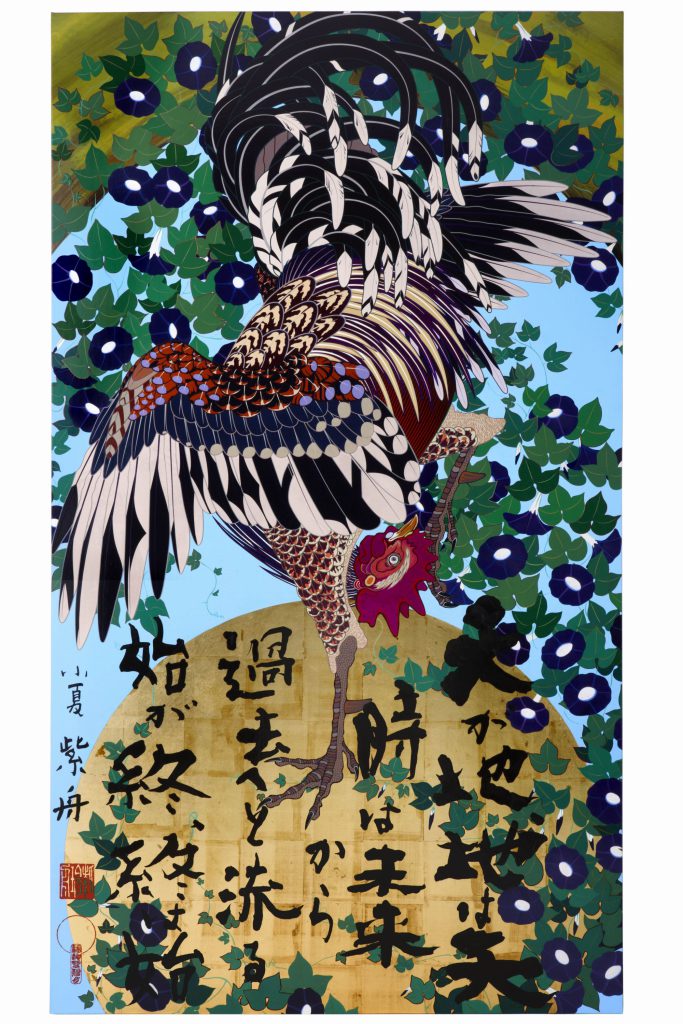
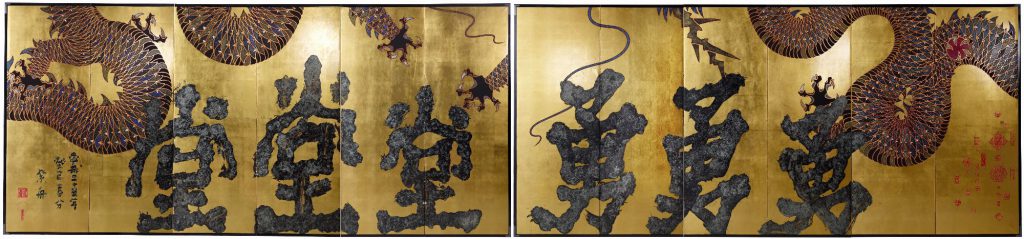
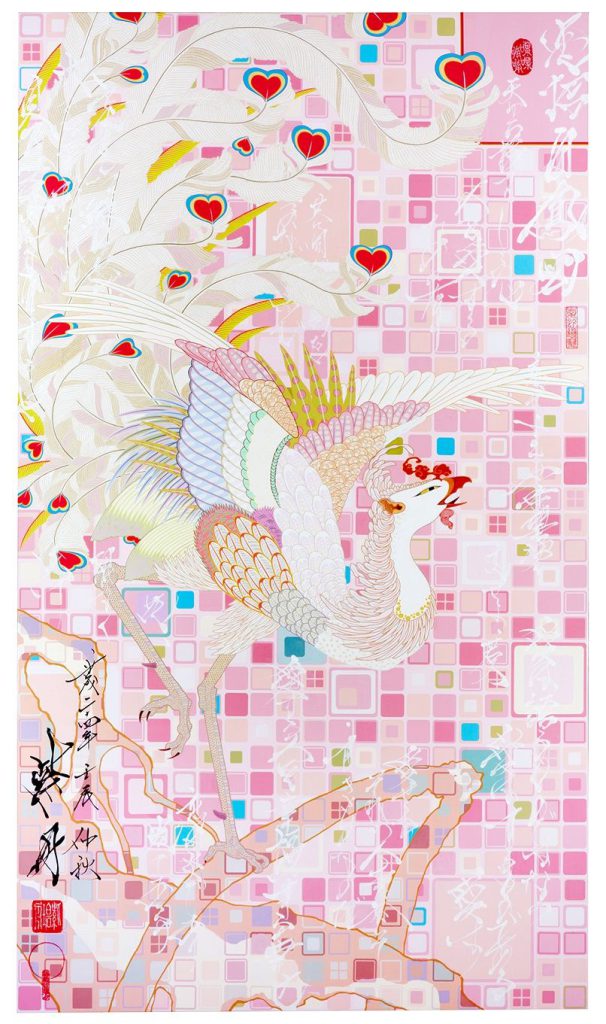
There are no outlines in nature. Yet Japanese art has captured people and natural forms through brush lines shared with calligraphy, one of its oldest cultural traditions. Where Western painting builds images with planes, Japanese art has depicted forms by drawing lines. The distinctive black contours surrounding faces and figures in ukiyo-e are an emblem of this approach. Sisyu reinterprets this beauty of line, which also influenced Western artists such as Picasso and Van Gogh. She frees ukiyo-e, which once translated three-dimensional space into flat lines, from the plane. Removing all outlines from the print, she replaces them with new ink strokes that become the contours of three-dimensional sculptures, moving freely through the air. From one particular viewpoint, the painting and sculptural contours overlap to reveal a single ukiyo-e image. From another angle, line and color shift apart, evoking the misregistration of a woodblock print. As viewers move, the work moves between two and three dimensions and the effect of shifted printing. Just as ukiyo-e once translated three dimensions into two, Sisyu releases its outlines back into the three-dimensional world.